The rapid assimilation of artificial intelligence across corporate landscapes, from automating routine tasks to informing strategic decisions, heralds a new era of efficiency and innovation. Yet, beneath this veneer of technological progress, a significant and increasingly urgent concern is taking root: the potential erosion of human critical thinking skills. This phenomenon, often dubbed "AI atrophy," poses a subtle but profound threat to long-term organizational agility, problem-solving capabilities, and ultimately, competitive advantage. As enterprises race to embed AI into the very fabric of their operations, a growing cadre of technology and business leaders globally is confronting this paradox, actively devising strategies to ensure that AI augments, rather than diminishes, human intellectual prowess.
The allure of AI is undeniable. McKinsey Global Institute reports suggest AI could add trillions of dollars to global GDP by 2030, driven by productivity gains and new product development. Adoption rates are skyrocketing; a 2023 IBM study revealed that 42% of companies surveyed had actively deployed AI in their business, with an additional 40% exploring its use. From predictive analytics in finance to generative AI in content creation, the tools promise to accelerate workflows, identify patterns beyond human capacity, and free up personnel for more complex endeavors. However, the very ease and efficacy of these tools can inadvertently foster a reliance that dulls the sharp edge of human cognition. When AI consistently provides answers, the muscle of independent inquiry, skeptical analysis, and nuanced judgment can weaken, leaving organizations vulnerable to the inherent biases or limitations of the algorithms themselves.
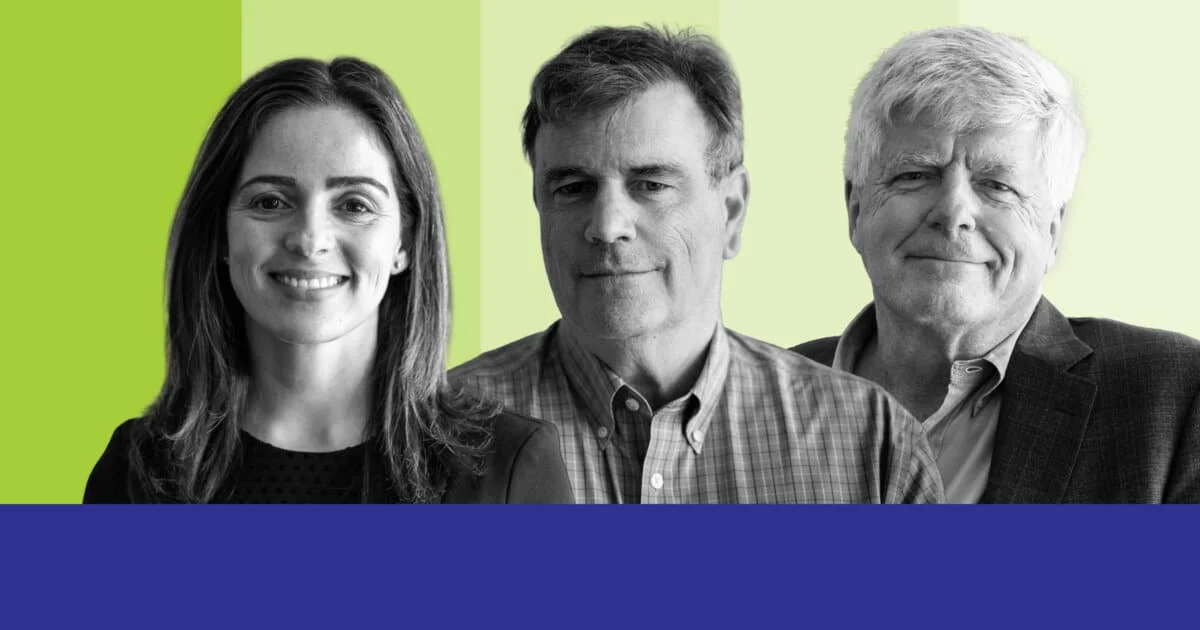
This growing apprehension was a central theme at a recent prominent technology leadership symposium, where global CIOs and business executives articulated a shared concern about preserving critical thinking in an AI-saturated environment. Michael Schrage, a distinguished research fellow at a leading digital economy initiative, offered a compelling reframing of how AI outputs should be perceived. He posited that rather than accepting AI-generated information as definitive "answers," users should instead view them as "hypotheses" that demand rigorous testing and stress-testing. This approach advocates for an immediate and deliberate challenge to the AI’s output, encouraging users to actively seek counterarguments, alternative perspectives, and underlying assumptions before validation. Such a methodology not only builds resilience against potential AI errors or "hallucinations" but also actively reinforces the human capacity for analytical scrutiny and intellectual curiosity.
Echoing this sentiment, George Westerman, a principal research scientist and senior lecturer at a prestigious management school, highlighted the fundamental importance of assessing an AI tool’s suitability for a given task. Before deploying an AI solution, teams must critically evaluate whether the technology was genuinely designed for the specific problem at hand. The indiscriminate application of powerful AI tools, without a clear understanding of their inherent capabilities, limitations, and potential biases, can lead to suboptimal outcomes, misinformed decisions, and a misplaced trust that further erodes human oversight. For instance, while a large language model might excel at summarizing complex legal documents, relying solely on its output for nuanced legal advice without expert human review could carry significant ethical and financial risks.
Beyond these individual-level strategies, fostering cognitive resilience against AI atrophy requires systemic organizational shifts. Enterprises must cultivate a culture where critical thinking is not merely encouraged but actively mandated and rewarded. This involves embedding "human-in-the-loop" protocols for high-stakes decisions, ensuring that AI recommendations are always subjected to expert human review, especially in areas such as financial trading, medical diagnostics, or critical infrastructure management. For example, leading financial institutions are developing hybrid AI-human trading desks where AI identifies opportunities and executes low-risk trades, but human traders maintain ultimate oversight and intervene for complex, high-impact scenarios requiring intuitive judgment and market context.

Furthermore, strategic investment in upskilling and reskilling the workforce is paramount. The focus should not solely be on training employees to use AI tools, but crucially, on teaching them how to evaluate AI. This includes understanding algorithmic principles, recognizing data biases, interpreting confidence scores, and developing the metacognitive skills to question, challenge, and refine AI-generated content. Companies like Accenture and Deloitte are already implementing comprehensive AI literacy programs, moving beyond basic operational training to incorporate modules on ethical AI, bias detection, and critical validation techniques. Such initiatives aim to transform employees from passive AI consumers into active, discerning partners.
Another innovative approach involves designing tasks and workflows that intentionally create "AI-free zones" or "human-first" phases. For creative industries, this might mean encouraging designers or writers to generate initial concepts without AI assistance, only introducing AI tools later for refinement or augmentation. In research and development, scientists could be tasked with formulating hypotheses and designing experiments independently before leveraging AI for data analysis or literature review. This deliberate separation helps preserve the foundational cognitive processes involved in ideation and problem formulation, preventing over-reliance on AI for the earliest, most critical stages of innovation.
The long-term economic implications of widespread AI atrophy are significant. A workforce that habitually outsources critical thinking to algorithms risks losing its capacity for truly novel innovation, strategic foresight, and adaptive problem-solving. This could manifest as a stagnation in breakthrough discoveries, an increased vulnerability to unforeseen crises (as human ingenuity struggles to adapt without algorithmic precedents), and a diminished ability to navigate complex geopolitical or market shifts. Conversely, organizations that successfully integrate AI while simultaneously nurturing human cognitive skills will gain a substantial competitive edge, fostering a dynamic synergy where machines handle computational heavy lifting, and humans provide the strategic vision, ethical compass, and creative leaps.
Globally, regulatory bodies are also beginning to acknowledge the importance of human oversight. The European Union’s proposed AI Act, for instance, emphasizes human supervision and control, particularly for high-risk AI systems, reflecting a broader recognition that human judgment remains indispensable in critical applications. This regulatory push, combined with a growing understanding within the private sector, underscores a collective movement towards a more thoughtful and balanced integration of AI.
In conclusion, the journey towards an AI-augmented future is not merely about technological adoption; it is fundamentally about striking a delicate balance between efficiency and intellectual preservation. The strategies championed by leading CIOs – treating AI outputs as hypotheses, rigorously assessing tool suitability, fostering a culture of critical inquiry, and investing in advanced human-AI literacy – are not just defensive measures. They represent a proactive commitment to cultivating a resilient, adaptable, and innovative workforce. The ultimate goal is to ensure that as AI continues to evolve and proliferate, humanity’s most invaluable assets – its capacity for critical thought, creativity, and ethical judgment – are not merely maintained, but actively enhanced, forging a symbiotic partnership that unlocks unprecedented levels of collective intelligence and progress.