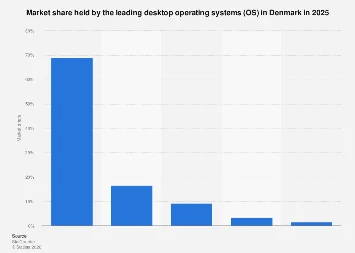
As the global technology sector continues its relentless evolution, understanding the prevailing digital infrastructure within key markets is paramount for businesses, developers, and policymakers alike. In Denmark, the desktop operating system (OS) market is poised for a particular configuration by 2025, with established players expected to maintain their significant market share, reflecting broader global trends in enterprise and consumer adoption. Projections indicate a continued dominance of Microsoft Windows, a testament to its deep integration within corporate environments and widespread consumer familiarity. This enduring leadership is driven by several factors, including legacy software compatibility, extensive hardware support, and a robust ecosystem of third-party applications that remain critical for productivity and daily operations across various sectors.
The Danish market, like many developed economies, exhibits a strong reliance on Windows for its business infrastructure. This preference is often rooted in the cost-effectiveness of enterprise licensing agreements, the availability of skilled IT professionals familiar with the Windows environment, and the security features that have been progressively enhanced over successive versions. While the exact figures for 2025 are forecasts, current data and historical trends strongly suggest that Windows will continue to command the largest portion of the desktop OS market share. This dominance is not merely about market penetration but also about the embedded nature of Windows within the workflow of Danish businesses, from small and medium-sized enterprises (SMEs) to large corporations. The ongoing digital transformation initiatives within Denmark, while embracing cloud-native solutions and new technologies, often build upon existing Windows-centric IT architectures, further solidifying its position.
Beyond the corporate realm, Windows’ ubiquitous presence in the consumer market also contributes significantly to its overall market share. Personal computers, whether used for work, education, or entertainment, predominantly run on Microsoft’s operating system. This widespread adoption is fueled by the affordability and variety of Windows-compatible hardware available, ranging from budget-friendly laptops to high-performance desktops. Furthermore, the gaming industry, a significant driver of PC hardware sales, overwhelmingly supports Windows as its primary platform, attracting a substantial user base. The ease of use and the vast library of readily available software, from productivity suites to creative tools, ensure that Windows remains the default choice for many Danish households and individuals.
While Windows is expected to retain its leading position, the macOS operating system from Apple will likely continue to hold a significant, albeit smaller, market share in Denmark. Apple’s ecosystem, known for its design aesthetic, user-friendly interface, and strong integration across its product lines, appeals to a segment of the Danish market that values these attributes. Creative professionals, students in design-oriented fields, and users who prioritize a seamless hardware-software experience often gravitate towards macOS. The premium pricing of Apple hardware, while a barrier for some, does not deter a dedicated user base that perceives the overall value proposition as justifying the investment. In Denmark, where innovation and design are highly valued, the appeal of macOS is expected to remain consistent.
The presence of macOS in the Danish market is also bolstered by its growing adoption in certain educational institutions and within specific industries that have a strong focus on creative work, such as graphic design, video editing, and music production. Apple’s consistent innovation and its ability to cultivate a loyal customer base suggest that macOS will remain a formidable competitor, carving out a stable niche in the desktop OS landscape. The company’s emphasis on security and privacy also resonates with an increasingly aware consumer base, further reinforcing its appeal.
The third significant player in the desktop OS market, though considerably smaller in share compared to Windows and macOS, is Linux. This open-source operating system is favored by a segment of users who prioritize customization, control, and cost-effectiveness. In Denmark, as in many tech-savvy nations, Linux finds its niche among developers, IT professionals, and users who are passionate about open-source principles. While its overall market share on desktops remains modest, its influence extends beyond direct usage, as it forms the backbone of many servers, cloud infrastructure, and embedded systems that underpin the digital economy.
The adoption of Linux on desktop machines in Denmark is often driven by specialized use cases, such as scientific research, software development, and server administration. For these users, the flexibility and transparency of Linux are invaluable. Furthermore, the growing availability of user-friendly Linux distributions, such as Ubuntu and Fedora, has made it more accessible to a broader audience, potentially increasing its adoption rate, albeit from a low base. The cost-free nature of Linux also makes it an attractive option for individuals and organizations looking to minimize software expenses, a factor that can be particularly relevant in economic downturns.
Looking ahead, the interplay between these operating systems will be shaped by evolving technological trends. The increasing prevalence of cloud computing, for instance, might alter the traditional desktop OS market dynamics. As more applications and data migrate to the cloud, the demand for powerful local operating systems could shift, with a greater emphasis on browser-based access and lightweight client software. However, the fundamental need for robust operating systems to manage local hardware and provide a stable user experience is unlikely to disappear entirely.
The Danish government’s commitment to digital innovation and its investment in technology infrastructure also play a role in shaping the OS landscape. Initiatives promoting cybersecurity, digital literacy, and the adoption of advanced technologies can indirectly influence OS choices. For example, government procurement policies for public institutions could favor operating systems that meet stringent security and interoperability standards.
Moreover, the global supply chain for computer hardware, which directly impacts the availability and pricing of devices, can also have a ripple effect on OS market share. Disruptions or shifts in hardware manufacturing could influence the types of computers that are most readily available to Danish consumers and businesses, thereby impacting OS preferences.
In conclusion, while the desktop operating system market in Denmark is characterized by a stable and predictable hierarchy, with Microsoft Windows holding a commanding lead, followed by Apple’s macOS and a niche presence for Linux, the landscape is not static. Evolving technological paradigms, such as cloud computing and the increasing sophistication of open-source alternatives, alongside economic factors and governmental digital strategies, will continue to influence the choices made by Danish users and organizations. By 2025, it is anticipated that the core dynamics will persist, but the subtle shifts in adoption and usage patterns will offer valuable insights into the ongoing evolution of Denmark’s digital infrastructure and its position within the global technological ecosystem.