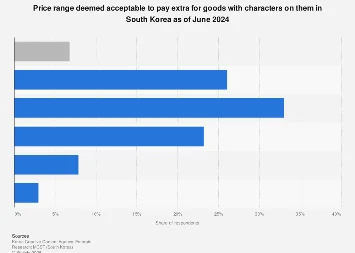
A recent survey conducted in South Korea during May and June 2024 reveals a significant consumer appetite for licensed character merchandise, indicating a strong willingness to incur additional costs for products adorned with beloved fictional figures. The study, which polled 3,500 individuals online, provides granular insights into the price premiums consumers deem acceptable, painting a detailed picture of the economic power of character branding in one of Asia’s most dynamic markets.
While specific percentages and exact price ranges remain behind a paywall, the overarching findings suggest that a substantial portion of the South Korean populace is amenable to paying more for goods featuring characters. This sentiment is not confined to a niche demographic; rather, it appears to be a widespread consumer behavior. The data implies that the emotional connection and perceived value derived from these characters translate directly into purchasing power, allowing brands to command higher prices for their character-infused offerings.
The survey highlights a tiered willingness to pay extra. A notable segment of respondents indicated they would accept price increases ranging between a certain percentage and a higher threshold. This suggests a spectrum of attachment and perceived value, where some consumers are satisfied with a moderate premium, while others are willing to stretch their budgets further for their favorite characters. This nuanced understanding is critical for businesses looking to optimize pricing strategies for character merchandise.
Furthermore, the data points to a significant portion of consumers—specifically, one in four respondents—who are prepared to pay a premium of up to a certain percentage. This group represents a core market segment that actively seeks out and values character-branded products, often viewing them as more than just functional items but as extensions of their personal identity and interests. This willingness to pay a more substantial premium underscores the deep cultural integration and emotional resonance of popular characters.
This phenomenon is not unique to South Korea, but the country’s robust pop culture scene, fueled by K-pop, K-dramas, and a thriving animation industry, provides fertile ground for character licensing. Global brands and domestic enterprises alike leverage this cultural capital to enhance product appeal and drive sales. The economic impact of this willingness to pay more is multifaceted. For manufacturers and retailers, it translates into higher profit margins on character-licensed goods. For intellectual property holders, it signifies the immense commercial value of their character assets, encouraging further investment in character development and licensing ventures.
The global market for character merchandise is substantial and growing. According to industry reports, the global licensed character market is projected to reach hundreds of billions of dollars in the coming years, with Asia Pacific being a key growth engine. South Korea, with its advanced digital economy and trend-setting consumer base, plays a pivotal role in this expansion. The nation’s consumers are early adopters of new trends and possess a high disposable income, making them particularly receptive to premium-priced goods that align with their lifestyle and entertainment preferences.
Several factors contribute to this consumer behavior. Firstly, the strong emotional connection forged through media consumption is paramount. Characters from popular dramas, movies, animated series, and even video games often become akin to personal friends or aspirational figures for consumers. This emotional investment creates a sense of loyalty and a desire to own tangible representations of these characters. Secondly, character goods often serve as status symbols or conversation starters within social circles. Owning exclusive or limited-edition merchandise can signify a consumer’s dedication to a particular fandom or their awareness of current cultural trends.
The rise of social media further amplifies this effect. Consumers frequently share their purchases online, creating a feedback loop that encourages others to acquire similar items. Influencer marketing, where popular personalities endorse character merchandise, also plays a significant role in shaping consumer perceptions and driving demand.
From an economic perspective, the premium consumers are willing to pay for character goods reflects a broader trend in consumer behavior: the increasing value placed on experiences and emotional fulfillment over mere product utility. This shift is particularly evident in developed economies like South Korea, where basic needs are largely met, and consumers seek goods that offer added value in terms of entertainment, self-expression, and social connection.
The survey’s timing, in mid-2024, suggests that this willingness to pay more is not a fleeting trend but an established facet of the South Korean consumer landscape. Businesses that can effectively tap into the emotional resonance of characters, whether through original creations or strategic licensing partnerships, are well-positioned to capitalize on this lucrative market segment. The ability to translate character popularity into tangible revenue streams, through premiums that consumers willingly accept, is a testament to the evolving nature of value in the modern economy.
The implications for businesses extend beyond simple product pricing. It suggests that investment in strong character development, compelling storytelling, and effective brand collaborations can yield significant financial returns. The creation of unique character universes and the cultivation of dedicated fan bases are becoming increasingly important strategies for market differentiation and revenue generation. As South Korea continues to be a global trendsetter in entertainment and digital culture, understanding and catering to this willingness to pay a premium for character-adorned goods will remain a key determinant of success for a wide array of industries, from consumer electronics and fashion to food and beverage and lifestyle products. The data indicates that the intangible appeal of a well-loved character is a tangible economic asset.