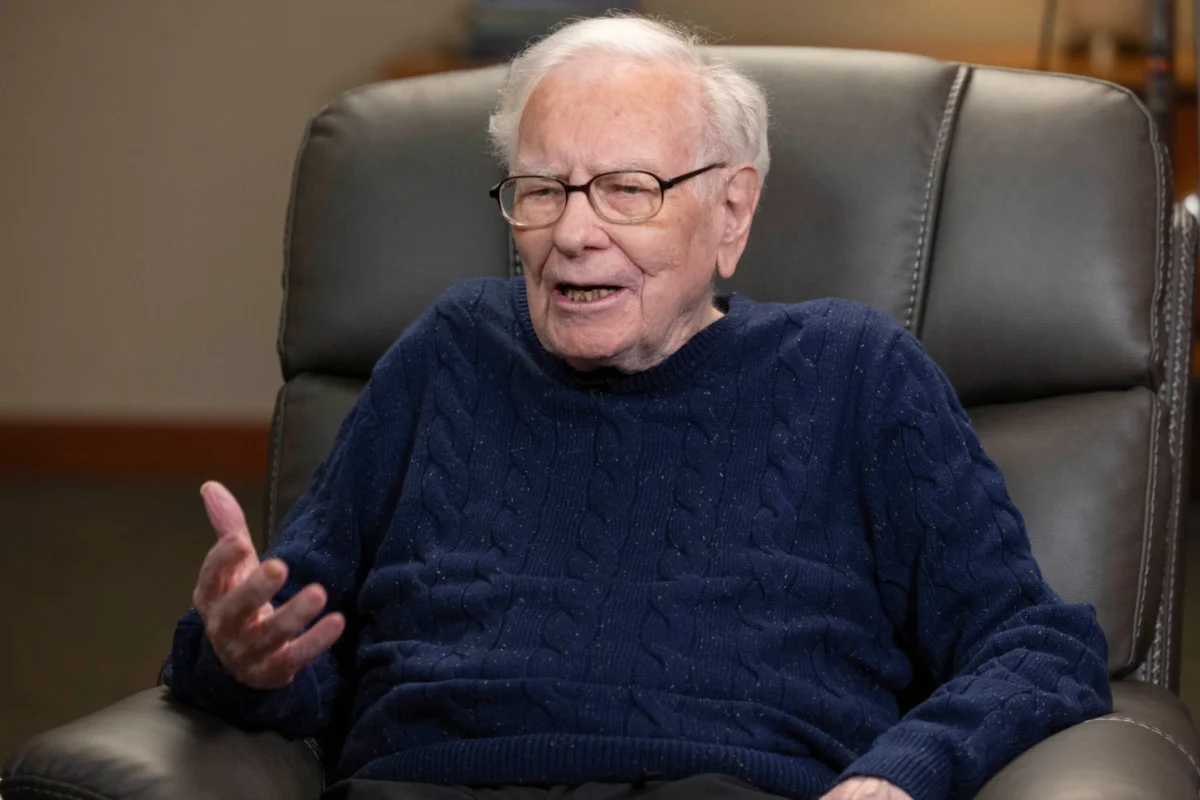
The landscape of global philanthropy is undergoing a seismic shift as Warren Buffett, the 95-year-old chairman and CEO of Berkshire Hathaway, redefines the terminal destination of his vast fortune. In a series of recent disclosures and candid reflections, the legendary investor has signaled a departure from his long-standing reliance on the Bill & Melinda Gates Foundation, choosing instead to empower a new generation of family-led stewardship. This transition, while rooted in succession planning, has been underscored by Buffett’s recent commentary on the reputational complexities surrounding his long-time friend and collaborator, Bill Gates.
For nearly two decades, the partnership between Buffett and Gates represented the pinnacle of institutional giving. Since 2006, Buffett has funneled more than $47 billion in Berkshire Hathaway stock into the Gates Foundation, providing the fuel for global initiatives in public health, poverty eradication, and education. However, the "Oracle of Omaha" recently confirmed a pivot in his estate strategy, one that places the ultimate responsibility for his remaining wealth—estimated to be worth over $100 billion—into the hands of a charitable trust overseen by his three children: Susie, Howard, and Peter Buffett.
This strategic redirection comes at a time when the public perception of Bill Gates has been complicated by his historical association with the late Jeffrey Epstein. In a detailed interview, Buffett characterized Gates’ interactions with Epstein as "distasteful," though he tempered this assessment with a pragmatic view of human fallibility. Buffett noted that while he had spent considerable time reviewing the details of the association since the beginning of the year, he viewed the lapse as a mistake rather than a disqualifying character flaw. He suggested that in a long career of hiring and befriending thousands, he too had encountered individuals who were not as they initially appeared. Despite this nuanced defense, the decision to exclude the Gates Foundation from his future estate plans suggests a desire for a cleaner, more personal legacy.
The financial implications of this pivot are staggering. This year, rather than the Gates Foundation receiving its customary lion’s share, Buffett directed his annual donations toward four family-linked entities. The Susan Thompson Buffett Foundation, named for his late wife and focused primarily on reproductive health and college scholarships, received approximately 9 million Class B shares, valued at roughly $4.5 billion. Meanwhile, the three foundations managed by his children—the Sherwood Foundation, the Howard G. Buffett Foundation, and the NoVo Foundation—each received 1 million Class B shares, totaling nearly $1.5 billion collectively.

This redistribution of capital reflects a broader trend in high-net-worth philanthropy: the move toward "trust-based" giving and the localization of impact. While the Gates Foundation operates with the bureaucratic precision of a multilateral institution, the Buffett children’s foundations often focus on more targeted, grassroots interventions. Howard Buffett’s foundation, for instance, has become a major player in international food security and conflict resolution, particularly in regions like Ukraine and sub-Saharan Africa. Susie Buffett’s Sherwood Foundation is deeply embedded in the social fabric of Omaha, Nebraska, focusing on early childhood education and social justice. Peter Buffett’s NoVo Foundation explores systemic changes to support marginalized communities and girls’ empowerment.
Buffett’s rationale for this shift is grounded in a decades-long observation of his children’s growth as philanthropists. He admitted that in earlier years, he did not believe they were prepared to manage the immense responsibility of distributing tens of billions of dollars. However, at their current ages—now in their 60s and 70s—Buffett expressed full confidence in their ability to execute his wishes. This transition is not merely about family loyalty; it is a calculated bet on the efficacy of a smaller, more agile governance structure. By placing his children at the helm, Buffett ensures that the "Buffett values" of frugality, common sense, and long-term thinking remain the North Star of his charitable footprint.
From a market perspective, the structured divestment of Buffett’s Berkshire Hathaway holdings is a masterclass in minimizing volatility. Buffett has outlined a clear timeline, stating his intent to dispose of all his Berkshire shares within approximately eight years of his passing. By providing a transparent roadmap, he mitigates the "overhang" risk that often plagues companies when a major shareholder prepares to exit. The conversion of his high-value Class A shares into more liquid Class B shares for charitable distribution allows for a steady, predictable flow of capital into the market without triggering the price shocks that a sudden liquidation might cause.
The broader economic impact of this wealth transfer cannot be overstated. With a total net worth often fluctuating near the $130 billion mark, the eventual disbursement of the Buffett estate will represent one of the largest infusions of private capital into the non-profit sector in human history. To put this in perspective, the annual budget of the World Health Organization is approximately $6.7 billion; the Buffett trust could theoretically fund such an organization for nearly two decades. The shift from the Gates Foundation’s global health focus to the varied interests of the Buffett children means this capital will likely be spread across a more diverse array of sectors, potentially disrupting existing funding models in fields ranging from regenerative agriculture to criminal justice reform.
Despite the shift in financial direction, the personal bond between Buffett and Gates appears to endure, albeit in a modified form. Buffett confirmed that the two remains in contact, having shared a three-hour meeting in Omaha as recently as a few weeks ago. For his part, Gates has remained gracious, describing Buffett’s historical support as "unprecedented" and crediting his contributions with saving millions of lives. The Gates Foundation, which boasts an endowment of over $75 billion, remains well-capitalized even without Buffett’s future estate, though the loss of his ongoing annual contributions will eventually necessitate a recalibration of its long-term spending plans.

Expert analysts in the philanthropic sector suggest that Buffett’s move may inspire other signatories of the Giving Pledge—the campaign he and Gates launched in 2010 to encourage billionaires to give away the majority of their wealth—to reconsider their own succession strategies. We are entering an era where "Big Philanthropy" is being scrutinized for its influence on public policy and its lack of democratic accountability. By shifting toward family foundations that often operate with less global fanfare but more local specificity, Buffett may be signaling a preference for a more decentralized model of billionaire benevolence.
The human element of this story is also poignant. At 95, Buffett is acutely aware of his mortality, a fact highlighted by his recent recovery from a broken leg and subsequent surgery. His focus has sharpened on the "how" of his legacy, not just the "how much." He has instructed his children that the responsibility of giving is theirs to bear, emphasizing that the money belongs to the world and it is their job to see it used well.
In the final analysis, Warren Buffett’s pivot is a testament to the evolving nature of wealth and responsibility. It acknowledges that even the most successful institutional partnerships can reach a natural conclusion and that the most enduring legacies are often those that return to their roots. While the "distasteful" shadow of the Epstein controversy may have served as a catalyst for reflection, the resulting strategy is one of profound intentionality. As the Berkshire Hathaway shares begin their decade-long journey from the corporate vaults of Omaha to the front lines of global and local causes, the world will be watching to see how the next generation of Buffetts handles the weight of the Oracle’s ultimate investment.