In the high-stakes laboratories of Shenzhen and the tech hubs of Beijing, a new industrial revolution is being forged in steel, silicon, and synthetic muscle. As the global race for artificial intelligence moves from the digital screen to the physical world—a transition often referred to as "embodied AI"—China’s humanoid robot startups are no longer content with being experimental curiosities. They are entering a period of aggressive commercialization, characterized by a frantic dash toward public equity markets. This movement is driven by a singular, cold economic reality: in a sector where research and development costs are astronomical and the window for market dominance is narrow, an initial public offering (IPO) is no longer a milestone of success, but a prerequisite for survival.
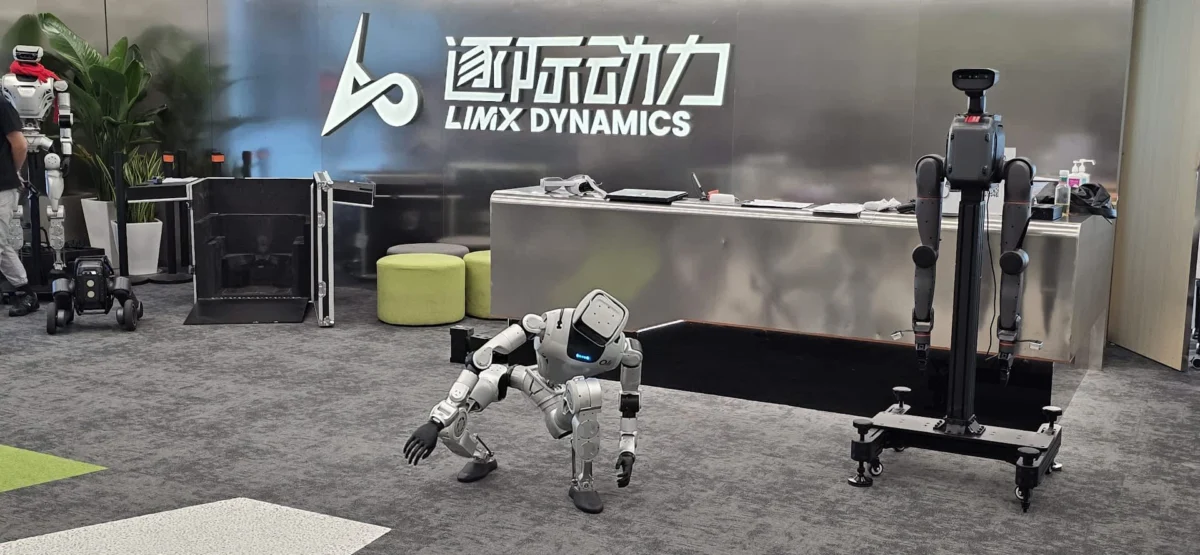
The urgency of this trend is best exemplified by LimX Dynamics, a Shenzhen-based humanoid specialist that has transitioned from a pandemic-era startup to a pre-IPO juggernaut in just over four years. Having recently secured a $200 million pre-IPO funding round, LimX has reached a valuation of approximately 15 billion yuan ($2.21 billion). For founder Will Zhang, the decision to go public is not a matter of if, but a matter of immediate timing. Zhang’s perspective is informed by the recent history of China’s high-tech manufacturing sectors, specifically the electric vehicle (EV) boom of the late 2010s. He draws a direct parallel between the current humanoid robotics landscape and the trajectory of "Nio, Xpeng, and Li Auto," the trio of Chinese EV manufacturers that listed in the United States between 2018 and 2020. In Zhang’s view, the robotics industry has reached a technical maturity where the "0 to 1" phase of basic innovation is complete. The challenge now is the "1 to 100" phase of mass production and market penetration. Companies that fail to secure the massive capital required for this scale-up risk following the path of WM Motor—a once-promising EV maker that ultimately withered and disappeared due to a lack of sustained liquidity.
This "listing is a must" mentality is pervasive across a sector that now counts over 100 active humanoid robotics companies within China. The surge in activity is backed by a staggering influx of capital. In the second quarter of the current fiscal year alone, investment in the Chinese humanoid sector reached 47.09 billion yuan ($6.95 billion). This represents a more than 100% increase from the first quarter and a more than six-fold increase compared to the same period in the previous year. This vertical trajectory in funding highlights a shift in investor sentiment; where capital was once cautious about the long-term viability of bipedal machines, it is now terrified of missing out on what many analysts believe will be a trillion-dollar global market.
The rush to the public markets is being facilitated by a regulatory environment in China that is increasingly favorable toward "hard tech" and "New Productive Forces"—a central policy theme aimed at upgrading China’s industrial base. Regulators have fast-tracked the approval process for companies like Unitree, which is eyeing a listing in Shanghai. Meanwhile, the Hong Kong Stock Exchange is processing hundreds of applications, many of which represent the next generation of industrial and collaborative robotics. Morgan Stanley, in a recent assessment of the sector, noted that the competitive pressure is only set to intensify as more players like DeepRobot and Leju prepare their own filings. The investment bank forecasts that China’s industrial robot market will grow by 18% this year, with humanoid shipments alone expected to reach 50,000 units.
However, the motivations for these IPOs extend beyond domestic competition. There is a profound geopolitical and global market dimension to the Chinese robotics push. As the United States and Europe tighten trade restrictions on various Chinese technologies, the humanoid robotics sector is looking toward alternative markets to establish its global footprint. LimX Dynamics, for instance, has already unveiled a multi-year strategy to export thousands of humanoid units to the Middle East—a region increasingly looking to diversify its economy through high-tech adoption. Furthermore, the company is already shipping its entertainment-focused "Luna" model to customers in South Korea. By listing on international-friendly exchanges like Hong Kong, these startups can attract the diverse capital necessary to fuel their global ambitions while bypassing some of the political friction associated with purely mainland-funded entities.
The participation of foreign venture capital in recent funding rounds underscores this international appeal. LimX’s latest round saw significant contributions from Stone Venture in the UAE, GGG in Italy, and Redstone VC in Germany. These investors are not just buying into a single company; they are betting on the Chinese supply chain’s unique ability to drive down the cost of complex hardware. Much like it did with smartphones and solar panels, China aims to utilize its massive manufacturing ecosystem to make humanoid robots affordable for commercial use. The involvement of strategic domestic partners, such as the precision parts manufacturer Lens Technology and Nio Capital, suggests a tightening of the vertical supply chain—from the sensors and actuators to the AI chips that serve as the robot’s brain.
Despite the optimism, the path to a successful IPO and long-term viability is fraught with technical and economic hurdles. The transition from a controlled laboratory environment to a chaotic real-world setting—such as a warehouse, a hospital, or a household—remains the "holy grail" of the industry. While the "0 to 1" innovation phase may be over, the "1 to 100" phase requires solving the "generalization" problem: creating a robot that can perform multiple tasks without specific reprogramming. This requires immense computational power and vast amounts of training data, both of which are expensive.
Moreover, the humanoid sector faces stiff competition from established global giants and well-funded Western startups. Tesla’s Optimus program, backed by Elon Musk’s vision and the company’s massive data-gathering capabilities, remains a formidable benchmark. Similarly, U.S.-based firms like Figure AI and Boston Dynamics are pushing the boundaries of agility and intelligence. The Chinese strategy appears to be one of "speed and scale." By going public early, Chinese startups hope to build a "war chest" that allows them to iterate faster than their competitors, sacrificing short-term profitability for long-term market share.
The economic impact of this robotics surge could be transformative for China’s domestic economy. As the nation grapples with a shrinking labor force and an aging population, the deployment of "embodied AI" offers a potential solution to labor shortages in manufacturing and elderly care. The Chinese government’s focus on "embodied AI" as a national priority reflects a belief that these machines will eventually become as ubiquitous as the automobile. By integrating advanced robotics into its industrial fabric, China seeks to maintain its status as the "world’s factory" even as labor costs rise.
As the confidential reviews for these IPOs proceed, the global financial community is watching closely. The success or failure of these listings will serve as a bellwether for the entire AI industry. If LimX Dynamics and its peers can successfully navigate the transition from private venture-backed startups to public companies, they will set a precedent for the commercialization of high-end robotics. If they falter, it may signal that the market’s expectations have outpaced the technology’s current capabilities.
For now, the momentum remains firmly with the innovators. The influx of billions of yuan, the support of international VCs, and the clear strategic mandate from Beijing have created a "perfect storm" for the robotics sector. As Will Zhang noted, the timing is everything. In the world of high-tech manufacturing, being first is often more important than being perfect. By racing to the stock exchange, China’s humanoid pioneers are betting that the capital they raise today will provide the oxygen they need to breathe in the competitive atmosphere of tomorrow. The race for the future of work has moved from the drawing board to the trading floor, and for the world’s humanoid robot makers, there is no turning back.