The intersection of silicon-valley messianism and Wall Street’s unforgiving leverage mechanics reached a volatile flashpoint this week as Situational Awareness, the hedge fund helmed by former OpenAI researcher Leopold Aschenbrenner, underwent a catastrophic liquidation. In a span of mere days, a fund that managed an estimated $45 billion at its zenith saw its public holdings gutted, leaving behind a residual portfolio valued at approximately $10 billion. The collapse serves as a stark memento mori for the current era of artificial intelligence investment, illustrating how even the most sophisticated technological foresight can be dismantled by the blunt instruments of margin calls and market volatility.
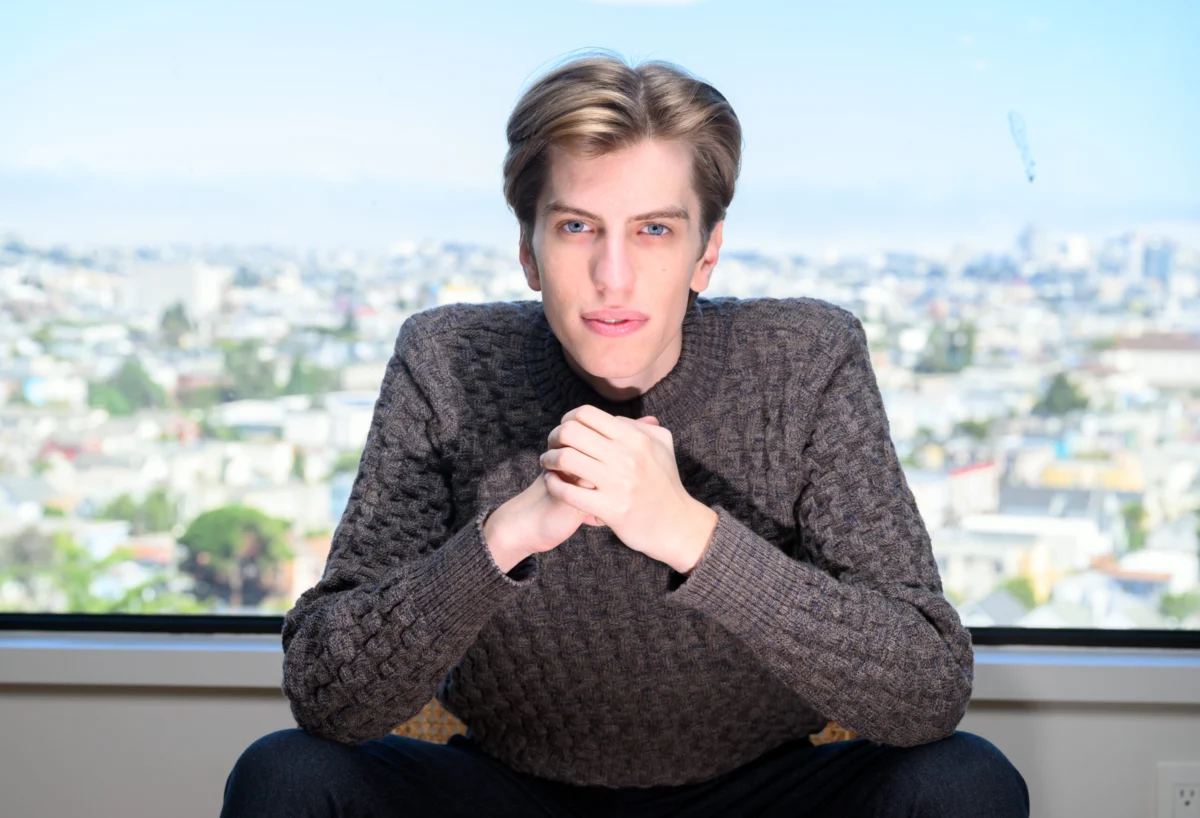
Aschenbrenner, a 24-year-old prodigy and Columbia University valedictorian, had rapidly ascended to the status of a digital-age prophet. His reputation was cemented by a 165-page manifesto, also titled "Situational Awareness," which detailed a future where artificial general intelligence (AGI) would be achieved within the decade, fundamentally altering global geopolitics and the economic order. To his adherents, Aschenbrenner was the rare individual who possessed the technical depth to understand the transformer architecture and the economic vision to monetize its trajectory. To his detractors, he represented a dangerous blend of hubris and inexperience, a "paper billionaire" whose conviction in the inevitable march of AI blinded him to the cyclical realities of public equity markets.
The mechanics of the fund’s downfall were rooted in an aggressive utilization of leverage that shocked seasoned market observers. Reports indicate that Situational Awareness operated with leverage as high as 400%, a strategy that amplifies gains during bull runs but leaves no margin for error during even minor corrections. When the semiconductor sector—the backbone of the AI trade—began to falter, the fund’s heavily concentrated bets on high-growth, high-volatility names like SK Hynix and CoreWeave triggered a cascade of margin calls. As the value of the underlying collateral dipped, lenders demanded more capital, forcing Aschenbrenner into a "fire sale" position.
In a move that underscored the severity of the crisis, the fund was forced to offload its entire leveraged book of public investments to Citadel, the massive multi-strategy firm led by Ken Griffin. These transactions typically occur at a significant discount to market prices, as the buyer provides immediate liquidity in exchange for favorable terms. The intervention of Citadel, a firm known for its rigorous risk management and predatory efficiency in distressed scenarios, highlighted the transfer of wealth from the "visionary" speculative class to the established titans of institutional finance.
The timing of the collapse coincided with a broader cooling of the AI fervor that has dominated global markets for the past 18 months. While the PHLX Semiconductor Index (SOX) has seen historic gains, investors have grown increasingly wary of the "capex-to-revenue" gap. Major technology firms are spending hundreds of billions on Nvidia H100 clusters and specialized data center infrastructure, yet the tangible returns on software and services have yet to match the scale of the investment. Aschenbrenner’s fund was essentially a pure-play bet on the continued, uninterrupted expansion of this infrastructure. When SK Hynix, a critical supplier of High Bandwidth Memory (HBM) for AI chips, faced selling pressure, the leveraged structure of Situational Awareness turned a routine market rotation into a terminal event for its public book.
Aschenbrenner’s trajectory into the upper echelons of the AI elite was as rapid as his fund’s decline. Born in Germany and graduating high school at 15, he moved to the United States and quickly integrated himself into the "Effective Altruism" (EA) community. This philosophical movement, which advocates for using data and reason to maximize one’s positive impact on the world, has become the dominant ideology among many AI safety researchers and Silicon Valley founders. However, the movement has also faced intense scrutiny following the collapse of the FTX cryptocurrency exchange, where Aschenbrenner previously worked for the philanthropic "Future Fund" under Sam Bankman-Fried.

After the FTX implosion, Aschenbrenner transitioned to OpenAI, joining the "Superalignment" team led by co-founder Ilya Sutskever. His tenure there was marked by both brilliance and friction. He reportedly authored internal memos warning that the company’s security protocols were insufficient to guard against state-sponsored espionage, particularly from China. This focus on "national security AI" became a cornerstone of his later investment thesis. His departure from OpenAI earlier this year was contentious; the company cited a breach of confidentiality, while Aschenbrenner maintained he was being penalized for raising valid safety and security concerns.
Turning his exit into an opportunity, Aschenbrenner leveraged his "OpenAI insider" status to raise $225 million in seed capital from a "who’s who" of tech billionaires, including Stripe founders Patrick and John Collison, and former GitHub CEO Nat Friedman. This capital base, combined with massive debt facilities, allowed him to build a position in the market that rivaled long-standing institutional funds. The allure for investors was clear: Aschenbrenner promised "situational awareness"—the ability to see the exponential curve of AI progress before it became obvious to the "lagging" analysts on Wall Street.
The economic impact of this liquidation extends beyond a single fund’s balance sheet. It raises critical questions about the stability of the "AI trade" and the systemic risks posed by highly leveraged, thematic investment vehicles. In the broader economic context, the AI boom has been compared to the fiber-optic build-out of the late 1990s. While the long-term utility of the technology may be indisputable, the short-term financial vehicles used to bet on it are often fragile. When a $45 billion entity is forced to liquidate, it creates a "liquidity vacuum" that can depress the prices of even the highest-quality assets, leading to a contagion effect across the tech sector.
Furthermore, the structure of Situational Awareness’s remaining assets reveals a deepening divide between public and private valuations. While the fund’s public equity book has been decimated, it reportedly still holds significant stakes in private AI firms, most notably Anthropic. These private holdings are much harder to value and even harder to liquidate quickly. The discrepancy between the daily-quoted prices of semiconductor stocks and the multi-billion-dollar private valuations of AI labs creates a precarious situation for investors who are "locked in" to the private side while their public hedges crumble.
The social and professional fallout for Aschenbrenner is equally significant. His personal life has become intertwined with the industry he seeks to dominate; he is currently engaged to Avital Balwit, the chief of staff to the CEO of Anthropic. This creates a complex web of interests that critics point to as evidence of the insular, "incestuous" nature of the AI elite. As the fund grappled with its near-total liquidation, Aschenbrenner was reportedly preparing for his wedding, a juxtaposition that many on Wall Street viewed as emblematic of a lack of professional focus.
Ultimately, the saga of Situational Awareness is a cautionary tale regarding the limits of intellectual brilliance in the face of market physics. Aschenbrenner’s 165-page essay may indeed be a prescient roadmap for the future of intelligence, but in the world of high-finance, being right too early—or being right with too much leverage—is indistinguishable from being wrong. As the dust settles on the Citadel transaction, the AI sector must now grapple with the reality that "situational awareness" requires more than just understanding the next generation of neural networks; it requires an awareness of the age-old cycles of greed, fear, and the inevitable return to the mean.
The broader market remains at a crossroads. As institutional investors digest the lessons of Aschenbrenner’s fall, the focus is likely to shift from "visionary" bets toward more disciplined, cash-flow-positive entries into the AI space. The era of the "prophet-investor" may be giving way to a more sober period of infrastructure consolidation, where the winners are determined not by the length of their manifestos, but by the resilience of their balance sheets. For Aschenbrenner, the transition from a $45 billion titan to a cautionary headline happened in the blink of an eye—a speed of change that even his most aggressive AI models might not have predicted.