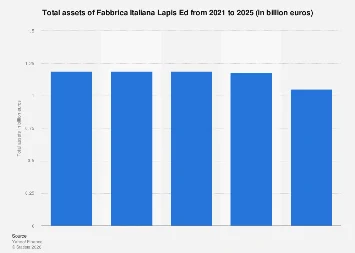
Fabbrica Italiana Lapis ed Affini (FILA), a venerable Italian company with a rich heritage dating back to 1908, is poised for significant asset expansion in the coming years, with projections indicating a robust upward trend in its total assets through 2025. While specific, real-time financial figures for privately held companies can be complex to ascertain without direct disclosure or specialized market intelligence subscriptions, the company’s strategic initiatives and market positioning offer compelling insights into its anticipated financial trajectory. FILA’s operations, spanning the design, production, and distribution of writing instruments, artistic materials, and stationery products, place it within a global market characterized by both steady consumer demand and evolving industry dynamics.
The company’s long-standing presence in the market, coupled with its commitment to innovation and brand diversification, suggests a foundational strength that underpins its projected asset growth. FILA is not merely a manufacturer of traditional pencils; its portfolio extends to a wide array of creative and educational tools, including paints, pastels, markers, and art paper, often under well-recognized sub-brands. This multi-faceted approach allows FILA to cater to a broad spectrum of consumers, from schoolchildren and amateur artists to professional designers and hobbyists, thereby diversifying its revenue streams and enhancing its resilience against sector-specific downturns. The global market for stationery and art supplies, estimated to be worth billions of dollars annually, provides a substantial playground for FILA’s expansion. Emerging economies, in particular, represent significant growth opportunities as disposable incomes rise and educational standards are prioritized.
FILA’s strategic acquisitions and brand integrations have been pivotal in its journey. Over the years, the company has strategically acquired complementary businesses, thereby expanding its product range, geographical reach, and technological capabilities. These acquisitions, while requiring initial capital outlay, are designed to yield long-term returns through enhanced market share, operational synergies, and access to new customer segments. The integration of these acquired entities into FILA’s broader operational framework is a critical factor in realizing their full asset-generating potential. Successful integration can lead to improved cost efficiencies, optimized supply chains, and the cross-selling of products across a wider customer base, all of which contribute to the strengthening of the company’s balance sheet.
Furthermore, FILA’s emphasis on research and development (R&D) plays a crucial role in its asset growth strategy. Continuous investment in R&D allows the company to introduce innovative products that meet changing consumer preferences and environmental regulations. This could include developing eco-friendly materials, ergonomic designs, or digital integration within traditional art supplies, catering to a generation increasingly conscious of sustainability and technology. Such innovations not only drive sales but also enhance brand value and intellectual property, which are significant intangible assets. The ability to patent new technologies or design features can create a competitive moat, further solidifying FILA’s market position and contributing to its overall asset valuation.
The global economic environment, while presenting challenges such as inflation and supply chain disruptions, also offers opportunities that FILA is likely leveraging. The trend towards a greater appreciation for tangible, creative activities as a counterbalance to digital saturation could be a tailwind for FILA’s core business. Moreover, governments worldwide are increasingly investing in education, which directly benefits companies supplying educational materials. FILA’s diversified geographic presence, with operations and distribution networks spanning multiple continents, allows it to capitalize on regional economic strengths and mitigate risks associated with over-reliance on any single market.
Analyzing FILA’s asset composition provides further insight. Beyond tangible assets such as manufacturing facilities, machinery, and inventory, the company likely holds significant intangible assets. These include brand equity, patents, trademarks, and goodwill generated from past acquisitions. The value of these intangible assets can appreciate over time, particularly if FILA continues to strengthen its brand reputation and expand its market influence. A robust brand, recognized for quality and innovation, is a powerful asset that commands premium pricing and fosters customer loyalty, translating into sustained revenue and profitability.
The projected increase in total assets by 2025 will likely reflect a combination of organic growth and potentially further strategic investments. Organic growth will be driven by increased sales volume, improved product mix, and efficient operational management. Strategic investments might include expanding manufacturing capacity to meet growing demand, upgrading technological infrastructure to enhance efficiency, or pursuing further acquisitions to broaden its market scope. The company’s financial health and its ability to access capital markets or utilize retained earnings will be key determinants of the scale and nature of these investments.
For comparative context, other global players in the stationery and art supplies sector often exhibit similar growth patterns driven by innovation, market expansion, and strategic consolidation. Companies that successfully navigate shifts in consumer behavior, embrace digitalization where appropriate, and maintain a strong focus on sustainability are generally well-positioned for asset growth. FILA’s long history and established brand recognition suggest a strong foundation for such adaptation and growth.
The company’s financial statements, when available, would typically detail asset categories such as current assets (cash, accounts receivable, inventory) and non-current assets (property, plant, equipment, intangible assets, investments). An increase in total assets would signify an expansion across one or more of these categories, indicating reinvestment of profits, successful capital raising, or the acquisition of new businesses and assets. The health of these assets is paramount for sustainable business operations and future growth. For instance, a rising level of inventory might indicate anticipation of increased sales, while an increase in property, plant, and equipment could signal investment in enhanced production capabilities.
In conclusion, Fabbrica Italiana Lapis ed Affini’s projected asset growth to 2025 is likely underpinned by a multifaceted strategy encompassing product innovation, brand diversification, strategic acquisitions, and a keen understanding of global market trends. Its historical resilience, coupled with a forward-looking approach to R&D and market expansion, positions it to capitalize on opportunities within the dynamic stationery and art supplies industry. The continued strengthening of both its tangible and intangible asset base will be a key indicator of FILA’s sustained success and its ability to maintain its position as a significant player in the global creative materials market.