When a container is meticulously hoisted ashore at Jawaharlal Nehru Port, it embarks on a swift journey aboard a high-capacity freight train destined for the industrial hubs of Dadri and Khurja in Uttar Pradesh, a distance spanning 1,500 kilometers. The remarkable efficiency of this operation sees the container unloaded a mere day later, a feat that significantly outpaces logistics in many other global economies, including the United States. This expedited transit is largely attributable to the completion of the Western Dedicated Freight Corridor, a monumental project that reached a pivotal milestone in January 2026 with the final electrification of its extensive route. This electrification not only marks the culmination of India’s longest dedicated rail freight link but also propels the nation into the ranks of countries with one of the world’s most extensive electrified rail networks, now achieving 100 percent electrification across its entire railway system – a benchmark rivaled by nations like Switzerland, renowned for its rail prowess.
In stark contrast, the United Kingdom has electrified approximately 37 percent of its rail network, while the United States has electrified a mere one percent. The pace of India’s electrification efforts has been nothing short of astonishing; over the past six years, Indian Railways has consistently added more than 15 kilometers of electrified track daily. This relentless expansion has resulted in an impressive 70,000 kilometers of electrified broad-gauge rail, forming a critical component of a comprehensive national strategy to modernize vital infrastructure sectors including transport, energy, and shipping, spearheaded by Prime Minister Narendra Modi’s administration. This significant infrastructure achievement serves as a powerful symbol of India’s ongoing economic rejuvenation, a transformation that has, to a notable extent, eluded widespread global attention.
The Evolving Landscape of "Modinomics"
Since Prime Minister Narendra Modi assumed power in 2014, ushering in an era distinct from decades of socialist governance, the economic policies enacted have been broadly categorized under the umbrella term "Modinomics." Initially coined by critics who questioned their efficacy, the term has since been adopted by supporters who argue that these reforms were long overdue in a nation historically characterized by its governance complexities. India, the seventh-largest country by geographical area and one of the most culturally diverse, is also the world’s most populous nation with a citizenry exceeding 1.47 billion. Navigating this vast and varied landscape presents inherent challenges. As noted in a comprehensive study published by Springer Nature, "Significant hurdles persist, including entrenched bureaucracy, social fragmentation, and deep-seated political divisions," underscoring the intricate environment in which reforms are implemented.
One of the most significant challenges has been the labor market. In 2014, Prime Minister Modi introduced sweeping changes to employment laws aimed at curbing the influence of powerful trade unions and stimulating job creation. This reform triggered a nationwide 24-hour strike involving nearly 150 million workers across banking, manufacturing, and construction sectors, resulting in an estimated economic loss of $3.5 billion. Even auto-rickshaw drivers participated in the strike in solidarity. Despite initial resistance, these reforms have demonstrably yielded results. According to data from Australia’s Treasury, the Indian economy maintained an annual growth rate between 6.5 and seven percent throughout Modi’s first decade in power (up to 2024), consistently positioning it among the world’s fastest-growing major economies, even amidst the significant economic contraction experienced in 2020 due to the COVID-19 pandemic. Projections from major international financial institutions, including the International Monetary Fund, forecast a sustained robust growth trajectory for the foreseeable future, extending to 2035.
However, within India’s dynamic political arena, Prime Minister Modi continues to face criticism for the pace and nature of reforms, even those widely acknowledged as necessary. Among the most impactful and arguably most overdue measures was the demonetization of currency. Announced with very short notice on November 8, 2016, the 500 and 1,000 rupee banknotes were invalidated. The primary objective of this drastic measure was to combat the pervasive issue of "black money"—untaxed cash held outside the formal economy, often used for illicit activities and contributing to terrorism financing. This move encompassed approximately 86 percent of the total currency in circulation.
The effectiveness of demonetization remains a subject of economic debate. While some economists point to the short-term economic disruption it caused, others highlight the long-term damage inflicted by the persistent parallel economy. A year after the policy change, Bhaskar Chakravorti, Dean of Global Business at The Fletcher School at Tufts University, writing for the Brookings Institute, observed that only about one percent of Indians were declaring their earnings for tax purposes. The demonetization policy effectively channeled a significant portion of this untaxed wealth back into the formal banking system. By the deadline of December 30, 2016, banks had reportedly received 14.97 trillion rupees ($220 billion), representing 97 percent of the demonetized currency. Furthermore, demonetization provided a substantial impetus to the adoption of cashless payment methods, including mobile wallets like Paytm. Crucially, in the intervening years, India has witnessed a widening of its tax base. This initiative was complemented by a comprehensive overhaul of the complex system of indirect taxation, leading to the introduction of a unified Goods and Services Tax (GST).
Ambitious National Development Goals
The Modi administration has, at times, been characterized by its ambitious goal-setting and the pronouncements of what critics often describe as "grandiose claims." A cornerstone of its economic strategy is the "Make in India" initiative, launched in 2014 with the aim of transforming the nation into a global manufacturing powerhouse through measures such as encouraging foreign investment and technology transfer. The initial targets set for this program were notably ambitious, including a doubling of the manufacturing sector’s growth rate, the creation of 100 million jobs in the sector by 2022, and an increase in manufacturing’s contribution to the Gross Domestic Product (GDP) to 25 percent by the same year. While manufacturing employment has seen growth, its share of GDP has experienced a decline, and job creation has fallen short of the ambitious targets.
A significant contributing factor to these outcomes is the structure of India’s manufacturing sector, which remains largely comprised of small enterprises. Approximately three-quarters of manufacturers employ fewer than five paid staff, and these smaller entities exhibit considerably lower productivity compared to larger Indian manufacturers and their counterparts in Western nations, particularly the United States. The International Monetary Fund (IMF) identifies complex compliance requirements, rigid labor regulations, and restrictive product market rules as significant impediments to business expansion, stating, "Easing these constraints would help businesses expand and, in turn, dramatically lift productivity."
Despite these persistent challenges, "Modinomics" has facilitated a strategic reorientation of the manufacturing sector away from traditional heavy industries towards higher-margin and high-growth sectors such as electronics, defense, and electric vehicles (EVs). The "Make in India" initiative, while not fully meeting its initial employment targets, has played a role in quadrupling the value of mobile phone production between 2016 and 2024 and establishing India as a leading global manufacturer of solar panels. The government has also set an aggressive target for a fully electric transportation sector by 2030, a deadline even more ambitious than that set by China. When this target was announced in 2015, it appeared exceptionally aspirational, given that only one percent of India’s 200 million vehicles were electric at the time, and only one domestic automotive group offered a battery-powered car.
The FAME (Faster Adoption and Manufacturing of Electric Vehicles in India) program was designed to prioritize the transition of three-wheelers (e-rickshaws) and commercial vehicles, followed by buses and then passenger cars. To accelerate this shift, manufacturers were offered tax incentives for producing vehicles without batteries, with the intention that these would be readily available for battery swapping at dedicated stations, a process designed to take approximately two and a half minutes. This strategy aimed to make battery-less vehicles up to 70 percent cheaper than their battery-equipped counterparts. The potential of this model attracted interest from major automotive players, including Honda and Piaggio, the latter establishing a wholly-owned subsidiary in India to pursue battery-swapping strategies. Energy giant Shell also recognized the strategic advantages, with its global head of battery swapping, Kasturi Gomatham, highlighting how the technology "decouples grid from that of the dynamic EV-charging needs and decouples battery from the vehicle itself," thereby mitigating the upfront cost burden for consumers and extending vehicle lifespan.
The World Economic Forum has recognized battery-swapping technology as a burgeoning trend with the potential to significantly accelerate EV sales. Bengaluru-based startup SUN Mobility embraced this model, establishing battery exchange stations across numerous cities and offering a pay-as-you-go subscription service. Concurrently with the FAME initiative, the Indian government directed its refineries to invest $46 billion in transitioning to lower-emission fuels, a decision supported by the Supreme Court.
A recent analysis by the International Society of Markets and Development (ISMD) indicates substantial progress in India’s EV market, largely propelled by systematic government policies aimed at reducing urban emissions and promoting sustainable mobility. While acknowledging that the FAME program has faced challenges in meeting all its objectives, ISMD notes its crucial role in shaping the EV ecosystem by addressing issues of affordability, infrastructure, and market growth. The FAME program has demonstrably increased EV adoption nationwide by approximately 50 percent, primarily within the two-wheeler segment. Passenger cars, while representing a smaller portion of overall vehicle ownership in India, are also seeing increased adoption, albeit at a slower pace than two and three-wheelers. SUN Mobility, for instance, has reported over 1.4 million battery swaps monthly across hundreds of stations in multiple cities, indicating strong traction for the battery-swapping model.
A Transformative Energy Revolution
The rise of the e-rickshaw signifies a profound shift in India’s energy future. With approximately 270 million two-wheelers and 10 million three-wheelers—the preferred mode of transport in bustling urban centers for deliveries and ride-hailing—India’s pivot from fossil fuels to clean energy is accelerating, with these vehicles playing a crucial role in driving this transition. Vehicles currently account for roughly half of India’s oil imports, a figure projected to decline as e-rickshaws become more prevalent, contributing to Prime Minister Modi’s ambitious goal of achieving a zero-emission nation by 2070. Projections from the Rocky Mountain Institute suggest that by 2030, as much as 80 percent of new two and three-wheeler sales in India could be electric, making a significant contribution to the nation’s emission reduction targets. The volume of EV sales has surged dramatically, from just over 95,000 in 2017 to 1.6 million in 2024.
The Atlas think tank summarizes this trend, stating, "EV sales in India have seen a remarkable upward trajectory in recent years, largely driven by growth in the two- and three-wheeler segments," reporting a compound annual growth rate of 61 percent. In parallel, the world’s largest renewable energy project is underway in the salt deserts bordering Pakistan. The Khavda renewable energy park, spanning an area five times the size of Paris, is designed to generate 30 gigawatts of green energy through high-efficiency solar modules and hybrid solar-wind systems. Developed by the Indian conglomerate Adani Green Energy, this ambitious project is slated for completion by 2029 and is expected to power over 16 million homes.

Currently, approximately half of India’s installed power capacity is derived from non-fossil fuel sources, including solar, wind, and hydroelectric power. The government has set an ambitious target of achieving 500 gigawatts of non-fossil fuel capacity and producing five million tonnes of green hydrogen by 2030, intended to decarbonize sectors such as steel manufacturing. While some observers initially viewed these targets as overly optimistic, the rapid electrification of the railway network, completed four years ahead of schedule, demonstrates the nation’s capacity to achieve ambitious goals. Despite its continued reliance on coal, described by energy experts as a "critical source for grid stability," India’s energy policy is clearly oriented towards a sustainable future. The nation is actively engaged in afforestation efforts to create a substantial carbon sink and is implementing more scientific water management practices, alongside a focus on preserving the Himalayan ecosystem. These initiatives have led to a significant reduction in India’s emissions intensity by 39 percent between 2005 and 2023, surpassing initial targets. India currently ranks as the world’s third-largest producer of solar energy and is poised to potentially surpass China in the number of solar-powered homes. The growth in renewable energy production is also exceeding official projections.
Revitalizing Maritime India
The ambitious program to revive India’s historically neglected maritime industry has encountered bureaucratic hurdles, including a fragmented federal system and regional political rivalries that have historically impeded inter-state cooperation. Nevertheless, this vital initiative is progressing. With an extensive 11,000-kilometer coastline and its strategic location on the Indian Ocean—the world’s third-largest—India is a crucial maritime nexus connecting it to the Middle East, Africa, South Asia, and Southeast Asia. The nation’s proximity to four critical maritime chokepoints—the Strait of Hormuz, Bab-el-Mandeb, the Strait of Malacca, and the Lombok Strait—coupled with concerns over China’s expanding maritime infrastructure in the Indian Ocean, underscores the strategic importance of this sector. The Indian government has explicitly stated, "Militarisation of the Indian Ocean region is not desirable."
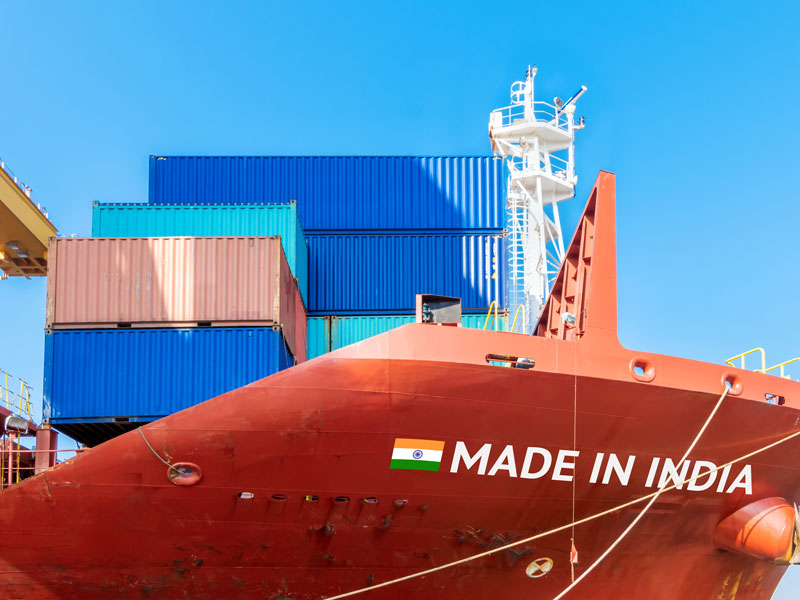
Despite the challenges posed by a sluggish bureaucracy, India’s maritime ambitions have seen promising early developments. In early 2026, container shipping giant CMA CGM placed a significant order for six LNG-fueled vessels to be constructed at India’s Cochin Shipyard. While these vessels, with a capacity of 1,700 containers each, are not the largest in the global fleet, they represent a crucial step in modernizing the country’s ports, shipping industry, and coastal trade infrastructure. CMA CGM’s commitment extends to recruiting 1,500 Indian seafarers, establishing an R&D hub, registering some of its vessels under the Indian flag to foster local trade, and supporting sustainable ship-recycling, an area where India aims to become a global leader. Other major container lines are expected to follow suit.
Simultaneously, India is undertaking the construction of deep-draft mega-ports, such as Vadhaven, located 150 kilometers from Mumbai, scheduled for completion in 2034. Upon its opening, Vadhaven is projected to rank among the top 10 largest ports globally, strategically positioned to facilitate trade between India, the Middle East, and Europe. Trade agreements are already being forged along this vital supply corridor. Construction is also slated to commence on another mega-port in the Bay of Bengal, following years of legal challenges, regulatory delays, and local opposition that have historically hampered significant economic projects in India, particularly in the maritime sector. Impatient with such delays, the government enacted legislation in 2025 to streamline paperwork and enhance inter-port cooperation. The Ministry of Ports, Shipping and Waterways has emphasized the urgent need to "vastly improve the capacity of the ports in terms of their berths and cargo-handling equipment to cater to the growing requirements of overseas trade."
India is also poised to establish its own state-backed container line. In early 2026, the government approved a $1.66 billion investment to launch an all-Indian shipping company. This venture is also intended to leverage the country’s extensive network of 14,500 kilometers of inland waterways, which are increasingly being utilized for commercial purposes. Current plans aim to significantly increase the capacity of this vast natural network, projecting a fourfold increase in cargo movement, which would provide a substantial boost to trade along its banks. While India’s merchant fleet currently ranks 18th globally, the government has earmarked $7.7 billion over the next decade for this economically critical project, signaling a long-term commitment to revitalizing its maritime sector.
Combating Corruption and Fostering Innovation
The Indian government is actively addressing corruption, albeit with a gradual pace. In the early 2000s, the World Bank cited the pervasive influence of "Mafia Raj" and other illicit practices that diverted development funds intended for crucial infrastructure projects. At that time, India was the World Bank’s largest borrower, and the institution was implementing measures to ensure the integrity of funding pipelines. The seriousness of the issue was articulated by India’s then Chief Justice, K.G. Balakrishnan, who lamented at an anti-corruption conference that "the quality of governance suffers when decisions are made on account of extraneous considerations related to political patronage, kinship or caste and linguistic identity among other factors." In 2026, Transparency International ranked India at 91st on its Corruption Perception Index, roughly midway. However, the Central Bureau of Investigation (CBI) appears to be making some headway. As of late 2025, it reported just over 7,000 pending cases, a reduction from previous years, though a significant number remain unresolved for extended periods. While petty corruption may be declining, high-level fraud involving senior tax and customs officials has led to significant repercussions.
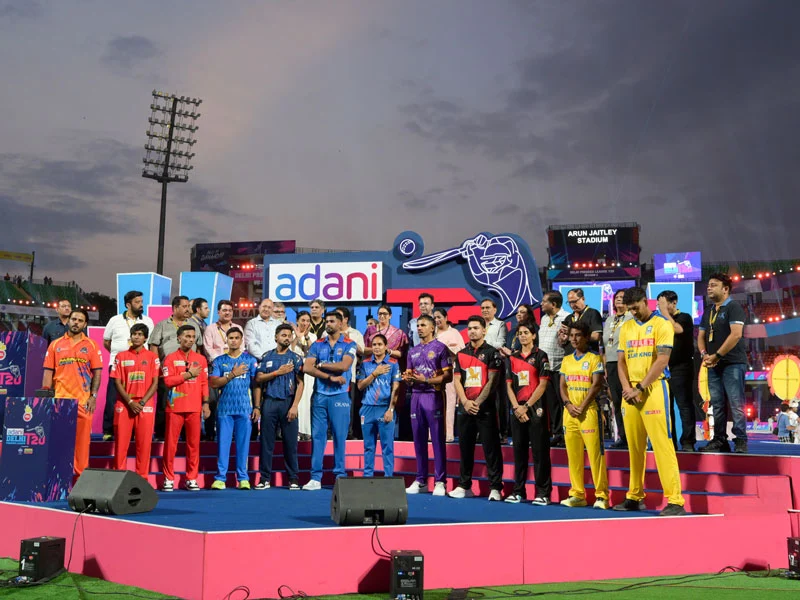
In contrast to the persistent challenges in combating corruption, India has witnessed remarkable innovation in other domains, notably in sports. The Indian Premier League (IPL), a professional Twenty20 cricket league founded in 2008, has become one of the world’s most valuable sports leagues by revenue. Based on an innovative franchise model, teams are owned by corporations and celebrities, offering a fast-paced, action-packed alternative to traditional longer formats of the game. The IPL is celebrated not only for its sporting spectacle but also as a testament to India’s commercial and sporting ingenuity, representing a homegrown business model that resonates deeply with national pride, much like the country’s revitalized railway system.
The transformation of India’s railway network, particularly its electrification, stands as a profound testament to the impact of sustained policy focus and investment. While countries like Britain are electrifying their railways at a pace of approximately two kilometers per year, and the United States lags even further behind, Indian Railways has quadrupled its electrification efforts. In the 2022-23 financial year alone, an impressive 6,565 kilometers of track were electrified. This dramatic acceleration underscores the effectiveness of the government’s infrastructure agenda and its commitment to modernizing critical national assets.