The traditional trajectory of a successful consumer brand—from local favorite to national powerhouse, culminating in a celebratory ringing of the bell at the New York Stock Exchange—is increasingly becoming an artifact of a bygone economic era. Half a decade after the historic initial public offering (IPO) frenzy of 2021, the landscape of global capital markets has undergone a fundamental transformation. What was once viewed as the ultimate milestone of corporate maturity is now frequently regarded as a burdensome, and often unnecessary, regulatory hurdle. As 2026 progresses, a growing cohort of high-valuation consumer companies is choosing to remain in the private sphere, signaling a structural shift in how businesses fund growth and provide liquidity to their stakeholders.
The contrast between the current environment and the peak of the IPO boom is stark. In 2021, the markets were characterized by a near-feverish appetite for new listings. The Nasdaq alone welcomed 743 IPOs that year, while the New York Stock Exchange (NYSE) added more than $1 trillion in new market capitalization. It was an era of "easy money" and record-low interest rates, where companies ranging from the crypto-exchange Coinbase to the gaming platform Roblox and the electric vehicle maker Rivian commanded multibillion-dollar valuations upon entry. According to data from Morningstar, companies going public in 2021 raised nearly $500 billion, roughly doubling the capital raised in 2020. This period represented the zenith of public market optimism, fueled by a post-pandemic surge in retail investing and a belief that the public markets were the only venue capable of supporting "decacorn" valuations.
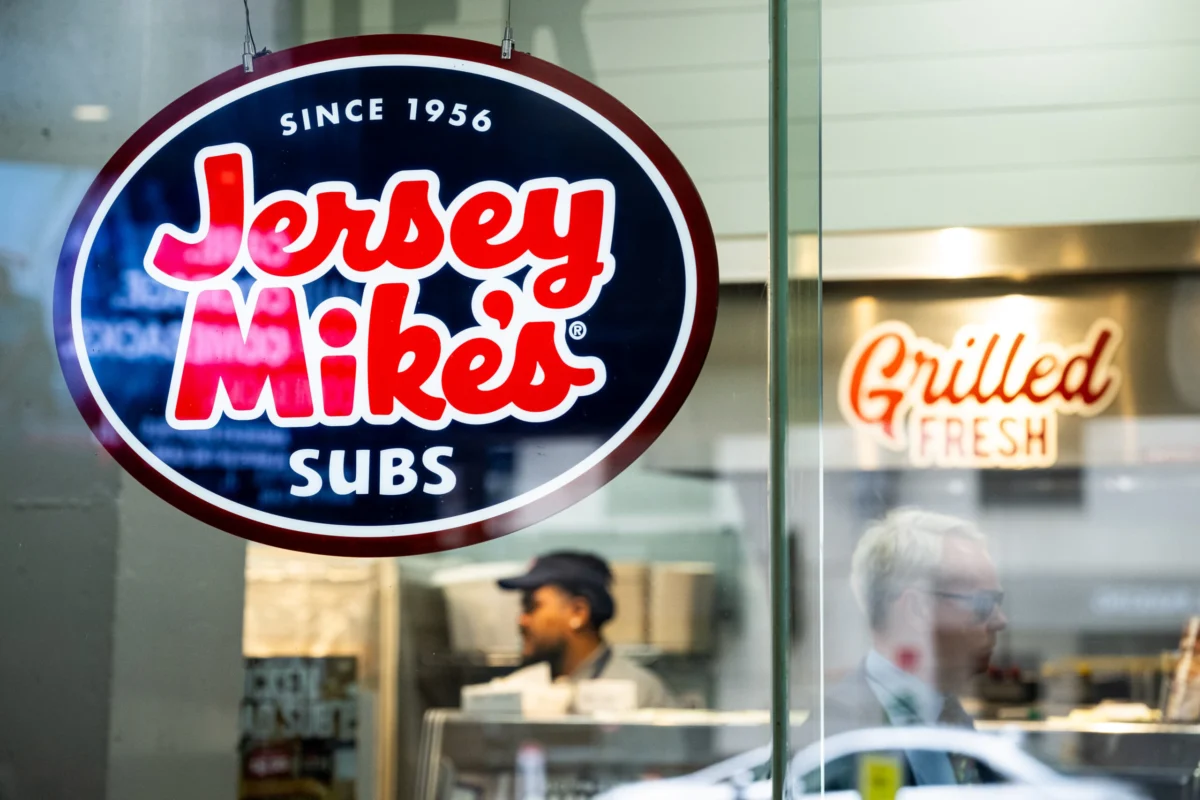
Fast forward to the present day, and the narrative has shifted from expansion to hesitation. While the 2026 market saw a rare blockbuster debut from Elon Musk’s SpaceX—a listing that raised tens of billions and reminded the world of the public market’s sheer depth—it remains the exception rather than the rule. Most consumer-facing brands are finding the transition to public life fraught with difficulty. Recent market entrants provide a cautionary tale. Jersey Mike’s, the ubiquitous sandwich franchise, and Reformation, the sustainable fashion retailer, both tested the public waters in late July 2026. The results were tepid at best. Reformation’s shares remained essentially flat on their debut, while Jersey Mike’s opened $2 below its initial pricing and closed its first day of trading down nearly 6%. These lackluster performances highlight a broader trend: public investors are no longer willing to pay a premium for growth without a clear, immediate path to sustained profitability and "bulletproof" balance sheets.
The reluctance to go public is rooted in a dramatic evolution of the private funding ecosystem. Thirty years ago, the United States boasted nearly 8,000 publicly traded companies; today, that number has dwindled to fewer than 4,000. This contraction is not due to a lack of successful businesses, but rather a revolution in private capital availability. Mike Dinsdale, CEO of Powerlaw and a former executive at DoorDash and DocuSign, notes that the emergence of "megafunds" and the massive influx of capital from family offices have removed the historical necessity of the IPO. For the ultra-wealthy, private equity has moved from an alternative asset class to a primary vehicle for wealth preservation and growth. When a company can raise $500 million or $1 billion from a handful of sophisticated private entities, the lure of the public markets—and the accompanying scrutiny—loses its luster.
Furthermore, the rise of robust secondary markets has solved the "liquidity problem" that once forced companies toward an IPO. Historically, early employees and venture capital backers needed a public listing to "cash out" their stakes. Today, according to Sunaina Sinha Haldea, Global Head of Private Capital Advisory at Raymond James, secondary markets act as a vital "pressure release valve." These platforms allow private shares to be traded among institutional investors without the company ever needing to file a prospectus or adhere to the rigorous disclosure requirements of the SEC. This depth of private liquidity means that the "artificial clock" that once dictated a five-to-seven-year path to an IPO has been effectively dismantled.
The "why" behind the preference for privacy often comes down to a choice between long-term strategic vision and the "quarterly clock." For a CEO, the transition to a public company involves a grueling cycle of quarterly earnings reports, guidance calls, and the relentless pressure to meet short-term analyst expectations. This environment often discourages the kind of bold, capital-intensive pivots required in the volatile consumer sector. In the private sphere, giants like Publix Super Markets, Sephora (under LVMH’s broader umbrella), and Chick-fil-A can operate with a multi-decade horizon, shielding their internal metrics and strategic maneuvers from competitors and the fickle whims of day-traders.
The regulatory burden is another significant headwind. The financial and resource costs associated with Sarbanes-Oxley compliance, ESG reporting, and the constant threat of shareholder litigation create a high barrier to entry. This has prompted a debate at the highest levels of government. President Donald Trump and several leaders within the Securities and Exchange Commission (SEC) have advocated for a reduction in the frequency of mandatory reporting. Earlier this year, SEC Chairman Paul Atkins signaled a move toward allowing companies to report earnings semi-annually rather than quarterly, arguing that the current "rigidity" of the rules harms both companies and long-term investors. Proponents argue that this would allow management to focus on fundamental value creation rather than "managing to the number."
However, this shift toward "private for longer" carries significant implications for the broader economy and the average retail investor. As high-growth companies delay their IPOs until they are mature, much of the exponential wealth creation that used to happen in the public markets is now occurring behind closed doors, accessible only to institutional players and the extremely wealthy. By the time a company like SpaceX or a hypothetical future giant eventually goes public, the "easy money" has often already been made by private equity firms. This creates a two-tiered investment landscape where the public is left with slower-growing, "value" stage companies, while the most dynamic sectors of the economy remain gated.
Expert analysis suggests that for the IPO market to regain its former vibrancy, a "carrot and stick" approach is required. The "stick" would involve regulatory changes that make it more difficult for massive private companies to avoid public-level disclosures once they reach a certain scale. The "carrot" would involve a significant reduction in the operational burden of being public. Jason Yeh, co-founder of Patron, suggests that while the current environment is stagnant, there is a backlog of companies that "on paper" should be public. He predicts that as macroeconomic conditions stabilize and interest rates potentially soften, a new wave of listings could emerge over the next 12 to 18 months—but only for those companies with cash-flow-heavy business models that can withstand the glare of the public spotlight.
The current state of the market suggests that the IPO is no longer the "exit" it once was; it is now merely one of many capital-raising options. For many consumer brands, the prestige of being listed on the NYSE is no longer worth the loss of control and the exhaustion of the quarterly reporting cycle. As long as private capital remains plentiful and secondary markets continue to mature, the "Great Delisting" of the American economy is likely to continue. The challenge for regulators in the coming years will be to balance the need for corporate transparency with the necessity of making public markets an attractive destination for the next generation of innovators. Without a fundamental shift in the "operational burden" of being public, the trend of consumer companies staying private for longer is not just a temporary market cycle, but a permanent feature of the modern global economy.