The landscape of Wall Street’s technology sector is undergoing a structural transformation as Dan Ives, arguably the most visible technology analyst of the last decade, transitions from the sell-side research desk to the front lines of capital deployment. In a move that signals the intensifying financialization of the artificial intelligence revolution, Ives has partnered with Yorkville Securities to launch Yorkville Ives & Co., a specialized merchant bank designed to bridge the gap between deep-sector research and high-stakes principal investing. The new entity, headquartered in New York, aims to capitalize on what Ives describes as the "Fourth Industrial Revolution," a period of secular growth characterized by massive capital expenditures in computing power, energy infrastructure, and automated industrial systems.
The formation of Yorkville Ives & Co. represents a significant departure from the traditional boundaries of equity research. While Ives spent the better part of twenty-five years at firms like FBR and most recently Wedbush Securities—where he became a household name for his bullish prognostications on Apple, Microsoft, and Tesla—his new venture seeks to integrate four distinct financial pillars: investment banking, equity research, institutional trading, and principal investing. By operating as a merchant bank, the firm will not only advise clients on mergers, acquisitions, and capital raises but will also invest its own balance sheet capital alongside its partners. This "skin in the game" approach is intended to differentiate the firm from traditional boutique advisory shops that rely solely on fee-based revenue.
The timing of the launch coincides with a historic pivot in global markets. For the past two years, the "Magnificent Seven" technology giants have driven the lion’s share of equity market returns, fueled by the promise of generative artificial intelligence. However, the market is now entering a secondary phase where the focus is shifting from software hype to the physical requirements of the AI era. According to recent industry data, the demand for data centers is projected to grow by 20% annually through 2030, requiring hundreds of billions of dollars in new investment. Yorkville Ives & Co. is positioning itself at the nexus of this capital-intensive cycle, focusing on technology, industrials, energy transition, and infrastructure—the four sectors most critical to the build-out of the AI ecosystem.
Roger Briggs, a veteran of the capital markets, will serve as the Chief Executive Officer of the new firm, while Ives takes on the role of Partner and Senior Managing Director. The synergy between the two leaders is intended to combine Yorkville’s established institutional infrastructure with Ives’ extensive network and market-moving insights. The firm’s mandate is broad, covering debt and equity capital raising in both public and private markets, strategic advisory for complex corporate transactions, and independent equity research. This multi-disciplinary model is a direct response to the increasing complexity of tech-driven deals, where a deep understanding of software architecture is as vital as a grasp of structured finance.
The "merchant bank" model itself is a throwback to an older era of finance, updated for the digital age. Traditionally, merchant banks were private institutions that provided capital to companies through share ownership rather than simple loans. In the modern context, this allows Yorkville Ives & Co. to be more than just a middleman. By participating in the capital structure of the companies they cover, the firm aligns its interests with the long-term success of the "transformational" businesses Ives has spent his career identifying. This is particularly relevant in the private markets, where late-stage startups in the AI and energy space are increasingly seeking sophisticated partners who understand their technical roadmap as well as their financial needs.

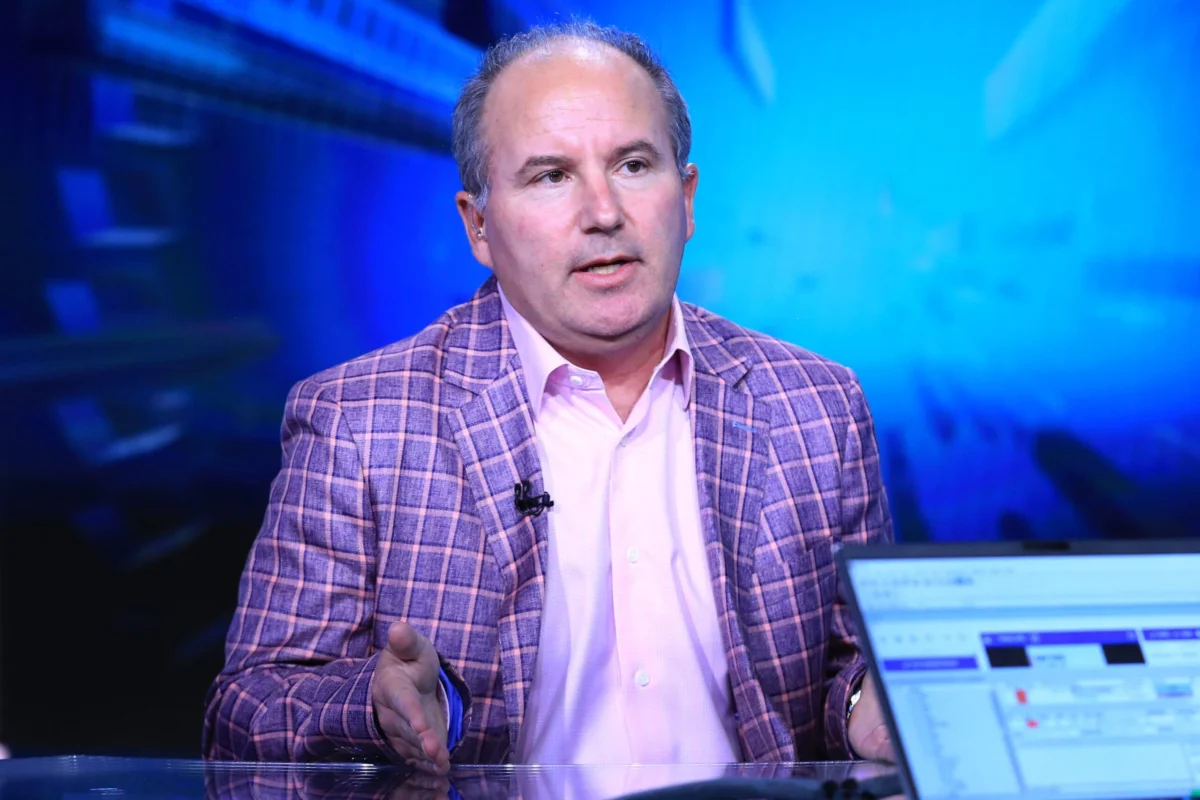
Ives’ transition comes after an eight-year tenure at Wedbush Securities, during which he became a ubiquitous figure on financial news networks. Known for his "bull case" scenarios and his trademark colorful jackets, Ives managed to cultivate a following that spanned from retail investors on social media to C-suite executives in Silicon Valley. His departure from Wedbush was preceded by several roles that hinted at his growing interest in the operational and strategic side of the business. He served on the advisory board of Zeta Global and held a brief but high-profile chairmanship at Eightco Holdings. During his time at Eightco, he was instrumental in implementing a treasury strategy centered on Worldcoin, the iris-scanning digital identity project co-founded by OpenAI’s Sam Altman. These experiences provided a blueprint for the type of cross-sector, tech-heavy advisory work that will define his new firm.
The economic backdrop for this new venture is one of massive scale and high stakes. Global spending on AI-related hardware and software is expected to surpass $1 trillion within the next decade. However, the bottleneck for this growth is no longer just chips or code; it is power and space. The energy transition focus of Yorkville Ives & Co. addresses the reality that AI data centers are projected to consume a significant portion of the world’s electricity by 2030. This creates a massive opportunity for advisory work in the utility sector, renewable energy integration, and the modernization of the electrical grid. By housing industrials and energy transition under the same roof as technology, the firm is acknowledging that the "cloud" is ultimately a physical entity made of steel, copper, and cooling systems.
Furthermore, the rise of boutique firms like Yorkville Ives & Co. reflects a broader trend in investment banking where specialized knowledge is beginning to challenge the dominance of "bulge bracket" banks. While firms like Goldman Sachs and Morgan Stanley possess unmatched scale, boutique firms can offer a level of sector-specific expertise and senior-level attention that is often lost in larger organizations. For companies operating in the niche intersections of tech and infrastructure, a firm that understands the nuances of an Nvidia H100 GPU lifecycle as well as a mezzanine debt structure offers a compelling value proposition.
Expert insights suggest that the success of this venture will depend on its ability to navigate a high-interest-rate environment that has made capital allocation more disciplined than it was during the "easy money" era of the 2010s. The firm plans to offer institutional trading and execution services, providing a comprehensive suite of tools for professional investors who are looking to gain exposure to the next wave of industrial automation. This "all under one hood" philosophy is designed to streamline the investment process for clients who are often overwhelmed by the pace of technological change.
The global competition for AI supremacy also adds a geopolitical dimension to the firm’s work. As nations move to secure their own sovereign AI capabilities and domestic supply chains for semiconductors and energy, the demand for strategic advisory services is expanding beyond traditional corporate borders. Yorkville Ives & Co. will likely find itself at the center of deals that have implications for national security and economic competitiveness, particularly as Western firms look to "friend-shore" their technology infrastructure.
In the final analysis, the launch of Yorkville Ives & Co. is a testament to the evolving role of the modern financial professional. It is no longer enough to merely report on the markets; the most influential figures are increasingly choosing to participate in them. Dan Ives is betting that his two decades of watching the tech industry from the outside have given him the foresight to lead it from the inside. As the "Fourth Industrial Revolution" gathers momentum, the firm’s success will be a barometer for the broader market’s ability to turn technological potential into sustainable economic value. By combining the agility of a boutique firm with the capital of a merchant bank, Yorkville Ives & Co. is positioning itself as a primary architect of the new digital economy.