India’s enduring fascination with gold, deeply interwoven with its cultural heritage and economic fabric, is undergoing a profound transformation. While the nation remains one of the world’s largest consumers of the precious metal, a discernible shift is occurring in how this demand is met, moving away from fresh imports towards a robust internal recycling mechanism. From the bustling lanes of Mumbai’s historic Zaveri Bazaar to the vibrant markets of Chennai’s T Nagar, a consistent message resonates from small, independent stores to large organised retailers: "Old gold exchanged here." This trend signifies a strategic pivot in the Indian jewellery market, driven by evolving consumer behaviour, government policy interventions, and fluctuating global prices.
Historically, gold in India has served a dual purpose: a store of wealth, particularly in rural areas lacking formal financial access, and an essential component of social and religious ceremonies. This deeply ingrained cultural affinity has long fuelled substantial import volumes, often contributing significantly to the nation’s current account deficit. However, the current landscape reveals a burgeoning segment of the market where the exchange of existing gold jewellery for new pieces, or for cash, is eclipsing outright purchases of newly minted gold. As global gold prices experienced a period of easing, coinciding with the conclusion of ‘adhik maas’ – a lunar month traditionally considered inauspicious for major gold acquisitions – this exchange-driven demand has gained significant traction.
This new dynamic is particularly evident in the sales figures reported by major jewellery chains. Paul Alukkas, managing director of the prominent South Indian retail chain Jos Alukkas, notes that exchange-led purchases now constitute approximately 75% of their business, a substantial increase from a previous 60%. Similarly, an executive from Senco Gold & Diamonds, speaking anonymously due to company policy, confirmed that around half of their sales are now attributed to gold exchange transactions. Retailers are actively encouraging this trend through aggressive promotional schemes, often advertising "zero deduction" on old gold and, in some instances, offering full value irrespective of the original caratage. These incentives are proving highly effective in attracting consumers looking to upgrade their collections or monetise dormant assets without incurring significant fresh expenditure.
The shift towards internal recycling is not merely an organic market evolution but also a direct response to recent government directives aimed at managing India’s foreign exchange reserves. On May 10, Prime Minister Narendra Modi publicly urged citizens to temper their gold purchases, citing the need to conserve foreign currency, particularly in the wake of surging global prices exacerbated by geopolitical tensions in West Asia. This appeal was swiftly followed by a policy change three days later, when the government increased the effective import tax on gold and silver to 15%, reversing duty cuts implemented just two years prior. These measures were designed to curb the inflow of bullion, which, despite a month-on-month decline in May 2026 to $3.42 billion from $5.63 billion in April 2026, still represented a 34% year-on-year jump in value.
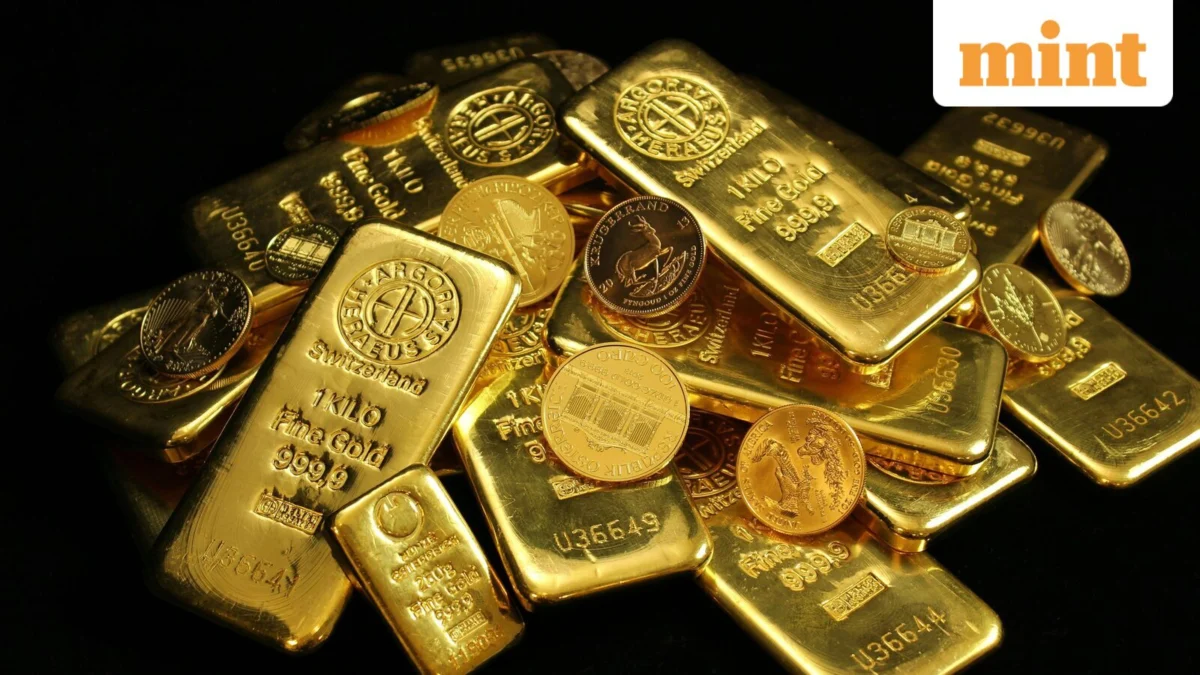
The immediate aftermath of these policy changes saw a marked impact on specific segments of the gold market. Demand for gold coins and bars, traditionally considered pure investment vehicles, has weakened sharply. Kumar Jain of the Mumbai Jewellers Association observed that "sale of coins and bars has completely stopped," with the entire jewellery market seemingly "running on recycled gold." Investment vehicles like coins and bars are particularly sensitive to price fluctuations and import duties, as they do not carry the "making charges" associated with jewellery, which offer a margin for retailers even in volatile markets. Surendra Mehta of the India Bullion & Jewellers Association highlighted the hesitation among investors to continue purchasing at elevated rates following the duty hike. This segment’s decline underscores a broader market recalibration where the primary driver of gold acquisition is shifting from investment to consumption, albeit consumption funded by existing assets.

Initially, the government’s interventions sent ripples through the stock market, with shares of top jewellery retailers experiencing drops of up to 10% on the day of the Prime Minister’s announcement. However, investor confidence has largely been restored, buoyed by the strong performance in jewellery exchange and the ambitious growth targets articulated by leading retailers. Thangamayil Jewellery Ltd, for instance, saw its shares surge by approximately 50% in the past month, outperforming the benchmark Nifty 50, following an improvement in net profit for Q4 FY26. Titan Company, operator of the popular Tanishq brand, recorded a 3% rise after announcing plans to double its revenue by FY30 from ₹76,078 crore in FY26. Similarly, Bluestone’s shares climbed 14% on the back of its strategy to achieve fivefold growth by 2030. These figures suggest that while the market is transforming, organised retailers are demonstrating resilience and adaptability.
The evolving landscape has also impacted consumer purchasing habits. Supriya Kataria, founder of Maharashtra-based Kumari Fine Jewellery, noted that customers are now spending more time evaluating purchases, indicating a move away from impulse buying. Jain estimated a 25% decline in discretionary gold purchases in May, with wedding-related acquisitions forming the bedrock of remaining demand. This signals a more considered approach to gold ownership, where functional and ceremonial needs supersede speculative investment. Furthermore, there is a growing, albeit limited, interest in lightweight and lower-carat jewellery, particularly among price-sensitive buyers seeking to manage budgets. While some retailers, like Senco Gold & Diamonds, report that 9-carat jewellery still only accounts for 7-8% of their inventory and sales, the conversation around alternative caratage is gaining momentum, challenging the traditional dominance of 22-carat gold in India, which is prized for its purity and superior resale value.
Despite recent easing in domestic gold prices—with 24-carat gold falling from ₹162,820 per 10 grams on May 13 to ₹152,890 on June 15—the long-term outlook remains bullish. Analysts project sustained upward trajectories, influenced by global economic uncertainties, central bank buying, and gold’s enduring appeal as an inflation hedge. J.P. Morgan Global Research, for instance, forecasts gold to average $6,000 per ounce by the final quarter of 2026, potentially climbing to $6,300 per ounce in 2027, significantly higher than the current $4,200-$4,300 range. This expectation of continued price appreciation fuels a psychological effect among consumers, prompting them to monetise existing holdings now to upgrade or secure profits, rather than waiting for potentially higher future prices, which also risks making fresh purchases even more expensive.
The policy measures and market shifts are expected to have a tangible impact on overall gold demand volumes. The World Gold Council (WGC) reported a 10% year-on-year increase in India’s gold demand to 151 tonnes in the March quarter. However, looking ahead to 2026, the WGC estimates a combined jewellery and bar and coin demand decline of approximately 50-60 tonnes, representing a 10% reduction from the previous year, primarily due to the import duty hike. This projection is echoed by Crisil Ratings, which anticipates a further 13-15% year-on-year decline in sales volume for India’s organised gold jewellery retail sector this fiscal, following an 8% contraction in the previous fiscal. This decline in volume, even if partially offset by value due to higher prices, poses challenges for retailers, particularly regarding inventory management.
Rahul Guha, senior director at Crisil Ratings, highlighted an alarming trend of inventory build-up across the sector, estimating an additional 30-40 days of stock lying with players. He noted that inventory turnover days, a crucial metric measuring the time it takes to convert stock into sales, have risen from the industry standard of 140-150 days to approximately 170-180 days. This extended holding period ties up working capital, incurs storage costs, and exposes retailers to greater risks from price fluctuations. Ramesh Kalyanaraman, executive director of Kalyan Jewellers India Ltd., acknowledged the pressure on quantity growth, noting that while customers maintain a specific budget, higher prices inevitably lead to lower volumes. He pointed out that gold prices have surged by 60-70% over the past year, making it difficult for consumers to increase their spending proportionately.
Despite these headwinds, the Indian gold market remains resilient, with retailers now pinning their hopes on the upcoming wedding season, traditionally the peak period for gold demand in the third quarter. This seasonal surge is expected to provide a much-needed impetus, though industry leaders anticipate a gradual recovery rather than an immediate rebound. The current dynamics underscore a pivotal moment for India’s gold market: while the metal’s cultural significance and investment appeal remain undiminished, the mechanisms of its acquisition are undergoing a profound, policy-driven evolution towards greater domestic self-reliance. This shift not only impacts trade balances but also reshapes consumer choices and retailer strategies, forging a new, more sustainable path for India’s golden future.