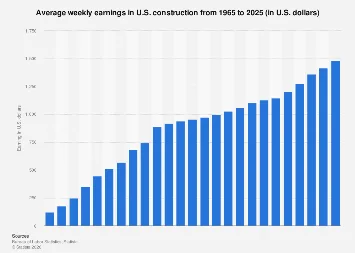
The construction sector in the United States is poised to witness a notable increase in average weekly earnings for its workforce as 2025 approaches. Projections indicate that construction professionals will earn approximately $1,485 per week, marking a substantial rise from the $1,418 earned in 2024. This upward trend reflects a broader pattern of wage appreciation within the industry, which has seen consistent growth over the past several decades, transforming the financial landscape for skilled tradespeople and laborers alike.
Tracing the trajectory of construction wages reveals a dramatic metamorphosis. In the year 2000, the average weekly earnings for a construction worker stood at a modest $685. Fast forward to 2025, and this figure is projected to more than double, reaching $1,485. This represents an increase of over 116% in real terms, underscoring the evolving economic value placed on the labor and expertise within this vital sector. The historical data, stretching back to 1965 when weekly earnings were a mere $122, paints a compelling picture of an industry that has not only expanded in scale but has also significantly improved the earning potential for its workforce.
Several macroeconomic and industry-specific factors are contributing to this sustained wage growth. A primary driver is the persistent demand for new infrastructure, housing, and commercial developments. The United States, like many developed nations, faces a significant infrastructure deficit, necessitating substantial investment in roads, bridges, public transit, and utilities. This ongoing need translates directly into a robust pipeline of projects, keeping construction firms busy and labor demand high. Furthermore, a burgeoning population and evolving consumer preferences continue to fuel residential construction, while the demand for modern commercial spaces, including logistics centers and data facilities, adds another layer of activity.
The construction industry is also experiencing a significant demographic shift. A substantial portion of the experienced construction workforce is nearing retirement age. This impending wave of retirements, coupled with a slower pace of new entrants into skilled trades, is creating a palpable labor shortage. To attract and retain qualified workers in this competitive environment, employers are compelled to offer more attractive compensation packages, including higher wages and improved benefits. The tight labor market empowers workers to negotiate for better terms, directly influencing the average weekly earnings.
Beyond the supply and demand dynamics, technological advancements and the increasing complexity of construction projects also play a role. Modern construction relies heavily on specialized equipment, advanced building materials, and sophisticated project management software. Workers who possess the skills to operate this technology, manage complex logistics, and adapt to innovative building techniques often command higher wages due to their specialized expertise. The industry’s embrace of prefabrication, modular construction, and Building Information Modeling (BIM) necessitates a workforce with a broader and more advanced skill set, further justifying increased compensation.
The economic impact of this wage growth extends beyond individual workers and construction companies. Increased earnings in the construction sector contribute to broader economic activity. As construction workers have more disposable income, they are likely to increase their spending on goods and services, boosting demand in other sectors of the economy. This can lead to job creation in retail, hospitality, and personal services, creating a positive multiplier effect. Moreover, higher wages can improve the quality of life for construction workers and their families, contributing to stronger communities and potentially reducing reliance on social assistance programs.
Globally, the trend of rising wages in the construction sector is not unique to the United States. Many developed economies are grappling with similar challenges of an aging workforce, high demand for construction services, and a need to upskill their labor force. Countries experiencing significant urbanization and infrastructure development, such as those in parts of Asia and the Middle East, are also witnessing upward pressure on construction wages, albeit with variations influenced by local economic conditions, labor regulations, and the availability of skilled foreign labor. However, the sustained and significant growth observed in the U.S. construction sector highlights its robust health and the increasing value placed on its workforce.
The long-term outlook for construction wages remains cautiously optimistic, contingent on continued investment in infrastructure, sustainable housing markets, and effective workforce development initiatives. Addressing the skilled labor shortage through vocational training programs, apprenticeships, and partnerships with educational institutions will be crucial in ensuring that the industry can meet future demand and that wage growth can be sustained without contributing to unsustainable inflation. The projected $1,485 weekly earnings for 2025 represent not just a financial gain for workers but also a testament to the evolving importance and complexity of the construction industry in shaping the nation’s built environment and economy.