The relentless advance of artificial intelligence is fundamentally reshaping the global labor landscape, triggering widespread anxieties and forcing a profound re-evaluation of professional identities across industries. As leading corporations like Amazon, PwC, and Microsoft publicly detail AI-driven efficiencies and workforce adjustments, a palpable concern about job security has permeated the global consciousness. Surveys consistently show a significant portion of the population expressing apprehension regarding AI’s potential impact on their livelihoods. While the precise attribution of every layoff to AI can be complex, the undeniable reality is that artificial intelligence is a powerful disruptive force, affecting roles from entry-level positions to specialized functions in human resources, project management, and even creative fields. In this period of unprecedented technological transformation, the search for guidance often leads to complex economic analyses or technological forecasts, yet profound insights can sometimes be found in unexpected places, offering both comfort and a clear path forward.
To truly grasp the dynamics of this modern disruption, it is instructive to examine historical parallels. The early 20th century witnessed a similar paradigm shift with the widespread adoption of mechanization, standardization, and mass production, particularly following the Great Depression. This era, while designed to invigorate economies, also displaced countless manual laborers and artisans, forcing a generation to adapt or risk obsolescence. It is against this backdrop that a classic children’s story, Mike Mulligan and His Steam Shovel, published in 1939, offers a surprisingly potent allegory for today’s AI-driven challenges. Penned by Virginia Lee Burton, the narrative of Mike, an unwavering steam shovel operator, and his beloved machine, Mary Anne, provides a poignant illustration of technological pushback, the evolving nature of value, and the enduring human quest for purpose amidst disruption.
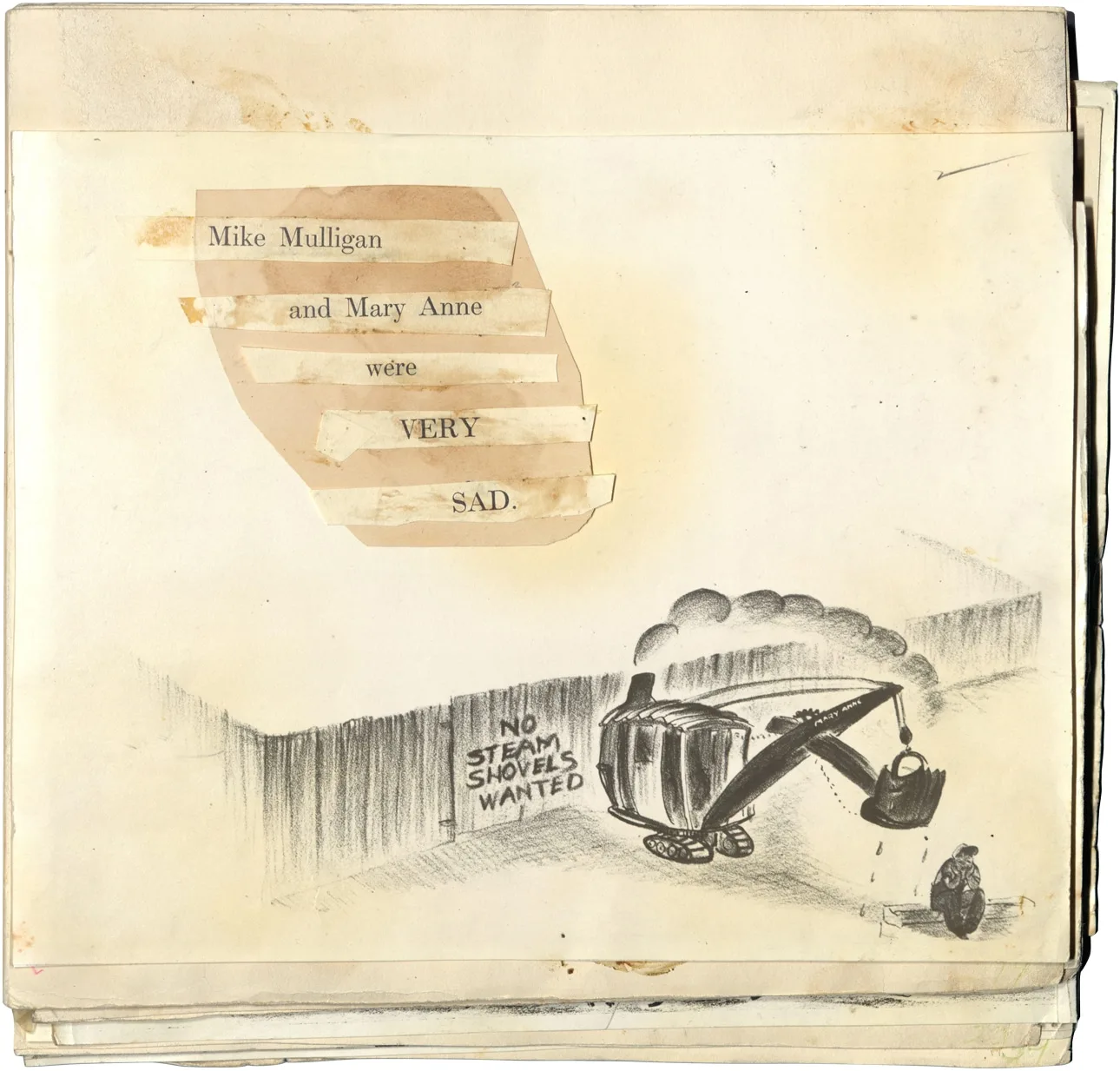
Mike Mulligan and Mary Anne were once a formidable team, instrumental in the construction boom of their time. Together, they laid foundations for towering buildings, carved out waterways, leveled ground for extensive highway networks, excavated tunnels for burgeoning railroads, and smoothed earth for new airfields. Their prowess symbolized the era’s industrial might, a testament to human-machine collaboration at its zenith. However, their reign was short-lived. The relentless march of progress introduced newer, more efficient machinery—diesel shovels, electric shovels, and eventually, the automated excavators of their day—rendering Mike and Mary Anne’s traditional methods increasingly uneconomical. The story, at its core, is a narrative of technological displacement, the emotional toll it exacts, and the imperative for radical adaptation.

Today’s AI revolution mirrors this historical trajectory, but with accelerated velocity and broader scope. McKinsey & Company predicts that generative AI alone could automate tasks that account for 60-70% of employees’ time, potentially generating trillions of dollars in value across the global economy. However, this economic boon comes with a substantial restructuring of labor. According to a 2023 World Economic Forum report, while AI is projected to create 69 million new jobs by 2027, it will simultaneously displace 83 million, resulting in a net loss of 14 million jobs. This "great reshuffling" is not limited to blue-collar sectors; knowledge-based roles in finance, law, marketing, and software development are increasingly susceptible to automation. For instance, AI algorithms can now analyze vast datasets, draft legal documents, generate marketing copy, and even write basic code, tasks once considered exclusively within the human domain.
The crucial lesson from Mike Mulligan lies not in resisting progress, but in understanding the evolving forms of value. When faced with obsolescence, Mike Mulligan didn’t abandon Mary Anne. Instead, he sought a new challenge, a monumental task that required their unique capabilities: digging the foundation for an entire town hall in a single day. This challenge, though seemingly a desperate last stand, forced a re-evaluation of Mary Anne’s utility. She was no longer just a digging machine; her immense power and Mike’s skilled operation became invaluable in a context where speed, scale, and a focused effort were paramount. This resonates deeply with the current imperative for workers. As AI assumes routine, data-intensive, and predictable tasks, the "human touch" — skills such as creativity, critical thinking, complex problem-solving, emotional intelligence, and interpersonal communication — becomes exponentially more valuable. These are the domains where human ingenuity still holds a distinct advantage, and where reinvention must focus.
For individuals, adapting to the AI age demands a proactive approach to skill development and career pivoting. This means not just upskilling within one’s current domain but often reskilling for entirely new roles or industries. Lifelong learning, once a theoretical ideal, is now a practical necessity. Educational institutions and corporate training programs are grappling with the immense challenge of preparing the workforce for jobs that may not yet exist. Governments, too, play a critical role in facilitating this transition through robust social safety nets, retraining initiatives, and policies that encourage innovation while mitigating adverse social impacts. For instance, nations like Singapore and Germany have invested heavily in vocational training and apprenticeship programs designed to future-proof their workforces against technological shifts.
Beyond skill sets, the story of Mike Mulligan also underscores the profound psychological dimension of job disruption: the search for purpose. Mike’s identity was inextricably linked to Mary Anne and their work. When that work became obsolete, his sense of self was challenged. His triumph in digging the town hall foundation was not just a professional victory but a reaffirmation of his and Mary Anne’s inherent worth. In an era where algorithms might dictate aspects of daily work or even replace entire job functions, maintaining a sense of purpose and finding meaning in one’s contributions becomes paramount. This could involve focusing on roles that emphasize human connection, ethical decision-making, or creative problem-solving – areas where AI serves as a tool, not a replacement.

For businesses, the lessons are equally salient. Rather than solely focusing on cost reduction through automation, leaders must embrace a strategy of human-AI collaboration, recognizing that the most successful enterprises will be those that effectively augment human capabilities with AI, rather than seeking outright replacement. This requires investing in employee training, fostering a culture of continuous learning, and redesigning workflows to leverage AI for efficiency while empowering human workers to focus on higher-value, more complex, and uniquely human tasks. Organizations like Google and Microsoft are already championing "AI copilots" that assist employees, allowing them to complete tasks faster and more effectively, thereby enhancing productivity without necessarily eliminating roles.
Ultimately, the narrative of Mike Mulligan and Mary Anne serves as a powerful reminder that technological disruption is not a terminal event but a catalyst for transformation. The steam shovel, once a symbol of cutting-edge technology, eventually ceded its dominance to more advanced machines. Yet, its enduring value was found in a new application, a testament to adaptability and the human spirit of ingenuity. As humanity stands at the precipice of an AI-driven future, the challenge lies in embracing this dynamic, identifying the evolving forms of value, and strategically reinventing ourselves and our enterprises. The future of work will not be defined by machines replacing humans, but by humans, empowered by machines, redefining what it means to create, innovate, and contribute in an increasingly intelligent world.