In a move designed to fortify the global standing of the greenback amidst escalating geopolitical volatility, United States Treasury Secretary Scott Bessent has issued a robust defense of expanding currency swap lines to key allies in the Persian Gulf and Asia. The proposal, which comes as the burgeoning conflict with Iran sends shockwaves through international energy markets and financial corridors, represents a significant pivot in American monetary diplomacy. By offering a liquidity backstop to oil-rich nations and strategic partners in the East, the Treasury Department aims to prevent a regional liquidity crunch from metastasizing into a systemic global financial crisis.
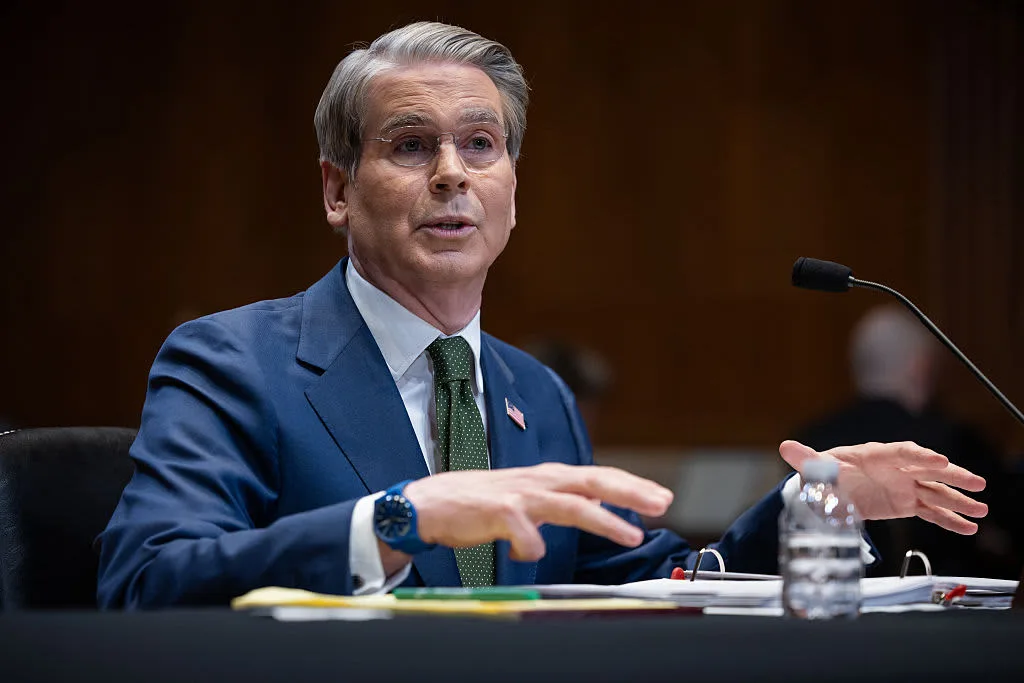
The current geopolitical climate, defined by the "Iran war" and the resulting disruption of maritime trade through the Strait of Hormuz, has placed unprecedented strain on the economies of the Middle East. While nations like the United Arab Emirates (UAE) possess vast sovereign wealth and robust balance sheets, the immediate availability of U.S. dollar liquidity has become a pressing concern as traditional credit markets tighten under the weight of wartime uncertainty. Secretary Bessent, testifying before a Senate Appropriations Subcommittee, framed these discussions not as emergency interventions, but as an extension of the United States’ role as the world’s ultimate financial guarantor.
Currency swap lines are essentially bilateral agreements between central banks to exchange their respective currencies. In practice, the Federal Reserve or the Treasury provides U.S. dollars to a foreign central bank in exchange for an equivalent amount of that country’s currency at the prevailing market exchange rate. The parties agree to swap the currencies back at a future date, usually with a modest interest payment. This mechanism ensures that foreign banks and businesses have access to the dollars they need to settle international transactions, pay off dollar-denominated debt, and stabilize their domestic banking sectors without being forced to dump U.S. Treasury securities into a volatile market.
Historically, the U.S. has maintained "standing" swap line arrangements with a select group of elite peers: the Bank of Canada, the Bank of England, the Bank of Japan, the European Central Bank, and the Swiss National Bank. These facilities were institutionalized during the 2008 financial crisis and further solidified during the onset of the COVID-19 pandemic in 2020. However, the prospect of extending these lines to the UAE and other Gulf states marks a departure from the traditional Eurocentric and G7-focused liquidity architecture.

Secretary Bessent argued that these potential swap lines are a "testament to the U.S. dollar’s primacy and the strength of America’s economic shield." By integrating the Gulf’s financial hubs more deeply into the dollar ecosystem, the U.S. effectively discourages these nations from seeking alternative liquidity sources, such as those offered by rival economic blocs or emerging digital payment systems. In his public communications, Bessent emphasized that many of these nations maintain "pristine sovereign balance sheets," often holding more U.S. assets than the European nations that currently enjoy permanent swap access.
The economic rationale for this expansion is rooted in the prevention of "fire sales." When foreign institutions face a dollar shortage, their first instinct is often to sell off their most liquid assets—which are almost invariably U.S. Treasury bonds. A mass liquidation of Treasuries by Gulf sovereign wealth funds could lead to a spike in U.S. yields, driving up borrowing costs for American consumers and businesses at a time when the domestic economy is already grappling with war-induced inflation. By providing a direct line to dollar liquidity, the Treasury Department creates a "pressure valve" that keeps the U.S. bond market stable.
Despite the strategic benefits, the proposal faces a difficult political environment in Washington. President Donald Trump, currently navigating a period of low approval ratings regarding his economic management, must balance the long-term benefits of dollar hegemony against the short-term optics of foreign assistance. Critics of the plan have been quick to label the swap lines as "foreign bailouts," questioning why a nation as wealthy as the UAE requires a financial lifeline from the American taxpayer. This sentiment is particularly acute as American households struggle with rising gasoline prices and supply chain disruptions directly linked to the hostilities in the Middle East.
Recent polling data suggests that nearly 60% of the American public disapproves of the administration’s handling of the economy, a figure that complicates any policy perceived as prioritizing international stability over domestic relief. However, the administration has been firm in its messaging. President Trump, when questioned about the UAE’s potential swap line, signaled his support, characterizing it as a gesture of loyalty to a critical ally. "If they had a problem, I would be there for them," the President remarked, emphasizing the reciprocal nature of the U.S.-UAE partnership.
Beyond the immediate war context, the expansion of swap lines is a calculated move in a broader "currency cold war." For years, countries like China and Russia have sought to develop "de-dollarized" payment systems to bypass the U.S.-dominated financial infrastructure. By establishing new U.S. dollar funding centers in the Gulf and Asia, the Treasury is effectively doubling down on the dollar’s role as the indispensable global reserve. Bessent’s assertion that "dollar dominance is strengthened by constant long-term initiatives" reflects a strategic imperative to counter the growth of "problematic, alternative payment systems" that could undermine American economic leverage.

Market analysts suggest that the inclusion of Asian allies in these discussions is equally significant. Nations like South Korea and Taiwan, which are deeply integrated into global high-tech supply chains, are particularly vulnerable to the shipping disruptions and energy price spikes caused by the Iran conflict. If these nations were to face a liquidity crisis, the resulting freeze in the semiconductor and electronics industries would have a devastating ripple effect on the U.S. economy. Expanding the swap network to include these partners provides a "macroprudential buffer" that protects both the foreign allies and the American consumers who rely on their exports.
The technical execution of these swaps can occur through two primary channels. While the Federal Reserve typically manages the permanent liquidity lines, the Treasury Department can utilize its Exchange Stabilization Fund (ESF) to provide similar backstops. The ESF, established during the Great Depression, gives the Treasury Secretary broad authority to intervene in currency markets to stabilize the dollar. Utilizing the ESF for these new swap lines would allow the administration to move more quickly than the Fed’s traditional deliberative process, providing a rapid response to the fast-moving developments of the Iran war.
As the conflict continues to evolve, the "economic shield" described by Secretary Bessent will be put to the test. The success of this strategy depends on the ability of the U.S. to convince both domestic skeptics and international partners that the dollar remains the safest harbor in a world of increasing geopolitical storms. If successful, the expansion of swap lines could not only prevent a financial contagion in the short term but also cement the dollar’s role as the bedrock of global commerce for decades to come.
Ultimately, the debate over swap lines is a debate over the nature of American power in the 21st century. By leveraging the unique status of the U.S. dollar, the Treasury is attempting to manage a global crisis without the need for traditional fiscal spending or military intervention. It is a form of "financial statecraft" that recognizes that in a modern, interconnected world, a liquidity shortage in Dubai or Seoul is just as dangerous to American prosperity as a market crash in New York or Chicago. Under the leadership of Secretary Bessent and the current administration, the U.S. is signaling that it will use every tool in its financial arsenal to maintain its economic leadership, even—and especially—in the shadow of war.