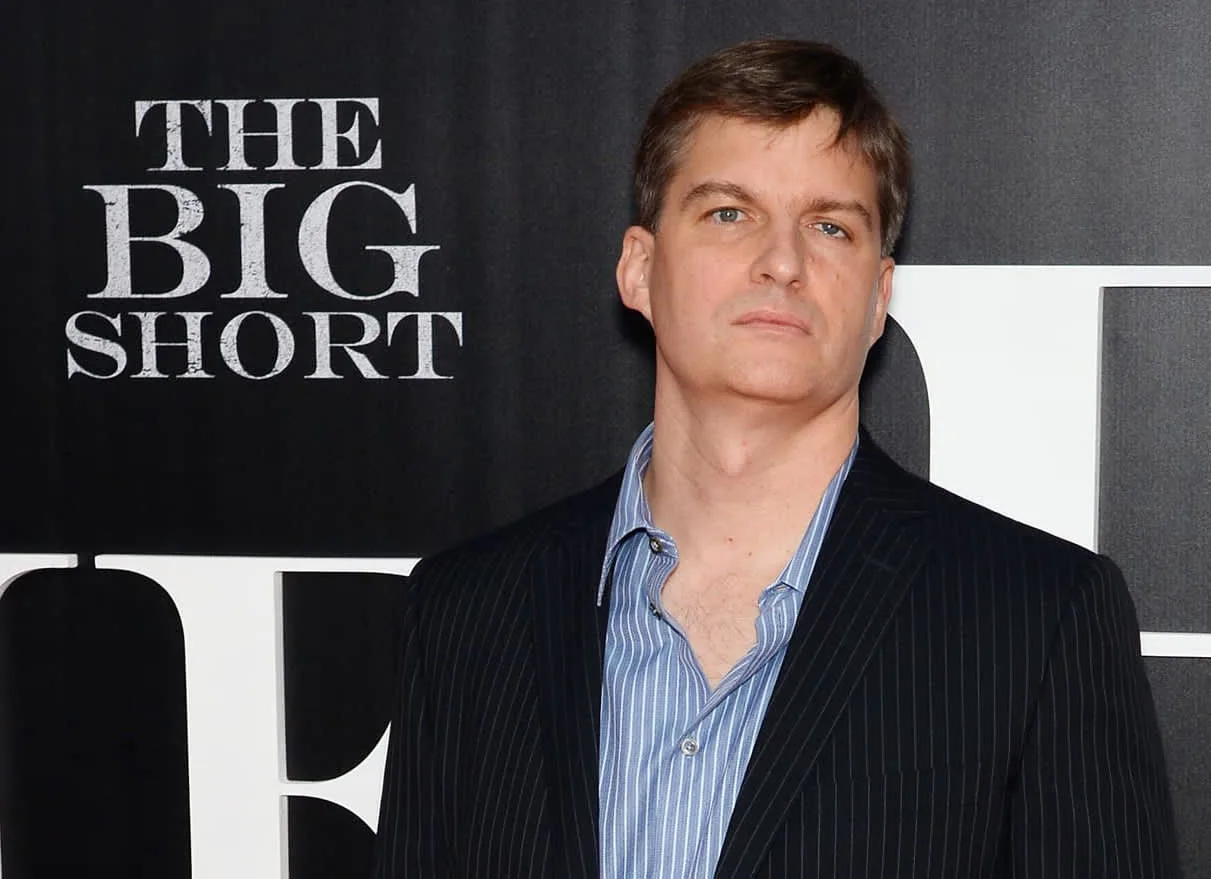
The financial world is witnessing a high-stakes collision between the momentum of the artificial intelligence revolution and the disciplined, often grim, skepticism of Michael Burry. The legendary investor, whose successful bet against the subprime mortgage crisis was immortalized in "The Big Short," has reaffirmed his bearish conviction against Palantir Technologies. Despite a high-profile endorsement from President Donald Trump that recently provided a temporary floor for the stock, Burry remains steadfast in his belief that the software giant is significantly overvalued, signaling a deeper divide in how the market prices the future of defense-tech and AI.
Burry’s Scion Asset Management has been quietly positioning itself against the darlings of the current bull market for several quarters. In a detailed disclosure on his Substack platform, Burry revealed that he continues to hold substantial, long-dated put options on Palantir, a company that has become a lightning rod for debates over the intersection of Silicon Valley innovation and national security. Specifically, Burry disclosed holding June 17, 2027, puts with a strike price of $50, along with December 19, 2026, puts at a $100 strike price. These positions indicate a belief that the stock, which closed recently at $128.06, could see its value slashed by more than half over the next two years.
The timing of Burry’s disclosure is particularly pointed. It followed a week of extreme volatility for Palantir, during which the stock plummeted nearly 14%. The decline was part of a broader 28% year-to-date retreat in 2026, as the initial euphoria surrounding AI-driven software began to face the harsh reality of rising interest rates and decelerating corporate spending. However, the stock found a sudden, if brief, reprieve when President Donald Trump took to Truth Social to praise the firm. "Palantir Technologies (PLTR) has proven to have great warfighting capabilities and equipment," the President wrote, adding, "Just ask our enemies!!!" The post provided an immediate intraday lift, highlighting the "Trump Trade" phenomenon where executive sentiment can move billions in market capitalization with a single sentence.
For Burry, however, political endorsements do not alter the cold mathematics of valuation. He characterized the stock as "wildly overvalued," noting that while a near-term rally fueled by political rhetoric is possible, the fundamental health of the business does not support its current market cap. Burry’s analysis suggests a fundamental value of less than $50 per share. This puts him at odds with a cohort of retail investors and institutional bulls who see Palantir as the indispensable operating system for the modern military-industrial complex.
The tension between Palantir’s leadership and its most famous detractor has turned personal in the past. Alex Karp, the eccentric and outspoken CEO of Palantir, previously dismissed Burry’s bearish bets as "super weird" and "bats— crazy." Karp has long argued that traditional valuation metrics fail to capture the "alpha" of Palantir’s Gotham and Foundry platforms, which are increasingly integrated into the U.S. Department of Defense and various intelligence agencies. Under the second Trump administration, Palantir has indeed secured a string of lucrative new contracts, benefiting from a hawkish foreign policy and an escalating conflict with Iran. The company’s software is reportedly being used for everything from battlefield targeting to logistics management in the Middle East, positioning it as a primary beneficiary of increased defense appropriations.
Yet, the skepticism shared by Burry and other value-oriented analysts centers on the sustainability of Palantir’s growth and its reliance on "lumpy" government revenue. While the company has made strides in its commercial segment, critics argue that its path to consistent, high-margin profitability is still obscured by high stock-based compensation and the intense competition in the enterprise AI space. When compared to traditional defense contractors like Lockheed Martin or Raytheon, Palantir trades at a massive premium—a "tech multiple" for what some argue is essentially a sophisticated consulting and services business.
Burry’s bearishness is not limited to Palantir. He also disclosed an increased position against Nvidia, the semiconductor powerhouse that has served as the primary engine of the AI bull market. Burry revealed he has added to his Nvidia puts, purchasing January 2027 contracts with a strike price of $115. His approach to Nvidia reflects a nuanced understanding of market mechanics; he noted that while implied volatility is high—making options expensive—he prefers the limited-risk profile of puts over outright shorting. This strategy allows him to wait out the "theta decay" or time erosion of the options, banking on a significant correction in the chipmaker’s valuation before the contracts expire.
The broader economic context provides a backdrop for Burry’s pessimism. After years of near-zero interest rates, the global economy in 2026 is grappling with a "higher-for-longer" rate environment that typically punishes high-growth, high-valuation tech stocks. As the cost of capital remains elevated, investors are increasingly demanding actual earnings over future promises. This shift in sentiment has hit the software-as-a-service (SaaS) sector particularly hard, with many former AI favorites seeing their multiples compressed as the "hype cycle" moves toward the "trough of disillusionment."
Furthermore, the geopolitical landscape adds a layer of complexity. While war in the Middle East provides a tailwind for defense spending, it also introduces systemic risks to global supply chains, particularly for semiconductor manufacturing. If the conflict were to expand or if trade tensions with East Asia were to escalate, the hardware backbone of the AI industry—currently dominated by Nvidia—could face unprecedented disruptions. Burry’s bets may be as much a hedge against these macro instabilities as they are a critique of specific corporate balance sheets.
The divergence between Trump’s "warfighting" endorsement and Burry’s "overvalued" assessment represents the ultimate tug-of-war in modern finance: the battle between narrative and numbers. The narrative surrounding Palantir is one of patriotic innovation—a Silicon Valley firm that chose the West over neutrality, building the tools that will win the wars of the 21st century. It is a compelling story that resonates with the current administration’s focus on American dominance in critical technologies.
However, the numbers that Burry focuses on tell a different story of speculative fervor. Historical data shows that when companies trade at price-to-sales ratios in the double digits for extended periods, the eventual reversion to the mean is often painful. Burry’s track record of identifying bubbles—from the tech crash of 2000 to the 2008 housing collapse—gives his warnings a weight that few other investors carry. While he has been early on some calls, his patience has historically been his greatest asset.
As the market moves deeper into 2026, the performance of Palantir and Nvidia will serve as a litmus test for the AI era. If these companies can continue to deliver exponential earnings growth that justifies their valuations, Burry may face significant losses on his puts. But if the momentum stalls and the "AI tax" on corporate earnings becomes too heavy to bear, the man who saw the 2008 crisis coming may once again be proven right. For now, Burry is content to wait, holding his positions through the noise of social media posts and political cycles, betting that eventually, the market’s gravity will prove stronger than its hype.