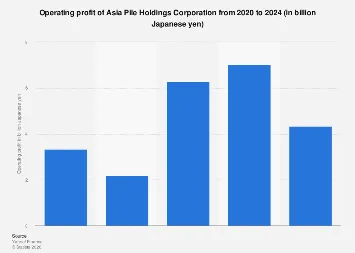
Asia Pile Holdings Corporation, a significant player in the foundation and civil engineering sector across Asia, is projecting a complex operating profit scenario for the fiscal year 2024. While specific financial figures are subject to ongoing market dynamics and internal performance, an analysis of industry trends, regional economic indicators, and the company’s strategic positioning provides a crucial lens through which to understand its potential profitability. The company’s performance is intrinsically linked to the broader economic health of the regions in which it operates, particularly Japan, Southeast Asia, and increasingly, other emerging markets.
The construction and infrastructure development sectors, which form the bedrock of Asia Pile’s business, are highly cyclical and sensitive to macroeconomic shifts. Global inflationary pressures, rising interest rates, and geopolitical uncertainties continue to cast a shadow over investment decisions in large-scale projects. For Asia Pile, this translates into a delicate balancing act between securing new contracts, managing material and labor costs, and maintaining healthy profit margins. The company’s reliance on substantial capital expenditure for its specialized piling equipment also means that financing costs and access to capital are critical determinants of its financial health.
In Japan, the company’s home market, infrastructure spending remains a key government priority, driven by the need for seismic retrofitting, urban renewal, and the development of new transportation networks. However, Japan’s demographic challenges, including an aging population and a shrinking workforce, present ongoing labor cost pressures and potential constraints on project execution capacity. Asia Pile’s ability to leverage automation and advanced construction techniques will be paramount in mitigating these domestic headwinds. Furthermore, the company’s established reputation and long-standing relationships with major developers and government agencies provide a competitive advantage in this mature market.
The outlook for Southeast Asia, however, offers a more dynamic growth trajectory. Countries like Vietnam, the Philippines, and Indonesia are experiencing robust economic expansion, fueled by foreign direct investment, burgeoning urbanization, and government-led infrastructure initiatives. These regions present significant opportunities for Asia Pile in the construction of high-rise buildings, industrial facilities, and critical public infrastructure such as ports and airports. The company’s experience in navigating diverse regulatory environments and its adaptability to local construction practices will be vital in capitalizing on these growth prospects. However, increased competition from both local and international players in these rapidly developing markets necessitates a strategic focus on efficiency, innovation, and cost competitiveness.
Global economic conditions will undoubtedly influence Asia Pile’s 2024 performance. A slowdown in global trade or a significant recession in major economies could dampen investment in export-oriented industries, indirectly impacting demand for industrial construction projects. Conversely, a stable or recovering global economy would likely translate into increased capital flows into infrastructure development across Asia, benefiting companies like Asia Pile. The company’s diversification across different geographical markets provides a degree of resilience against localized economic downturns, but a synchronized global slowdown would pose a more significant challenge.
Analyzing the competitive landscape, Asia Pile operates in an industry characterized by high barriers to entry due to the specialized nature of its equipment and expertise. However, the threat of new entrants is always present, particularly in rapidly growing markets where local players are increasingly sophisticated. Asia Pile’s ability to maintain its technological edge, invest in research and development for more sustainable and efficient piling solutions, and cultivate strong client partnerships will be critical to defending its market share and sustaining its profitability. The company’s commitment to safety and environmental standards also plays an increasingly important role in securing contracts with multinational corporations and environmentally conscious developers.
From a financial perspective, the company’s operating profit will be a function of its revenue streams and its cost structure. Revenue will be driven by the volume and value of projects secured, as well as the pricing power it can command. Cost management will be crucial, encompassing raw material procurement (steel, concrete), labor expenses, equipment maintenance and depreciation, and overheads. Fluctuations in commodity prices, particularly steel, can have a direct impact on project costs. Furthermore, efficient project management and the mitigation of construction delays are essential to avoid cost overruns and protect profit margins.
The strategic investments made by Asia Pile in recent years, including the expansion of its fleet of advanced piling machinery and the development of new construction methodologies, are expected to contribute to its operational efficiency and competitiveness in 2024. The adoption of digital technologies, such as Building Information Modeling (BIM) and advanced project management software, can further streamline operations, improve cost forecasting, and enhance risk management. These technological advancements are not merely operational enhancements but are becoming increasingly critical differentiators in securing high-value projects.
Looking ahead, the long-term profitability of Asia Pile Holdings Corporation will also be shaped by its ability to adapt to evolving industry trends. The global push towards sustainability and green construction presents both challenges and opportunities. Developing and offering eco-friendly piling solutions, such as those utilizing recycled materials or minimizing environmental impact during construction, could open new market segments and enhance the company’s brand reputation. Furthermore, the increasing demand for resilient infrastructure, capable of withstanding the impacts of climate change, such as extreme weather events and rising sea levels, will likely drive investment in specialized foundation engineering, a core competency of Asia Pile.
In conclusion, while precise operating profit figures for Asia Pile Holdings Corporation in 2024 remain speculative without definitive financial disclosures, the company’s performance will be a reflection of its strategic agility in navigating a dynamic global economic environment, the specific growth trajectories of key Asian markets, and its capacity to innovate and maintain cost discipline within the competitive infrastructure development sector. Its established expertise, coupled with strategic investments in technology and a forward-looking approach to sustainability, positions it to address the opportunities and challenges that lie ahead. The company’s success in 2024 will hinge on its ability to translate its technical capabilities into robust financial returns amidst an evolving global economic and industrial landscape.