In early 2025, the American workforce experienced a significant shift, with over 212,000 women exiting the labor market, a trend exacerbated by the rise in return-to-office mandates, according to the U.S. Bureau of Labor Statistics (BLS). This exodus was particularly pronounced among mothers with young children, whose workforce participation dropped nearly three percentage points in just six months. These statistics underscore a critical and often overlooked challenge: businesses are inadvertently shedding valuable talent by perpetuating a corporate culture that views caregiving as a professional liability rather than a potent asset. The disproportionate burden of caregiving responsibilities, largely shouldered by women globally, continues to exact a dual penalty on their careers, first when they step back from work to provide care, and subsequently upon their return, as their invaluable, newly acquired skills often go unrecognized. This systemic bias, often termed the "motherhood penalty" or "maybe baby" bias, casts a shadow over all women, perceiving them as potential flight risks for future caregiving needs.
Yet, this prevailing narrative starkly contrasts with emerging research that highlights caregiving as a profound incubator of precisely the attributes modern employers covet most: empathy, problem-solving prowess, adaptability, and resilient leadership under duress. The implication is clear: strategically retaining and supporting caregiver employees transcends mere corporate social responsibility; it is a direct pathway to enhanced organizational performance and a critical competitive advantage. Studies consistently demonstrate that enterprises with greater gender diversity, particularly in leadership roles, exhibit lower employee turnover, foster stronger team dynamics, and achieve superior profitability. For instance, transitioning from an all-male leadership team to one with 30% female representation in top executive positions has been associated with an approximate one percentage point gain in net profit margin, translating to a substantial 15% increase in profitability for an average firm.
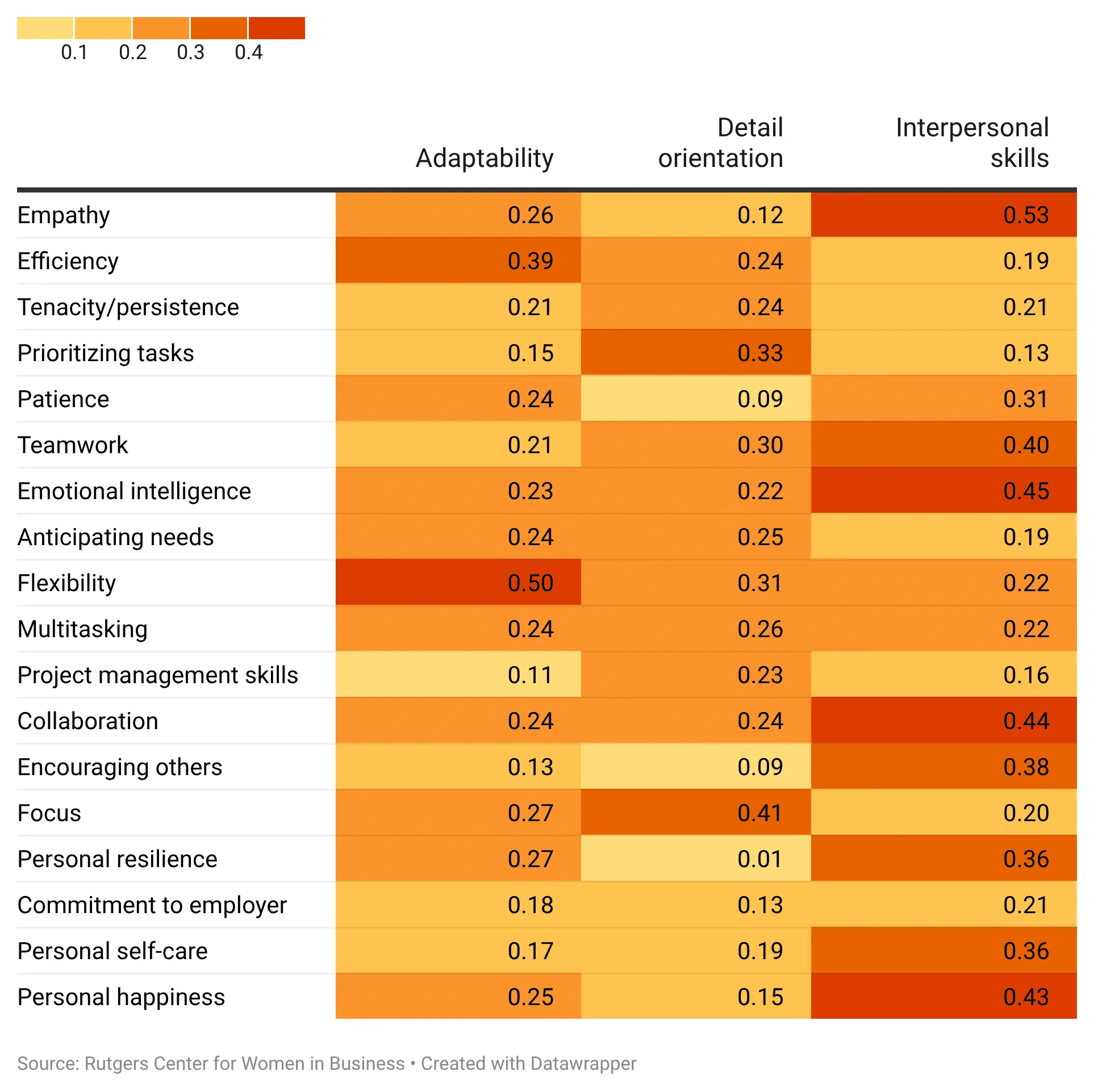
Recognizing this disconnect, the Rutgers Center for Women in Business embarked on a comprehensive investigation, shifting the focus from why businesses should invest in caregivers to how caregiver employees directly benefit businesses. Their 2023 survey of 131 caregivers unveiled a compelling truth: the immersive experience of caregiving demonstrably enhances professional efficacy across a spectrum of crucial competencies. Participants reported marked improvements in areas ranging from conflict resolution and meticulous time management to astute strategic foresight. The data allowed researchers to delineate 18 distinct caregiving-honed skills, which were then clustered into three overarching domains: adaptive capacity, interpersonal acumen, and organizational proficiency.
The initial reception to these findings was overwhelmingly positive, with professionals across diverse industries echoing a shared sentiment of having long felt compelled to conceal their caregiving responsibilities due to ingrained negative employer perceptions. The entrenched assumption that caregivers are drains on workplace time and resources was fundamentally challenged by this empirical evidence. To further validate these insights from an employer’s vantage point, a subsequent semantic embedding analysis was conducted. This rigorous methodology mapped the identified 18 caregiving skills against the U.S. Bureau of Labor Statistics’ 17 core workplace skills—a comprehensive catalog representing the most universally valued human capacities across all occupations, including adaptability, critical thinking, interpersonal communication, leadership, and detail orientation. The BLS assigns importance ratings to each skill based on employer-reported requirements for various jobs.
The triangulation of data revealed striking overlaps. Caregiving skills encompassed an impressive 76.5% of the total BLS workforce skills and achieved a perfect 100% alignment with the top three skills most in demand across all occupations: adaptability, interpersonal communication, and detail orientation. When the analysis narrowed to specifically examine management occupations, the congruence was even more pronounced. Caregiving skills demonstrated 100% coverage across all leadership competencies, mirroring precisely the BLS’s top managerial skill priorities: adaptability, problem-solving, decisive decision-making, and intrinsic leadership qualities. Cumulatively, these findings unequivocally establish caregiving not as a career impediment but as a powerful catalyst for developing the adaptive, relational, and organizational capabilities that are foundational to effective management and transformative leadership in any sector.

In an era increasingly defined by the pervasive expansion of artificial intelligence and automation across the workplace, the human capabilities cultivated through caregiving are becoming irreplaceable competitive differentiators. Caregiving, in essence, functions as a rigorous, real-world leadership development program, equipping individuals with a unique blend of "human skills" that machines cannot replicate. For organizational leaders and employers, this necessitates a profound re-evaluation of their perspectives on caregivers and caregiving, prompting a strategic pivot towards four specific actions.
First, articulate and integrate caregiving skills explicitly. It is imperative for organizations to actively track, translate, and formally recognize the contributions of caregivers within resume language, performance review frameworks, and leadership development models. Skills such as empathy, resilience, complex problem-solving, and foresight – all hallmarks of effective caregiving – are frequently undervalued or dismissed as "soft skills" in traditional corporate contexts. This oversight not only perpetuates inequities but also blinds organizations to a rich vein of talent. By consciously naming and valuing these competencies, companies can unlock hidden potential and foster a more inclusive, skills-first culture.
Second, eliminate penalties for career breaks. The pervasive bias against career gaps, particularly those taken for caregiving, represents a significant drain on the global talent pool. Research from India, for instance, indicated that women returning to the workforce after a career break received 49% fewer callbacks than those without such gaps. This is not merely an equity issue but a costly loss of experienced, highly skilled professionals. Parental leave and other forms of caregiving leave should be reframed not as resume gaps but as intensive periods of real-world leadership and skill development. Furthermore, the societal stigma associated with men taking extended parental leave often prevents eligible fathers from utilizing such benefits, inadvertently reinforcing the caregiving burden on women. Actively encouraging men to take leave and ensuring it does not negatively impact their career progression is crucial for fostering a more equitable environment. "Returnship" programs, designed to recruit and integrate professionals who have paused their careers for caregiving, offer a structured pathway for businesses to tap into this experienced talent pool. As Brett Hemmerling, Vice President and Global Head of Early Careers and Programs Talent Attraction at Moody’s, astutely noted, "If employers are stuck looking only at career trajectories and see gaps as negatives, they’re missing the skills and experiences cultivated within those gaps. Relocating a family, for example, is project management. Managing caregiving demands requires adaptability and resilience managers find appealing." This underscores the necessity for leadership pipelines to evolve beyond linear career paths, embracing the rich, nonlinear experiences that often produce more adaptable and resilient leaders for the complexities of modern business.
Third, recalibrate organizational policies. Progressive policies such as paid leave, flexible work arrangements, and comprehensive caregiving support are no longer optional perks; they are fundamental to talent attraction, retention, and overall organizational success. Caitlin Freeland, Vice President of Inclusion and Culture at Bristol-Myers Squibb, observed, "Organizations that overlook caregiving are missing a major growth opportunity." Her team’s proactive development of an inclusion strategy that explicitly recognizes caregiving as an untapped asset exemplifies this paradigm shift. Flexible scheduling practices, in particular, are consistently cited as among the top factors influencing employee retention, highlighting the direct intersection of structural work policies with caregiving demands. When these policies are visibly supported by leadership and widely adopted across the workforce, they cultivate a virtuous cycle of cultural acceptance, reduced stigma, and stronger equity outcomes, ultimately diminishing the "motherhood penalty" by ensuring both men and women can integrate their professional and personal lives without compromise.
Finally, strategically invest in uniquely human skills. The analysis of caregiving skills reveals a distinct advantage: they do not significantly overlap with the domains where AI is advancing most rapidly, such as advanced mathematics, mechanical operations, or highly specialized technical tasks. Instead, caregiving inherently develops the human, adaptive, and relational competencies that remain beyond the reach of artificial intelligence. Empathy, foresight, resilience, critical thinking under pressure, and nuanced interpersonal communication—the very essence of caregiving—are emerging as the most critical skills for the future workforce, offering organizations an enduring competitive edge in an increasingly automated world. The World Economic Forum’s Future of Jobs reports consistently highlight these human-centric skills as paramount for navigating the evolving landscape of work in 2026 and beyond.
The implications for organizations are profound. Caregiving serves as a masterclass in leadership, crisis management, adaptability, collaboration, and foresight. Companies that persist in viewing caregiving as a career impediment risk alienating and losing high-value employees, thereby forfeiting a powerful lever for innovation, organizational resilience, and sustained talent retention. In the coming decade, the enterprises that will truly thrive are those that abandon outdated biases against caregiving, instead embracing caregivers as individuals equipped with some of the most sought-after and strategically valuable skill sets in the contemporary global workforce. By championing this paradigm shift, businesses can cultivate a more inclusive, productive, and ultimately more profitable future.