The contemporary business landscape is awash with data, a phenomenon acutely felt within the domain of customer experience (CX). What began as a strategic imperative to understand and enhance customer interactions has, for many organizations, devolved into a paradox of plenty: an overwhelming deluge of metrics that, rather than illuminating the path to improved customer satisfaction and loyalty, often obscures it. Companies worldwide, driven by the digital transformation and the availability of sophisticated analytics tools, collect an astonishing array of data points, frequently exceeding their capacity to effectively manage, interpret, or leverage these insights for meaningful operational and strategic adjustments. This proliferation often leads to analysis paralysis, a drain on valuable resources, and a disjointed understanding of the very customer journey they aim to optimize.
The evolution of CX measurement has seen a rapid expansion from rudimentary satisfaction surveys and direct customer interviews to an intricate ecosystem of quantitative and qualitative indicators. Today, a customer might receive multiple surveys within minutes of completing a transaction – whether checking out of a hotel, receiving a product delivery, or concluding a service interaction. These measurements span three broad categories: customer perceptions, capturing the emotional and cognitive states of customers; operational indicators, reflecting the efficiency and effectiveness of internal processes; and financial outcomes, linking CX directly to revenue, profitability, and market share. The challenge arises when companies adopt metrics primarily due to industry commonality or vendor recommendations, without a rigorous assessment of their relevance to specific business objectives or their capacity to drive actionable improvements within their unique customer journeys. This often results in a fragmented view, where isolated metrics provide snapshots without revealing the larger narrative of customer engagement.
Research underscores the extent of this data overload. A recent report by Gartner indicated that most large enterprises track over 50 CX metrics, with some managing upwards of 200. This complexity is compounded by the fact that various metrics are often managed in disparate silos across different departments, leading to inconsistent data definitions, redundant efforts, and a lack of a unified customer view. In a collective study involving 14 companies within the subscription services sector, a diverse range of channels – from call centers and live chat to web portals, email campaigns, and physical retail locations – were found to employ well over 100 distinct CX performance measures. The sheer scale of collecting, compiling, and analyzing daily, weekly, monthly, quarterly, and annual data across these metrics demanded substantial human capital and significant financial investment, often without yielding commensurate strategic returns. The economic impact of such inefficiency is considerable, diverting resources that could otherwise be invested in innovation, product development, or direct customer value creation.
The core issue is not the availability of data, but the absence of a strategic filter. Many organizations mistake data volume for insight depth, believing that more metrics automatically equate to a better understanding of their customers. This approach overlooks the critical step of identifying which metrics truly matter – those that are predictive of future customer behavior, indicative of critical moments of truth, and directly correlated with desired business outcomes. Without this strategic focus, CX efforts risk becoming an expensive exercise in data collection rather than a powerful engine for growth. The operational cost of maintaining extensive data infrastructure, combined with the human effort required for analysis and reporting, can quickly erode any potential gains from CX initiatives if not managed judiciously.
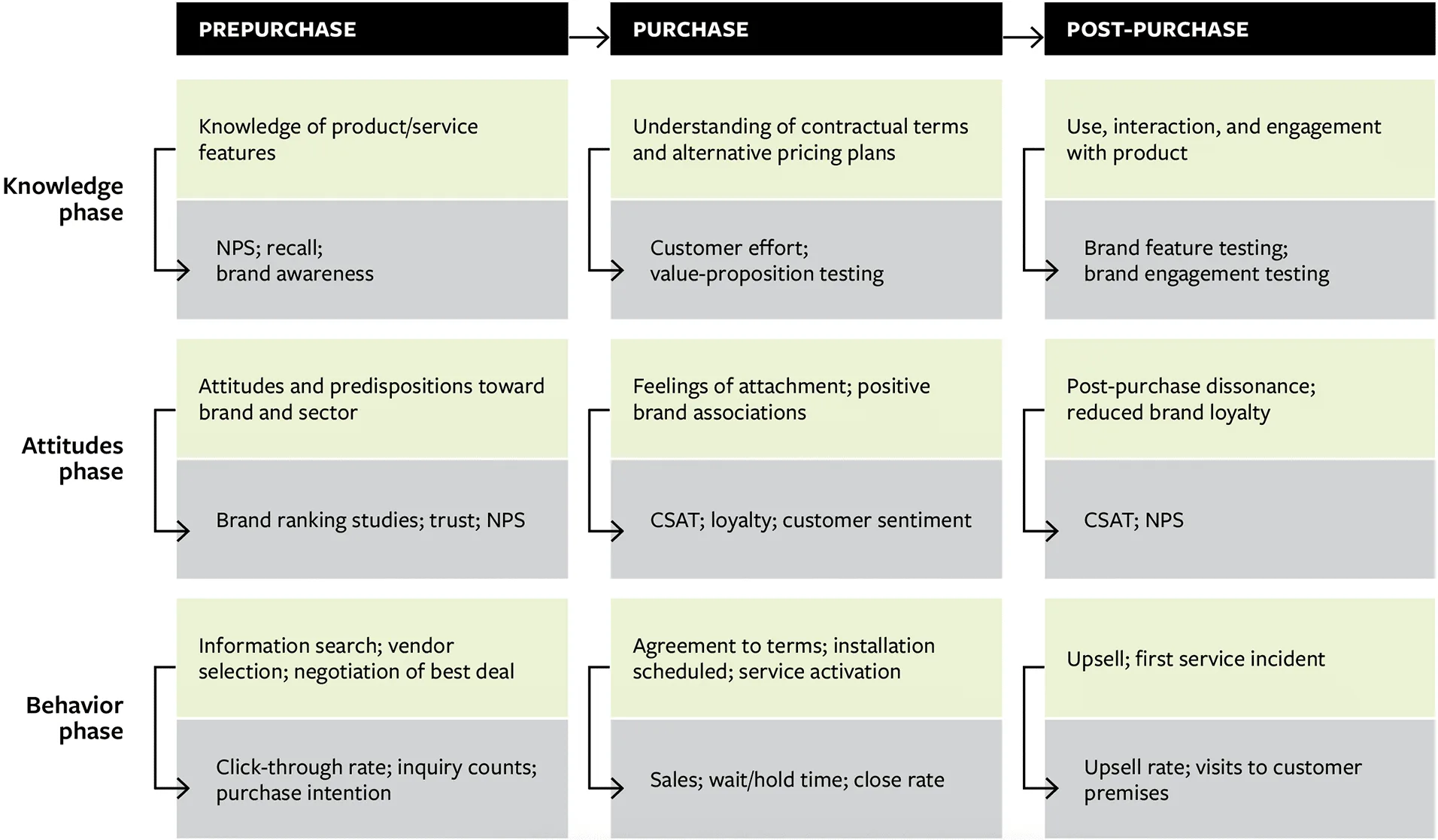
To navigate this complexity, a paradigm shift is required towards a more efficient and effective CX management program. This involves a two-pronged approach: first, a rigorous elimination of low-value metrics, and second, the strategic mapping of a smaller, high-impact set of key CX metrics across the entire customer journey. This methodology, honed through extensive consulting work and a comprehensive review of existing literature, allows businesses to streamline their data collection processes, enhance reporting efficiencies, and most importantly, derive genuinely actionable insights. It liberates CX managers from the burden of data aggregation, allowing them to focus on interpreting signals and driving improvements.

The customer journey map serves as the crucial framework for this strategic re-evaluation. By meticulously charting each stage of the customer’s interaction with a brand – from initial awareness and consideration to purchase, onboarding, usage, support, and ultimately, retention and advocacy – organizations can identify the critical touchpoints and "moments of truth" that disproportionately influence overall customer sentiment and loyalty. At each of these pivotal junctures, specific metrics can be strategically deployed. For instance, during the onboarding phase, metrics like "time to first value" or "feature adoption rate" might be more relevant than generic satisfaction scores, as they directly reflect the customer’s ability to successfully engage with the product or service. Similarly, in a support interaction, "first contact resolution" or "agent empathy score" could be more telling than a broad "customer satisfaction" metric, providing direct insights into service efficacy and quality.
The process of eliminating low-value metrics necessitates a critical assessment against several criteria. Metrics that are redundant, provide limited actionable insights, exhibit high collection costs relative to their strategic utility, or show weak correlation with business outcomes should be deprioritized or retired. For example, if multiple surveys are measuring essentially the same sentiment at different points, consolidation is key. If a metric consistently fails to inform decisions or predict churn, its value is questionable. This streamlining not only reduces the operational overhead associated with data collection and analysis but also sharpens the focus of CX teams, enabling them to dedicate resources to areas that truly move the needle. The goal is to move beyond mere measurement to predictive analytics, using a concise set of metrics to anticipate customer needs and proactively address potential issues.
The economic implications of this refined approach are substantial. Companies that excel in CX consistently outperform their peers financially. Studies indicate that leaders in customer experience typically achieve higher revenue growth, better profitability, and increased customer lifetime value (CLTV). By focusing on metrics that directly influence these outcomes, businesses can more effectively allocate resources to CX initiatives that yield tangible returns. A clearer understanding of which interventions impact specific journey stages allows for targeted investments, whether in improving digital interfaces, enhancing agent training, or optimizing product features. This precision minimizes wasteful spending on initiatives based on ambiguous or irrelevant data, thereby maximizing return on CX investment.
Implementing such a strategic shift, however, is not without its organizational challenges. It often requires breaking down internal silos, fostering cross-functional collaboration, and securing buy-in from senior leadership for a unified vision of CX. Establishing a common language and understanding around key metrics, along with centralized data governance, is paramount. Moreover, it involves a cultural shift – moving from a mindset of "collect everything" to "collect what matters." This transformation empowers CX professionals to act as strategic advisors, translating data into clear, compelling narratives that resonate with executives and drive impactful business decisions.
In an increasingly competitive global marketplace, where customer expectations continue to rise, the ability to accurately and efficiently measure customer experience is no longer just a best practice; it is a fundamental pillar of sustainable growth. By adopting a disciplined, journey-centric approach to CX measurement, organizations can transcend the current data overload, transform their data into genuine strategic assets, and unlock unparalleled business value. The future of CX leadership belongs to those who master the art of precision, focusing on the metrics that not only reflect the customer’s voice but also propel the enterprise forward.