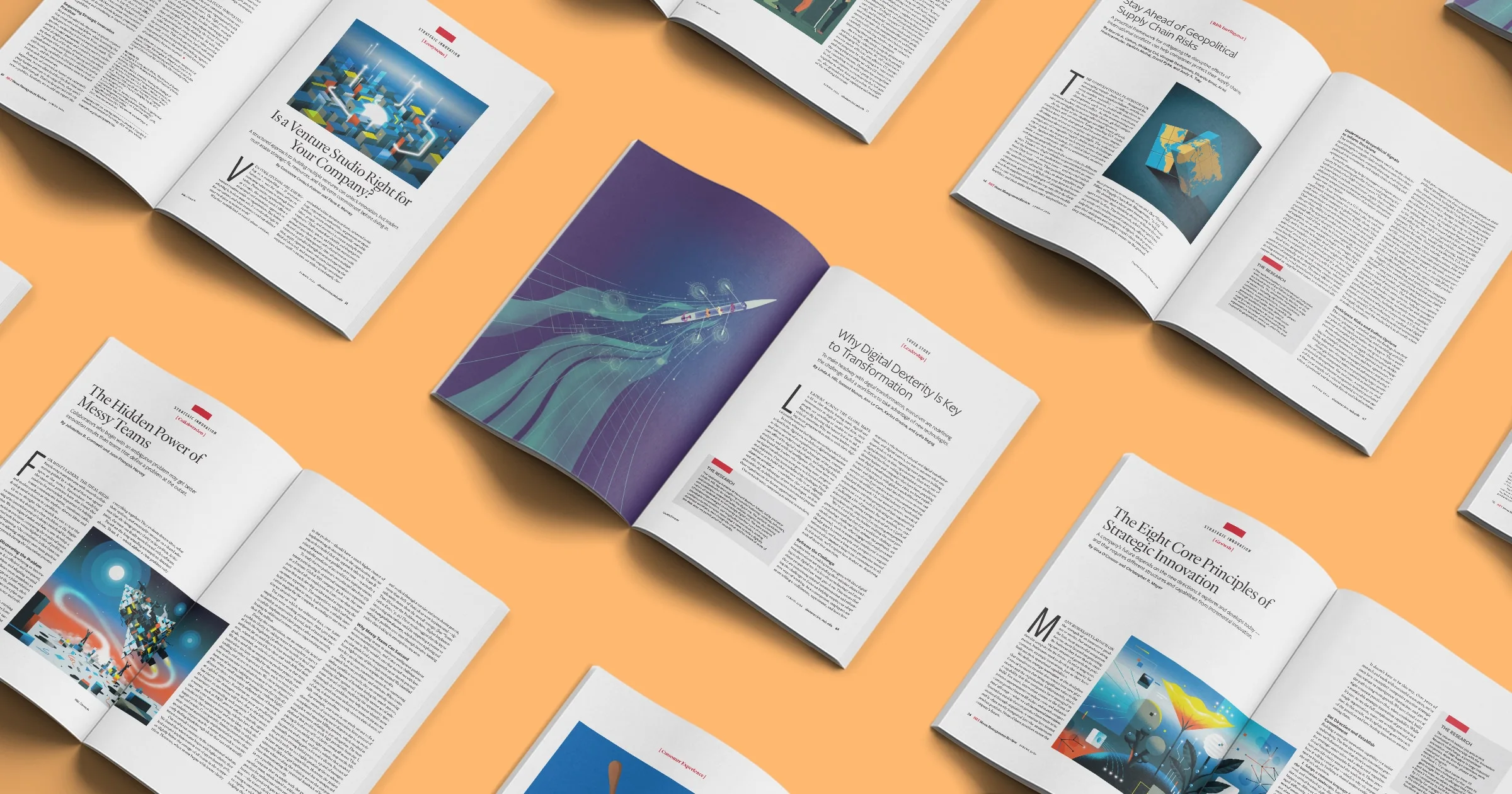
The contemporary business landscape is characterized by an unprecedented confluence of technological acceleration, shifting geopolitical dynamics, and evolving consumer expectations, compelling organizations to fundamentally rethink their operational and strategic paradigms. Sustained growth and resilience in this volatile environment demand a proactive, integrated approach to innovation, digital transformation, risk management, and customer engagement. Leaders globally are grappling with the need to foster perpetual renewal while simultaneously optimizing existing operations and fortifying against external shocks.
At the heart of future-proofing any enterprise lies the cultivation of strategic innovation as a core capability. Far too often, mature companies, initially propelled by groundbreaking products or services, succumb to the inertia of maintaining and incrementally improving established business lines. This focus, while necessary for operational efficiency, frequently stifles the development of truly novel offerings crucial for long-term vitality. Research into organizations that have successfully maintained a robust pipeline of innovation reveals that establishing a permanent, strategically guided innovation practice is paramount. Such a practice necessitates not just investment, but a deep, foundational commitment to a strategic vision that continuously seeks to renew the product and service portfolio, ensuring a steady stream of market-relevant advancements and preventing competitive stagnation. This capability moves beyond sporadic R&D efforts, embedding innovation into the organizational DNA, much like a muscle that is consistently exercised and strengthened.
A potent mechanism gaining traction for corporate innovation is the venture studio model, allowing companies to deploy talent, ideas, and capital into multiple parallel ventures. Despite significant challenges, including high capital requirements and intricate governance, the appeal of venture studios stems from their potential to explore diverse strategic areas simultaneously, accelerating the pace of new business creation. However, success is contingent upon several critical factors: securing specialized talent, leveraging a proprietary intellectual property portfolio or deep market insights, effectively combining internal assets with external capabilities, and establishing agile yet robust governance structures. Critically, a venture studio demands a sustained, long-term commitment of both time and financial resources, distinguishing it from short-term incubators or accelerators. Reports indicate a burgeoning interest in corporate venturing, with global venture studio investments projected to grow by 15-20% annually, underscoring their perceived value in the innovation ecosystem.
Paradoxically, the genesis of truly viable new ideas often emerges not from rigidly defined problem statements, but from open-ended exploration facilitated by "messy teams." Conventional wisdom advocates for clear objectives at the outset of any innovation project, believing this enhances the likelihood of successful idea generation and implementation. Yet, studies, including analyses of global corporate innovation competitions, have demonstrated a counter-intuitive outcome: teams commencing with ambiguous problem definitions, but demonstrating the ability to converge on a single, compelling idea by the project’s midpoint, significantly increased their chances of successful implementation. This suggests that an initial phase of unconstrained ideation and exploratory dialogue can unlock deeper creativity and uncover more disruptive solutions than a strictly goal-oriented approach, challenging traditional project management methodologies and highlighting the value of emergent discovery.
Beyond innovation, the imperative for digital transformation continues to reshape organizational structures and processes. However, the path to digital maturity is fraught with peril for those adopting a technology-first mindset. Leaders who frame digital transformation primarily as a cultural shift, prioritizing people and work-process change, consistently achieve greater progress. Developing a workforce that is not only willing but also adept at integrating digital tools and data into their daily roles requires more than new software or training modules. It demands a recalibration of organizational culture, facilitated by specific leadership practices: reframing the challenge as a human-centric endeavor, active engagement from the executive suite, fostering collaboration across diverse perspectives, and demonstrating unwavering, long-term commitment. Industry data suggests that nearly 70% of digital transformations fail to meet their objectives, often due to insufficient attention to the human element and cultural adaptation.
The pervasive influence of digital technologies also extends to the very foundations of performance measurement. Traditional Key Performance Indicators (KPIs) and balanced scorecards, while offering structure, are frequently susceptible to "gaming behaviors," where employees optimize for narrow metrics at the expense of broader strategic goals, such as long-term customer retention. Insights from artificial intelligence and machine learning research offer a compelling new approach. By adapting AI model training techniques to design performance measurements, leaders can create more robust and fraud-resistant metric systems. This involves moving beyond single-point indicators to multi-faceted, context-aware measurement frameworks that mirror how AI models learn and adapt, deterring unethical practices and aligning incentives more closely with overarching organizational objectives. The global market for AI in business is expanding rapidly, with projections indicating a valuation exceeding $500 billion by 2030, much of which will be driven by its application in data analytics and strategic decision support.

The ability to act decisively and rapidly in a data-rich environment is becoming a critical differentiator. "Real-time businesses" (RTBs) are demonstrating superior performance by empowering employees to make better-informed decisions and execute them with unparalleled speed. This operational agility, underpinned by instantaneous data availability and decision-making capabilities, translates into significantly higher customer satisfaction and a distinct competitive edge. Key enablers for successful RTBs include ubiquitous access to real-time data, decentralized decision-making authority for empowered employees, enhanced business agility to pivot quickly, and a deeply integrated customer experience. Case studies from diverse sectors, ranging from aviation to retail and financial services, illustrate how companies leveraging these four capabilities can transform their operations, optimizing everything from supply chain logistics to customer service interactions and gaining market share.
Furthermore, fostering sustainable growth requires a rigorous, structured approach to learning from both successes and failures. A novel framework, DIRS (Decompose, Interpret, Reward, and Scale), offers a powerful methodology for leaders to systematically determine the underlying causes of project outcomes. Developed from extensive longitudinal studies across various countries and industries, DIRS emphasizes structured learning, enabling managers to accurately assess past decisions and plan for future growth. By decomposing initiatives into their constituent parts, interpreting the causal links between actions and outcomes, appropriately rewarding successful learning, and scaling effective strategies, organizations can cultivate a culture of continuous improvement, identify future opportunities with greater precision, and develop repeatable growth strategies that enhance resilience and longevity. This iterative learning cycle is vital in dynamic markets where competitive advantages are fleeting.
In an increasingly interconnected yet fractured world, protecting supply chains from geopolitical disruption has become a paramount concern. The traditional risk management playbook is proving insufficient against the backdrop of escalating trade wars, sanctions, armed conflicts, and other forms of global political instability. A structured, three-part framework can equip leaders to proactively safeguard their supply chains: developing a sophisticated understanding of geopolitical signals, anticipating potential risks and defining a spectrum of response options, and maintaining adaptive capabilities to navigate current conditions. Companies that invest in robust geopolitical intelligence and scenario planning can mitigate the economic fallout of disruptions, which have, in recent years, cost global businesses trillions of dollars in lost revenue and increased operational expenses, highlighting the inadequacy of purely economic models for supply chain resilience.
Even seemingly internal strategic moves, like mergers and acquisitions (M&A), carry substantial risks that require sophisticated foresight. A staggering proportion—nearly half—of all M&A deals eventually unravel, often a decade after the initial transaction, leading to significant destruction of shareholder value, diversion of leadership attention, and damage to organizational credibility. Research points to poor initial strategic fit and unforeseen disruptions as primary culprits. The "Corporate Divorce Matrix" provides a vital diagnostic tool, enabling leaders to identify risks throughout the M&A lifecycle and anticipate potential pitfalls. By applying this framework, businesses can make more informed, sound decisions at every stage, from initial due diligence to post-merger integration, significantly improving the chances of long-term success and avoiding costly corporate separations.
Finally, in an era of abundant data, the challenge in customer experience (CX) measurement is not a lack of metrics, but rather an overwhelming proliferation of them. Marketers often drown in data, struggling to discern which indicators truly deliver actionable insights. A smarter approach involves paring down the collected customer metrics to focus only on those that align directly with key stages of the customer journey and provide the deepest, most relevant understanding of customer sentiment and behavior. By streamlining metric collection, organizations achieve greater tracking and reporting efficiencies, and by connecting these refined metrics to specific touchpoints within the customer journey, CX managers gain profoundly more actionable insights. This focused approach enables companies to move beyond superficial satisfaction scores, optimize customer interactions more effectively, and build lasting loyalty, ultimately translating into enhanced brand equity and sustained revenue growth.
The diverse challenges and opportunities outlined underscore a fundamental truth: successful enterprise leadership in the mid-2020s and beyond hinges on an integrated, adaptive, and human-centric approach. From nurturing perpetual innovation and embracing intelligent digital transformation to building resilient global supply chains and mastering the complexities of M&A, the interconnectedness of these strategic imperatives demands a holistic vision. Organizations that cultivate agility, leverage data for real-time decision-making, and commit to continuous learning are best positioned to not only survive but thrive amidst the ongoing currents of global change.