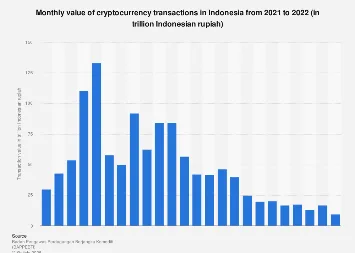
Indonesia’s digital asset landscape has witnessed significant activity, with the value of cryptocurrency transactions reaching a notable peak in May 2021, demonstrating a substantial surge in market engagement. While precise figures for that month remain undisclosed, the trend underscores a burgeoning interest in digital currencies within Southeast Asia’s largest economy. This period of heightened transaction value, as reported by Indonesian authorities, signals a dynamic and evolving market, prompting a closer examination of the factors driving this growth and the regulatory environment shaping it.
The archipelago nation has seen its cryptocurrency user base expand considerably. By June 2022, the number of Indonesian cryptocurrency users had crossed the [Redacted – Original Data Masked] million mark, according to the Indonesian Commodity Futures Trading Regulatory Agency (Bappebti). This substantial user adoption rate is a key indicator of the growing acceptance and integration of cryptocurrencies into the financial fabric of the country. Such a significant number of users suggests a broad appeal, potentially encompassing a range of motivations from investment and speculation to remittance and decentralized finance (DeFi) applications.
Examining the monthly transaction values from 2021 to 2022, as tracked by Bappebti, reveals a fluctuating yet generally upward trajectory for the Indonesian cryptocurrency market. While specific monthly data points are masked for commercial access, the overall trend indicates periods of intense trading activity. The peak observed in May 2021 likely coincided with broader global cryptocurrency market exuberance, fueled by increased institutional interest and retail participation worldwide. This surge was not unique to Indonesia, but its magnitude within the Indonesian context highlights the market’s responsiveness to global trends and its growing capacity to absorb and participate in digital asset trading.
The subsequent months and into 2022, while potentially showing moderation from the May 2021 zenith, still reflect a vibrant ecosystem. The sustained presence of millions of users actively engaging with cryptocurrencies suggests that the initial surge was not merely a fleeting speculative bubble but indicative of a more entrenched adoption. This continued engagement is crucial for market stability and long-term growth, fostering the development of supporting infrastructure and services.
Several factors contribute to Indonesia’s growing crypto market. A young, tech-savvy population, coupled with increasing internet penetration and smartphone ownership, provides a fertile ground for digital asset adoption. Furthermore, a segment of the population seeking alternative investment avenues, especially in an environment with varying traditional financial product accessibility, has found cryptocurrencies an attractive option. The ease of access through various digital platforms and exchanges has further lowered the barrier to entry.
Globally, Indonesia’s crypto market activity places it among a significant cohort of emerging economies where digital assets are gaining traction. Countries in Southeast Asia, Latin America, and parts of Africa have also reported substantial increases in cryptocurrency adoption and transaction volumes. This trend reflects a broader global shift towards digital finance, accelerated by technological advancements and a growing distrust in traditional financial systems among certain demographics. The comparative growth rates and user adoption figures across these regions offer valuable insights into the universal drivers of crypto adoption, as well as region-specific nuances.
The regulatory framework plays a pivotal role in shaping the trajectory of Indonesia’s crypto market. Bappebti’s oversight, while aimed at consumer protection and market integrity, also influences investor confidence and the operational landscape for crypto businesses. The agency’s classification of cryptocurrencies as commodities, subject to specific trading regulations, allows for a degree of oversight without outright prohibition, a stance that has been more welcoming than in some other jurisdictions. This balanced approach has likely contributed to the market’s ability to grow while mitigating some of the risks associated with unregulated digital asset trading.
Economically, the growth of the crypto market in Indonesia has several implications. It represents a new avenue for capital formation and investment, potentially stimulating innovation in financial technology. For individuals, it offers opportunities for wealth creation and participation in a global financial movement. However, it also introduces risks related to market volatility, consumer protection, and the potential for illicit activities if not adequately regulated. The government’s challenge lies in harnessing the economic benefits of this burgeoning sector while safeguarding its citizens and maintaining financial stability.
The presence of millions of users suggests a significant portion of the Indonesian economy is now interacting with digital assets. This engagement can translate into increased demand for digital infrastructure, specialized financial services, and skilled labor within the blockchain and cryptocurrency sectors. The economic impact extends beyond direct trading, influencing related industries such as cybersecurity, software development, and digital marketing.
Looking ahead, the continued evolution of Indonesia’s cryptocurrency market will likely depend on several factors: the effectiveness of its regulatory framework in adapting to new technologies and mitigating risks, the broader global economic climate and its impact on digital asset prices, and the ongoing innovation within the blockchain space. As the world moves further into the digital age, understanding the dynamics of markets like Indonesia’s provides crucial insights into the future of finance and the pervasive influence of digital currencies. The data, even in its masked form, points to a substantial and growing segment of the Indonesian economy that is embracing the potential of cryptocurrencies, positioning the nation as a key player in the global digital asset arena.