The global energy landscape remains locked in a state of high-stakes suspense as the intersection of military conflict and commodity trading creates a period of intense price discovery. In recent sessions, the international oil benchmarks have served as a real-time barometer for geopolitical anxiety, spiking on fears of regional escalation before retreating as diplomatic signals and strategic rhetoric suggest a possible moderation in the scope of potential hostilities. This "fear premium," which has become a staple of the post-pandemic trading environment, highlights the extreme sensitivity of global supply chains to the shifting political climate in the Middle East.
Market participants have been particularly focused on the verbal cues emanating from Jerusalem and Tehran. When Israeli leadership offered comments that appeared to prioritize military objectives over the destruction of energy infrastructure, the immediate relief was palpable across trading floors in London and New York. Brent crude and West Texas Intermediate (WTI), which had both been trending toward significant monthly highs, saw a notable pullback. This retreat was not a sign of total resolution, but rather a recalibration of risk. Investors who had priced in a "worst-case scenario"—namely, the direct targeting of Iranian oil fields or the blockade of the Strait of Hormuz—found themselves unwinding long positions as the immediate threat to physical supply seemed to diminish.
The economic stakes of this volatility cannot be overstated. For the global economy, which is currently navigating a delicate transition toward lower inflation and interest rate normalization, a sustained surge in energy costs represents a significant "black swan" risk. Central banks, including the U.S. Federal Reserve and the European Central Bank, are monitoring these developments with predatory focus. High energy prices act as a regressive tax on consumers, siphoning away discretionary income and driving up the costs of logistics and manufacturing. Should oil prices sustain a level above $90 or $100 per barrel, the hard-won progress in cooling headline inflation could be rapidly reversed, forcing a more hawkish stance from monetary policymakers.
To understand the current market dynamics, one must look at the structural vulnerabilities of the global oil supply. While the United States has achieved record-breaking levels of domestic production, reaching upwards of 13 million barrels per day, the global market remains fundamentally reliant on the stability of the Middle East. The region accounts for approximately one-third of global sea-borne oil trade. The Strait of Hormuz, a narrow waterway between Oman and Iran, remains the world’s most critical chokepoint. Approximately 20 million barrels of oil flow through this passage daily. Any disruption here—whether through direct military action or increased insurance premiums for tankers—would send shockwaves through the global economy that no amount of U.S. shale production could fully offset.
The recent price retreat also reflects a broader tug-of-war between geopolitical risk and macroeconomic reality. While the "war drums" provide upward pressure, the "demand doldrums" provide a powerful ceiling. China, the world’s largest importer of crude oil, continues to send mixed signals regarding its economic recovery. Despite various stimulus measures announced by Beijing, industrial data suggests a cooling of the Chinese manufacturing engine. When demand from the world’s primary growth driver is perceived as sluggish, it acts as a natural hedge against the price spikes caused by Middle Eastern instability. Traders are essentially weighing the probability of a supply shock against the certainty of a demand slowdown.
Furthermore, the role of OPEC+ remains a critical variable in this economic equation. Led by Saudi Arabia and Russia, the alliance has maintained a strategy of production cuts to support price floors. However, there is growing internal pressure within the cartel to reclaim market share, especially as non-OPEC producers like Brazil, Guyana, and the U.S. continue to expand their footprint. The tension between maintaining high prices and maintaining market dominance creates a complex backdrop for the current crisis. If the Middle East conflict were to escalate to the point of a major supply disruption, OPEC+ theoretically holds significant spare capacity. Yet, the logistical and political ability to deploy that capacity in the heat of a regional war remains an untested proposition.
The psychology of the modern oil trader has also evolved. In the era of high-frequency trading and algorithmic execution, news headlines are processed in milliseconds. When an Israeli official suggests a targeted rather than a total response, algorithms trigger sell orders that can drop prices by several percentage points in a matter of minutes. This creates a feedback loop of volatility that often outpaces the physical reality of oil production. For institutional investors and hedge funds, the current environment is less about the fundamentals of "barrels in the ground" and more about the "headlines in the feed." This shift toward sentiment-driven trading has made the market more prone to "flash" movements, both to the upside and the downside.
Beyond the immediate price action, the conflict is accelerating a broader discussion regarding energy security and the transition to renewables. For European nations, which have already undergone a painful decoupling from Russian energy following the invasion of Ukraine, the renewed instability in the Middle East reinforces the strategic necessity of diversifying energy sources. The volatility of the fossil fuel market serves as a persistent advertisement for the stability of domestic renewable grids. However, the reality remains that for the foreseeable future, global transport and heavy industry are tethered to the price of a barrel of crude. The transition is a marathon, but the current geopolitical crises are forcing a sprint in strategic planning.
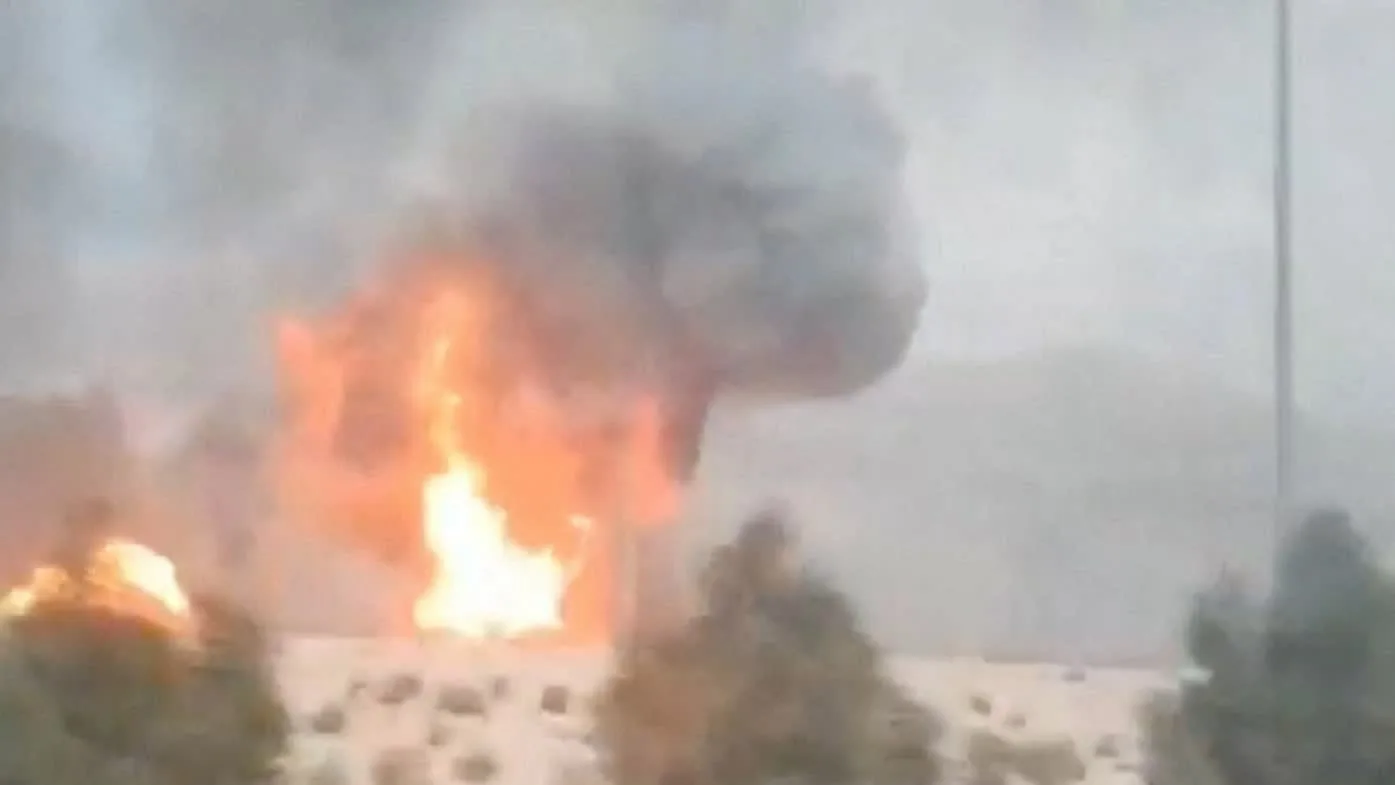
Expert analysts suggest that the market is currently in a "wait-and-see" pattern. The retreat from the day’s highs is a reprieve, not a recovery. The underlying tensions between regional powers remain unresolved, and the potential for a miscalculation is high. If a single tanker is struck or if a missile finds its way to a major refinery, the current downward trend would be erased instantly. This has led to a surge in the options market, as companies seek to hedge against "tail risks"—extreme events that are unlikely but would have catastrophic financial consequences.
The impact on the shipping industry is another layer of the economic narrative. Increased tensions in the Red Sea and the Persian Gulf have already led to a spike in maritime insurance rates. Many shipping firms have opted for the longer, more expensive route around the Cape of Good Hope to avoid the Suez Canal and the Bab el-Mandeb strait. This adds significant transit time and fuel costs to global trade, contributing to "cost-push" inflation even if the price of oil itself remains relatively stable. The "hidden" costs of war are often just as damaging to the global economy as the visible spikes in commodity prices.
As we look toward the final quarter of the year, the trajectory of the oil market will likely be defined by three pillars: the discipline of the OPEC+ alliance, the efficacy of Chinese economic stimulus, and the tactical restraint of military actors in the Middle East. While the comments from Israeli leadership have successfully tempered immediate market jitters, the equilibrium is fragile. The world remains one headline away from a renewed energy crisis. In this environment, the only certainty for businesses, governments, and consumers is the continuation of uncertainty. The retreat in prices seen today is a welcome pause, but in the volatile theater of global energy politics, the curtain rarely stays down for long. Professional observers and market participants must remain vigilant, recognizing that while the "fear premium" may fluctuate, the underlying risk remains a permanent feature of the modern economic landscape.