The escalating geopolitical tensions in West Asia have cast a stark spotlight on India’s profound dependence on imported energy, reigniting urgent calls for a strategic pivot towards indigenous, sustainable alternatives. With a significant portion of its crude oil and natural gas requirements sourced from this volatile region, India faces heightened vulnerability to supply disruptions and price volatility, directly impacting its economic stability and critical services. This precarious situation underscores a prevailing sentiment among business leaders and policymakers: that the current crisis must be leveraged as a catalyst for long-term energy resilience.
India’s energy landscape is characterized by a rapidly growing demand fueled by industrial expansion and a burgeoning population. The nation imports over 85% of its crude oil and more than half of its natural gas needs, primarily from the Middle East. This heavy reliance exposes the Indian economy to external shocks, translating into higher import bills, inflationary pressures on consumers, and increased fiscal deficits. Recent disruptions, including those impacting critical shipping routes and global supply chains, serve as potent reminders of the economic fragility inherent in this dependency. The cost of a standard LPG cylinder, for instance, often fluctuates significantly in response to international market dynamics, directly affecting millions of households and businesses.
Amidst this backdrop, Nithin Kamath, co-founder and CEO of Zerodha, a leading financial services firm, and a prominent voice in India’s climate investment landscape through his Rainmatter fund, has forcefully articulated the need for a paradigm shift. Drawing on the adage, "never waste a good crisis," Kamath advocates for aggressive investment in locally produced, environmentally friendly alternatives like biogas. His perspective highlights not just the immediate necessity but also the strategic foresight required to build enduring energy security. Rainmatter, his climate fund, actively supports companies in the biogas sector, demonstrating a tangible commitment to this vision.
Biogas, produced through the anaerobic digestion of organic matter such as agricultural waste, municipal solid waste, and animal manure, offers a multifaceted solution. It yields a combustible gas, primarily methane, which can be purified into Compressed Biogas (CBG) for use as vehicle fuel, industrial energy, or piped cooking gas. Simultaneously, the process generates bio-slurry, an organic fertilizer that enhances soil health and reduces reliance on chemical alternatives. This circular economy approach addresses not only energy needs but also critical issues of waste management, rural development, and agricultural sustainability.
Despite its immense potential, India currently harnesses less than 1% of its estimated biogas production capacity. Expert analyses suggest that the nation possesses the organic waste feedstock to produce approximately 62 million metric tonnes (MMT) of CBG annually. This staggering untapped resource could significantly offset India’s natural gas imports, which currently stand at around 30-35 MMT annually. The chasm between potential and current output, estimated at less than 1 MMT, underscores a significant opportunity for national energy policy and private investment.
The pathway to unlocking this potential requires a robust policy framework and substantial capital infusion. Government initiatives such as the Sustainable Alternative Towards Affordable Transportation (SATAT) scheme, launched in 2018, aim to establish 5,000 CBG plants across India by 2023, with a target production of 15 MMT of CBG. While these programs have laid crucial groundwork, the pace of implementation and the scale of investment still need to accelerate dramatically to meet ambitious targets and truly "move the needle." Policy measures could include guaranteed off-take agreements, attractive subsidies, capital expenditure support, tax incentives, and streamlined regulatory approvals to attract both domestic and international investors. Furthermore, fostering research and development in advanced digestion technologies and feedstock optimization is crucial for long-term viability.

Global benchmarks illustrate the transformative power of a concerted focus on biomethane. Europe, for instance, boasts over 1,300 operational biomethane plants, with Germany alone operating more than 200. These nations have successfully integrated biogas into their energy grids, benefiting from diversified energy sources, reduced greenhouse gas emissions, and economic growth in rural areas. China, another energy giant, is aggressively targeting 20 billion cubic meters of bio-natural gas annually by 2030, despite much of its existing biogas infrastructure being small-scale and rural. Their strategy involves rapid industrial scaling and policy support to integrate bio-natural gas into the national energy mix. These examples provide a clear roadmap for India, highlighting the need for a comprehensive, multi-stakeholder approach that combines policy mandates with market-driven incentives.
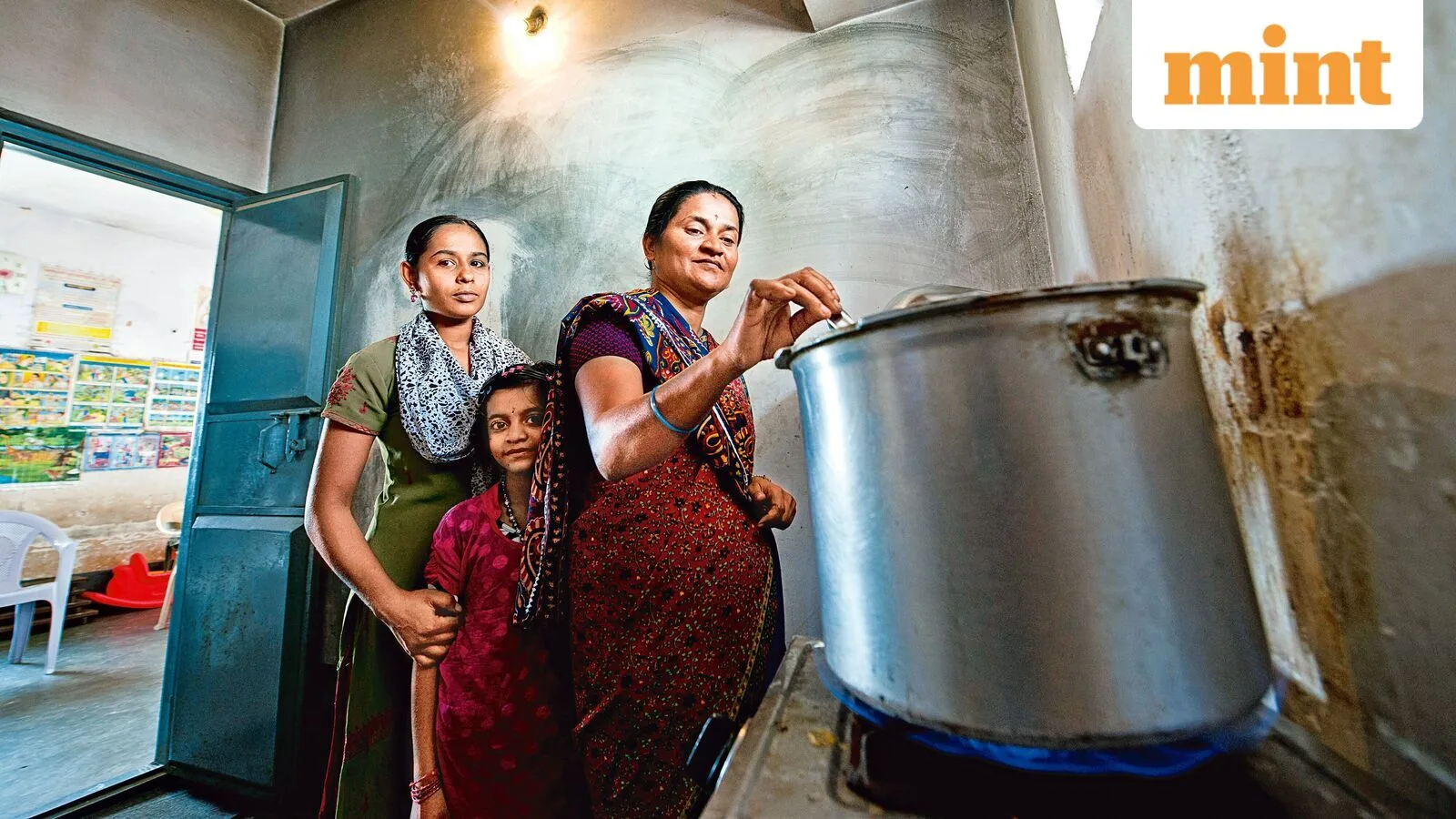
The economic and social dividends of a thriving biogas sector extend far beyond energy security. At a micro-level, the implementation of biogas plants, particularly community-based or decentralized models, can revolutionize rural economies. In Lambra Kangri village in Punjab’s Hoshiarpur district, a cooperative biogas plant has provided piped cooking gas to 44 homes for nearly a decade, offering a cleaner, more affordable alternative to LPG cylinders, typically costing ₹700 or more. Households pay a mere ₹200-300 per month, while the valuable bio-slurry is sold as an organic fertilizer, making the plant self-sustaining. This model not only reduces household energy expenditures but also creates local employment and improves public health by reducing indoor air pollution.
Further examples demonstrate the versatility and scalability of biogas applications. Akshaykalpa, a company backed by Rainmatter, has integrated biogas solutions into its network of over 1,750 farmers across Andhra Pradesh, Karnataka, Tamil Nadu, and Telangana. These initiatives empower farmers to manage agricultural waste effectively, generate their own energy, and produce organic fertilizers, thereby enhancing their livelihoods and promoting sustainable farming practices. Similarly, the joint venture between Hasiru Dala Innovations and Carbon Masters, called Sustainable Impacts, operates wet waste processing facilities in Bengaluru, converting organic waste from bulk generators like hotels and restaurants into biogas, which is then supplied back as a substitute for LPG and CNG. At Kempegowda International Airport in Bengaluru, the Nexus Novus and Wisebin joint venture, also backed by Rainmatter, manages India’s first integrated waste management facility associated with an airport, processing 20 to 30 tonnes of waste daily into energy.
These pioneering efforts, while commendable, represent only a fraction of what is possible. Industry experts estimate that with successful implementation of robust policies and significant investment, India could realize 15-20% of its total CBG potential – equivalent to 8-12 MMTPA – within the next seven to eight years. Such an achievement would not only drastically reduce the import bill but also create millions of green jobs, improve sanitation, and contribute significantly to India’s climate goals by mitigating methane emissions.
However, challenges persist. These include ensuring consistent feedstock supply, developing efficient collection and aggregation mechanisms, standardizing technology, overcoming initial capital costs, and fostering greater public awareness and acceptance. An integrated approach is essential, involving collaboration between government agencies, private industry, financial institutions, and local communities.
The strategic case for biogas has never been clearer. India cannot afford to leave 62 MMT of domestic biogas potential largely untapped while it grapples with the economic and geopolitical ramifications of importing over half its natural gas requirements. The current global instability provides a compelling impetus to accelerate the transition. By embracing a comprehensive biogas revolution, India can transform a crisis into a profound opportunity, charting a course towards greater energy independence, environmental sustainability, and a more resilient, prosperous future.