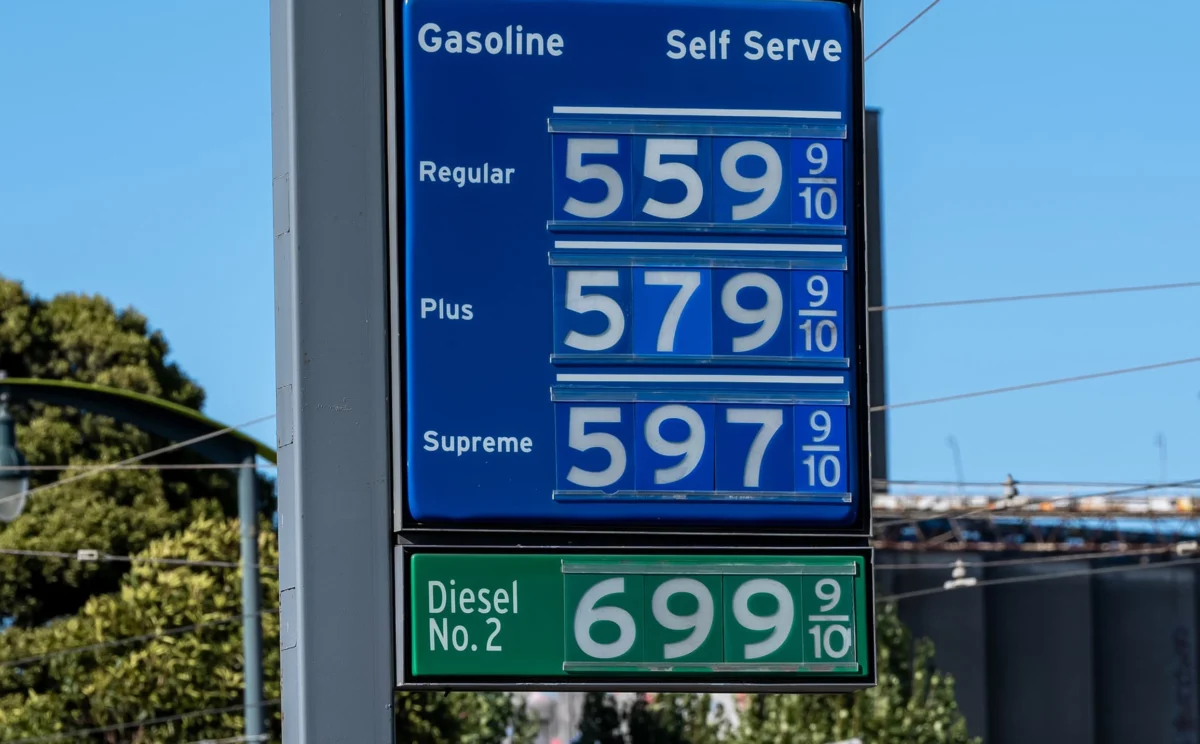
The American economy, a complex web of logistics and consumer demand, is currently facing a silent but potent adversary: the soaring cost of diesel fuel in California. While gasoline often captures the public’s attention at the pump, diesel serves as the literal engine of commerce, powering the trucks, trains, and ships that move nearly every physical good across the United States. As the conflict involving Iran enters its sixth month, the resulting volatility in energy markets has sent California’s diesel prices to unprecedented levels, creating a secondary inflationary wave that is beginning to ripple through the national supply chain.
California’s energy landscape has long been an outlier in the United States, but its current predicament is exacerbated by a "perfect storm" of geopolitical instability, domestic infrastructure limitations, and stringent environmental mandates. At the heart of the issue is the San Pedro Bay port complex, comprising the Ports of Los Angeles and Long Beach. This gateway handles approximately one-third of all containerized imports and exports for the United States. Before a product manufactured abroad reaches a shelf in the Midwest or a distribution center on the East Coast, it is almost certainly hauled by a vehicle paying California’s premium fuel rates. Consequently, the price of diesel in the Golden State is not merely a local concern; it is a national economic variable.
The geopolitical catalyst for this recent price surge is the ongoing war involving Iran, which has cast a long shadow over the Strait of Hormuz—the world’s most vital oil transit chokepoint. While crude oil prices have experienced significant fluctuations, the market for refined petroleum products, particularly diesel, has proven far more brittle. Global energy analysts point out that while crude supply is one part of the equation, the world’s ability to process that crude into usable fuel is under immense strain. The loss of Russian refining capacity due to intensified drone strikes on infrastructure, coupled with uncertainty regarding China’s fuel export quotas, has left the global market approximately 8% short of current diesel demand.
This refining bottleneck was highlighted by ExxonMobil CEO Darren Woods, who recently noted a significant disconnect between crude oil prices and the prices consumers pay for finished products. Even if the geopolitical tensions in the Middle East were to subside and maritime corridors were to fully reopen, the structural deficit in refining capacity remains a long-term challenge. The transition of several major refineries to renewable diesel production—particularly in California—has further constrained the supply of traditional petroleum-based diesel, leaving the market with little margin for error during times of international crisis.
The statistical disparity between California and the rest of the nation is stark. According to data from AAA, the average price for a gallon of diesel in the United States currently hovers around $5.36. However, in California, that figure has surged to $6.92, a dramatic increase from the $5.10 average recorded prior to the outbreak of the Iran conflict. This nearly $2-per-gallon premium acts as a "hidden tax" on the American consumer. Because transportation companies operate on thin margins, these increased fuel costs are almost immediately passed through to shippers via fuel surcharges, which are then integrated into the final retail price of goods ranging from groceries to construction materials.
The economic isolation of California further complicates the situation. Unlike the Gulf Coast or the East Coast, which are connected by a vast network of pipelines, California operates as a virtual "energy island." There are no major interstate pipelines that transport refined fuel into the state from other major U.S. refining hubs. This means the state is almost entirely dependent on its own internal refining capacity and maritime imports. When global supplies tighten or local refineries undergo maintenance, there is no easy way to pipe in cheaper fuel from Texas or Louisiana. When combined with the state’s unique fuel specifications—designed to reduce smog but more expensive to produce—the result is a structural price floor that remains significantly higher than the national average.

Financial institutions have begun to sound the alarm on the macroeconomic implications of these localized price spikes. Analysts at JPMorgan have observed that a meaningful share of the total U.S. supply chain is tethered to West Coast fuel prices. These costs do not just impact the "last mile" of delivery; they influence the entire logistics stack, including freight costs and transportation margins. If California’s diesel prices remain elevated, it could hinder efforts by the Federal Reserve to bring inflation back down to its 2% target, as transportation costs are a fundamental component of the Consumer Price Index (CPI).
Furthermore, the "diesel-to-crude" spread—often referred to as the crack spread—has widened. This indicates that the shortage is not just about the availability of oil, but about the industrial capacity to turn that oil into the middle distillates required for heavy industry. The agricultural sector is particularly vulnerable. In the American heartland, diesel powers the tractors that plant and harvest crops, but California is also a massive agricultural exporter. The cost of moving California-grown produce to the rest of the country is rising in tandem with the cost of fuel, adding further pressure to food inflation, which has already been a sensitive point for American households.
The global context of this crisis cannot be overstated. The world is currently grappling with a realignment of energy trade routes. European nations, having largely decoupled from Russian energy sources, are now competing for diesel supplies from the Middle East and Asia. This global competition keeps prices high even in energy-rich nations like the United States. While the U.S. is the world’s largest producer of oil and gas, the regional imbalances—particularly on the West Coast—mean that the domestic abundance of crude does not always translate to affordable fuel at the pump.
Industry experts suggest that relief may be slow to arrive. For prices to stabilize, several factors would need to align: a cessation of hostilities in the Middle East to secure the Strait of Hormuz, an increase in Chinese fuel exports to saturate the global market, and a period of stability in Russian refining output. Domestically, there is little appetite for the construction of new refineries in the United States, especially in California, where the regulatory environment is increasingly focused on a transition away from fossil fuels. This suggests that the current volatility may be a recurring feature of the energy market rather than a temporary anomaly.
As the situation persists, businesses are being forced to adapt. Some logistics companies are exploring the acceleration of electric truck fleets, though the infrastructure for long-haul heavy-duty electric transport is still in its infancy. Others are looking at optimizing routes and increasing load factors to minimize the impact of fuel surcharges. However, these are long-term solutions to an immediate financial problem. For the time being, the high cost of diesel in California remains a significant headwind for the broader U.S. economy.
In conclusion, the surge in California diesel prices serves as a potent reminder of the interconnectedness of global geopolitics and domestic economics. A conflict thousands of miles away in the Middle East has directly impacted the cost of doing business in the United States, with California’s unique energy landscape acting as a magnifying glass for these pressures. As long as the global refining market remains tight and the "energy island" of the West Coast remains isolated from the rest of the country’s fuel infrastructure, the ripple effects of $7-a-gallon diesel will continue to be felt at kitchen tables and in corporate boardrooms across the nation. The "workhorse" of the economy is becoming increasingly expensive to feed, and the bill is ultimately being paid by the American consumer.