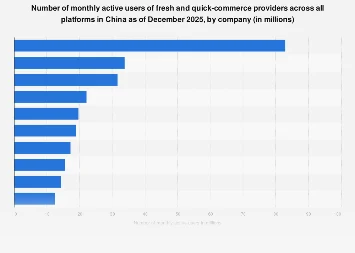
The burgeoning Chinese market for online fresh food delivery is projected to witness substantial expansion in its user base by the end of 2025, with leading platforms expected to capture millions of monthly active users (MAUs). This sustained growth underscores the increasing consumer reliance on digital channels for procuring essential groceries, driven by convenience, a wider product selection, and evolving lifestyle preferences. While specific, granular figures for individual platforms remain proprietary and are often subject to subscription access, industry projections and available data point towards a highly competitive and dynamic sector.
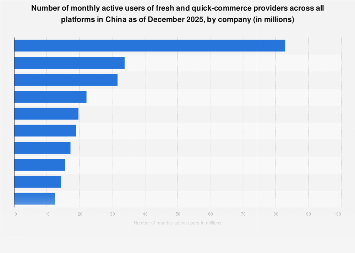
Analysis of the market as of December 2025 indicates that Freshippo, a significant player in China’s quick-commerce and fresh food delivery ecosystem, is anticipated to lead in terms of monthly active users. This platform, known for its integrated online-to-offline (O2O) model and extensive network of fulfillment centers, is expected to command a considerable share of the market. Following closely is Dingdong Maicai, another prominent contender that has rapidly scaled its operations by focusing on localized delivery hubs and a diverse product catalog. The third position is projected to be occupied by Sam’s Club, which leverages its membership-based model to offer premium fresh produce and groceries through its online channels, appealing to a discerning consumer segment.
The definition of monthly active users in this context is crucial for understanding the market’s reach. It typically encompasses deduplicated users across various access points, including dedicated mobile applications, mini-programs within popular super-apps like WeChat and Alibaba’s ecosystem, and potentially web-based interfaces. This comprehensive approach reflects the multi-platform engagement strategies employed by these companies to maximize their visibility and accessibility to consumers. The inclusion of mini-programs is particularly significant, as it allows for seamless integration into existing user habits and reduces the friction associated with downloading and managing multiple applications.
The trajectory of fresh food e-commerce in China is not merely a story of user acquisition; it is intrinsically linked to broader economic trends and technological advancements. The sheer scale of China’s population, coupled with a rapidly growing middle class that increasingly values time and convenience, provides a fertile ground for online grocery services. Furthermore, the widespread adoption of smartphones and high-speed internet infrastructure has laid the technological foundation for the sector’s expansion. The COVID-19 pandemic also acted as a significant catalyst, accelerating the shift towards online shopping for essential goods, a behavioral change that appears to be enduring.
Globally, China’s approach to fresh food e-commerce is often considered a benchmark. While Western markets have seen steady growth, the speed and scale of adoption in China, particularly in its Tier 1 and Tier 2 cities, are unparalleled. Companies here are not just delivering groceries; they are often innovating in areas such as cold chain logistics, inventory management, and personalized shopping experiences. The intense competition has spurred significant investment in technology, from AI-powered recommendation engines to automated warehousing solutions, aiming to optimize efficiency and reduce delivery times.
The economic impact of this sector extends beyond the immediate companies involved. It stimulates job creation in logistics, warehousing, and customer service. It also supports agricultural producers by providing a direct channel to a vast consumer base, potentially leading to more stable demand and fairer pricing. However, this rapid growth also presents challenges, including intense price wars, high customer acquisition costs, and the need for robust quality control and food safety standards. The sustainability of current business models, often characterized by heavy subsidies to attract and retain customers, remains a subject of ongoing debate among market analysts.
Looking ahead, the market is expected to consolidate further, with established players likely to absorb smaller competitors or forge strategic partnerships. The focus will increasingly shift from sheer user growth to profitability and customer loyalty. Innovation in product offerings, such as ready-to-cook meal kits, organic produce, and imported specialty items, will be critical for differentiation. Moreover, the integration of social commerce features and loyalty programs will play a vital role in fostering deeper customer engagement and reducing churn rates.
The competitive landscape is also shaped by regulatory frameworks. Chinese authorities have been increasingly scrutinizing the e-commerce sector, particularly concerning anti-monopoly practices, data privacy, and consumer protection. Companies must navigate these evolving regulations while continuing to innovate and expand. The long-term success of these platforms will depend not only on their ability to meet consumer demand but also on their commitment to responsible business practices and adherence to regulatory guidelines. The projected user numbers for 2025 represent a significant milestone, but they are merely a snapshot in time for an industry that is constantly evolving, driven by technological innovation, consumer demand, and the relentless pursuit of efficiency in delivering fresh food to millions of households across China.