The post-pandemic euphoria that once propelled China’s domestic travel industry to record heights is rapidly giving way to a sobering reality. For the past two years, tourism was heralded as one of the few resilient pillars of the Chinese economy, a reliable engine of growth even as the property sector stumbled and manufacturing faced global headwinds. However, recent data and corporate earnings reports suggest that the "revenge travel" era has reached a definitive end, replaced by a cutthroat environment of price wars and diminishing per-capita spending that reflects a broader crisis of consumer confidence across the world’s second-largest economy.
The shift in momentum is most visible in the cooling performance of international hospitality giants. Hilton Worldwide Holdings recently adjusted its outlook for the Chinese market, signaling a shift from optimism to caution. The hotel group now anticipates that revenue per available room (RevPAR)—a critical industry metric that combines occupancy rates and room pricing—will decline by low single digits for the remainder of the year. This revised forecast is a significant downgrade from earlier expectations of a flat performance and follows a quarterly swing that saw a 1.3% growth in the first quarter evaporate into a 2.2% contraction by the second.
According to Christopher Nassetta, President and CEO of Hilton, the Chinese economy is currently characterized by a lack of consistency. While the nation continues to post growth figures that would be the envy of many Western nations, the pace and reliability of that growth are failing to meet the historical benchmarks that global investors and local businesses have come to expect. This "sputtering" effect is particularly pronounced in the travel sector, where discretionary spending is often the first casualty of economic uncertainty.
The data supporting this downturn is stark. According to figures from Smith Travel Research (STR) cited by Goldman Sachs, RevPAR across the Chinese hotel industry tumbled by 6% year-on-year through late July. This followed a modest 1% decline in June, effectively wiping out the mild gains seen during the spring travel season. The decline is being driven by a dual pressure: a three-percentage-point drop in occupancy rates and a simultaneous 1% slide in average daily rates (ADR). When hotels are forced to lower prices while simultaneously seeing fewer guests, the impact on the bottom line is exponential.
The current climate has ignited a fierce price war, particularly in regions that were previously considered "must-visit" destinations. In Dali, a picturesque city in Yunnan province known for its historic architecture and highland scenery, the disparity in pricing is jarring. While a weekend night at a premium Hilton resort might command $173, savvy domestic travelers are increasingly opting for alternatives. Data from the travel booking platform Trip.com reveals that comparable accommodations in the same area are often available for less than a third of that price, with some reputable options dipping as low as $50.
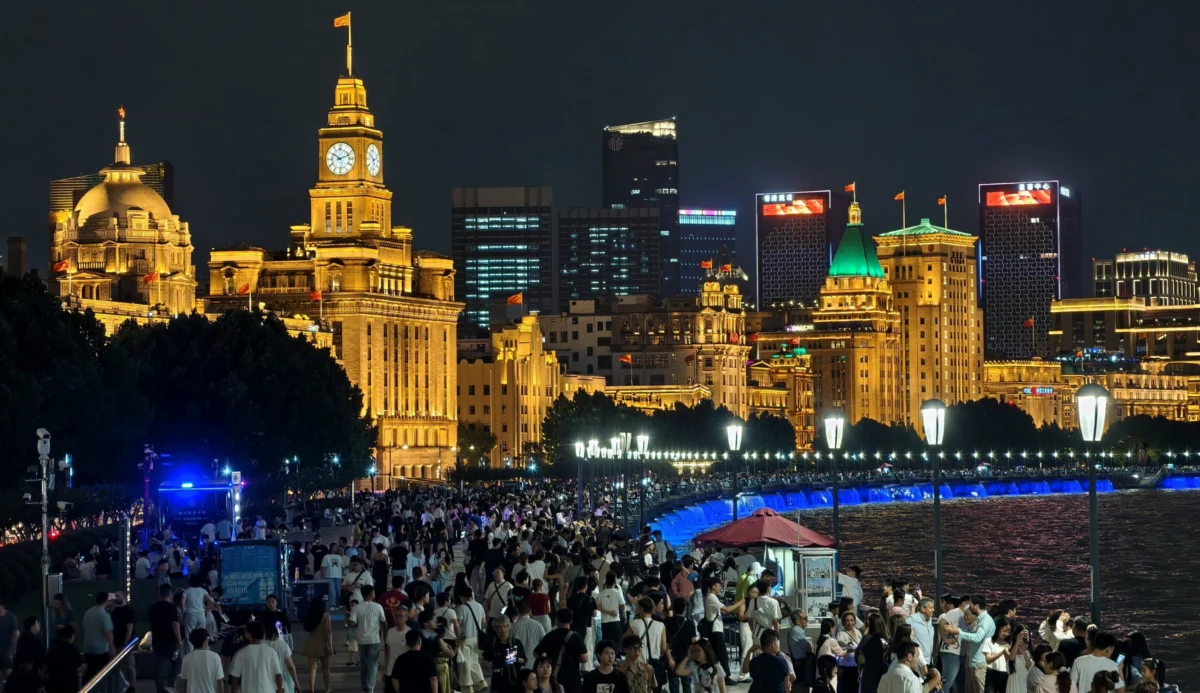
This trend of "trading down" is not isolated to rural retreats. In Shanghai, the nation’s financial hub, the median price for a one-night stay has settled at approximately 595 yuan ($88). In more remote but trending destinations like Kashgar in the Xinjiang Uygur Autonomous Region, the median price is a mere 192 yuan ($28). While luxury suites costing thousands of dollars per night continue to exist, they are increasingly becoming outliers in a market where the "typical" traveler is hunting for bargains. The analysis of thousands of listings shows a staggering range of options, with some stays starting as low as 40 yuan ($6), illustrating the desperate measures some operators are taking to maintain occupancy.
Economists suggest that this is not merely a cyclical correction but a structural shift in how Chinese consumers approach leisure. Gary Ng, a senior economist at Natixis, points to a "sharp decline of per-capita spending" on tourism that began to manifest in the third quarter of 2025. While people are still traveling, they are doing so with a newfound frugality. The "special forces travel" trend—a social media phenomenon where young people visit as many landmarks as possible in 24 hours while spending the absolute minimum on food and lodging—has evolved from a niche subculture into a mainstream consumer strategy.
This frugality is a direct byproduct of the broader macroeconomic environment. China’s retail sales have remained consistently sluggish, and the consumer price index (CPI) has hovered near deflationary territory. In June, the CPI rose by a lower-than-expected 1%, while the specific sub-index for travel costs fell by 0.6% on a month-on-month basis. Dong Liquan, a chief statistician at the National Bureau of Statistics, noted that significant drops in airfares and hotel rates were primary contributors to this decline. When the cost of travel falls faster than the general rate of inflation, it suggests a sector that is struggling with overcapacity and weak demand.
The cooling of the domestic market stands in stark contrast to the burgeoning "K-shaped" recovery within the luxury and inbound segments. While the middle-class domestic traveler is tightening their belt, high-net-worth individuals and international visitors are providing a much-needed lifeline to premium operators. Hyatt Hotels Corporation, for instance, has reported a vastly different experience than its mid-market competitors. Hyatt’s RevPAR in Greater China rose by 7.2% in the second quarter, bolstered by an 11% surge in its luxury properties.
This divergence is fueled largely by a shift in government policy aimed at revitalizing international ties. China has aggressively expanded its visa-free entry program to include citizens from various European and Asian nations. This has resulted in a significant uptick in high-spending visitors from economies with higher per-capita incomes. Hyatt reported an 18% increase in travelers from the United States and a 24% jump in visitors from Europe over the last quarter. Mark Hoplamazian, Hyatt’s President and CEO, described the luxury leisure segment in China as being "on fire," suggesting that for those at the top of the economic pyramid, the "sputtering" economy is less of a deterrent.
However, the question remains whether the luxury and inbound segments are large enough to offset the domestic slowdown. Natixis estimates that overseas visitors account for only about 12% to 13% of total tourism spending in China. While their contribution is valuable, the health of the industry ultimately rests on the shoulders of the hundreds of millions of domestic tourists who form the backbone of the market.
The implications of this tourism slowdown extend far beyond the balance sheets of hotel chains. Tourism is a labor-intensive industry that supports millions of jobs in transport, hospitality, retail, and local craftsmanship. In provinces like Yunnan and Xinjiang, where tourism is a primary driver of the local GDP, a sustained downturn in spending could lead to regional economic stagnation. Furthermore, the price wars currently being waged are likely to lead to a consolidation of the market. Smaller, independent operators who lack the capital reserves of global chains may find it impossible to survive a prolonged period of suppressed margins.
Looking ahead, the Chinese tourism market is entering a phase of maturity where growth will no longer be driven by sheer volume but by the ability to offer unique, high-value experiences. As wage growth slows and the wealth effect from the property market continues to diminish, consumers are becoming more discerning. They are moving away from standardized group tours and "check-the-box" sightseeing in favor of niche experiences—such as visiting "China’s First Coffee Village" in Baoshan—but they are doing so with a meticulous eye on the price tag.
The current price wars are a symptom of an industry in transition. For the Chinese government, the challenge will be to stimulate domestic consumption without relying on the debt-fueled models of the past. For the travel industry, the task is to navigate a landscape where the consumer is no longer willing to pay a premium for the status of travel, but rather demands tangible value for every yuan spent. As the sun sets on the era of unrestrained post-pandemic spending, the Chinese tourism sector must learn to thrive in a climate of caution, where competition is fierce and the "bright spots" are increasingly reserved for those who can cater to an increasingly bifurcated market.