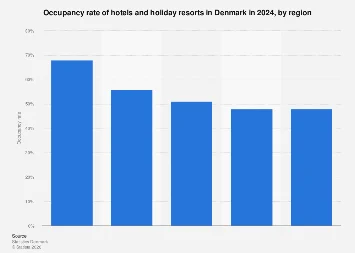
The Danish tourism sector is demonstrating a nuanced recovery in 2024, with significant regional disparities in hotel and holiday resort occupancy rates. While the nation as a whole is experiencing a rebound in visitor numbers, the distribution of this demand highlights key economic and demographic factors influencing travel patterns. The Capital Region, encompassing the vibrant hub of Copenhagen, has emerged as a leading performer, reflecting its status as a primary gateway and a magnet for both business and leisure travel. Conversely, other regions are exhibiting more moderate growth, signaling the need for targeted strategies to bolster their appeal and economic contribution from the hospitality industry.
Data indicates that the Capital Region has achieved a notable occupancy rate, underscoring its robust appeal. This performance is not solely attributable to a surge in international arrivals but also to a sustained domestic tourism market and a resurgence in corporate events and conferences. Copenhagen’s well-developed infrastructure, extensive cultural offerings, and its role as a major business center provide a consistent base of demand that weathered the pandemic more effectively than regions reliant on specific seasonal or niche tourism. This concentration of activity often translates into higher room utilization, even as new accommodations may enter the market.
In contrast, the region of Southern Denmark, known for its picturesque coastlines and historical towns, is reporting a lower, though still respectable, occupancy rate. This region’s tourism profile often leans towards leisure travelers, families, and those seeking a more relaxed, nature-oriented experience. The recovery here may be more dependent on evolving consumer preferences for domestic travel and the perceived value proposition. Factors such as seasonal fluctuations, accessibility, and the diversity of attractions play a more pronounced role in determining occupancy levels throughout the year. Southern Denmark’s performance can also be influenced by its proximity to larger international markets, which may see varied travel intentions and spending power.
The Zealand Region, which includes significant historical sites and a mix of urban and rural landscapes, has recorded the lowest occupancy rates among the analyzed areas. This suggests a more complex recovery trajectory. While areas like Roskilde and Helsingør attract visitors, the overall demand may be more susceptible to external economic pressures, seasonal variations, and competition from other regions or even neighboring countries. The challenge for Zealand lies in diversifying its tourism offerings, enhancing its marketing reach, and ensuring that its attractions are accessible and appealing to a broader spectrum of travelers year-round. This could involve developing new cultural experiences, improving transportation links, or promoting niche tourism segments such as cycling, gastronomy, or historical reenactments.
The observed variations in occupancy rates are a critical indicator for the Danish hospitality sector, influencing revenue streams, employment, and investment decisions. For regions with lower occupancy, strategic interventions are essential. These might include targeted marketing campaigns aimed at specific demographics or emerging markets, incentives for developing new tourism products, or initiatives to improve infrastructure and accessibility. Furthermore, fostering collaboration between local businesses, tourism boards, and regional authorities can create a more unified and effective approach to promoting the region’s unique selling points.
Globally, the recovery of the tourism sector post-pandemic has been uneven. While destinations that rely heavily on international long-haul travel are still grappling with rebuilding pre-pandemic volumes, those with strong domestic markets or proximity to key source markets have shown more resilience. Denmark’s performance can be benchmarked against other European nations. For instance, countries like Spain and Italy, which are heavily reliant on international tourism, have seen significant efforts to attract visitors back through promotional campaigns and the easing of travel restrictions. Nordic neighbors, such as Sweden and Norway, also present comparative data points, often showcasing similar patterns of urban centers leading recovery while more rural or nature-focused areas may experience slower, but steady, growth.
The economic implications of these occupancy rates are far-reaching. Higher occupancy directly translates to increased revenue for hotels, supporting employment within the sector, from front-desk staff to housekeeping and management. This, in turn, has a ripple effect on ancillary businesses, including restaurants, retail outlets, transportation services, and local attractions. A strong performance in the Capital Region can bolster the national economy, while a slower recovery in other regions might necessitate increased public or private investment to stimulate growth and prevent economic stagnation in those areas.
Looking ahead, the Danish tourism industry faces both opportunities and challenges. The growing trend towards sustainable tourism, experiential travel, and digital nomadism presents avenues for innovation. Regions that can adapt to these evolving preferences, perhaps by developing eco-lodges, offering unique cultural immersions, or providing robust digital infrastructure, are likely to see enhanced occupancy rates. The success of the Capital Region serves as a model, demonstrating the power of diversified offerings and strong infrastructure. However, the development of other regions requires a tailored approach that leverages their distinct characteristics.
Statistics on hotel occupancy are not merely numbers; they are vital signals of economic health and consumer sentiment. They inform policy decisions, guide business strategies, and shape the future of destinations. For Denmark, understanding these regional dynamics is paramount to ensuring a balanced and sustainable recovery of its vital tourism sector, fostering economic prosperity across all its diverse landscapes. The ongoing analysis of these figures will be crucial for identifying emerging trends, adapting to changing market conditions, and ultimately, for solidifying Denmark’s position as a sought-after European travel destination. The focus must remain on developing a comprehensive tourism strategy that not only capitalizes on existing strengths but also proactively addresses the unique needs and potential of each region.