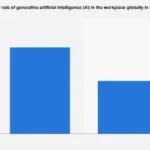

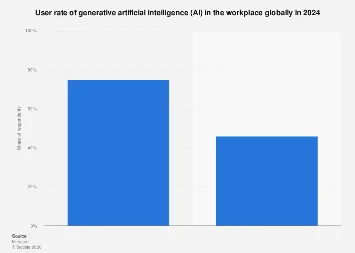
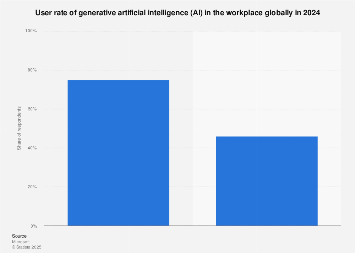
Generative Artificial Intelligence (AI) has rapidly transitioned from a nascent technology to a pervasive force within the global workforce in 2024. An extensive survey conducted between February and March 2024, encompassing 31,000 respondents across various professional roles—including AI power users, business leaders, and general employees—reveals a striking adoption rate. Preliminary data indicates that a substantial majority, approximately three-quarters of professionals worldwide, are now actively integrating generative AI tools into their daily work routines. This widespread embrace signifies a fundamental shift in how businesses operate and how individuals approach their professional tasks.
The speed at which this integration has occurred is equally noteworthy. The survey data suggests that a significant portion of these users, an estimated one-third of the total respondents, have only begun utilizing generative AI in the workplace within the last six months. This rapid onboarding points to the accessibility and perceived immediate value of these AI applications, which are designed to streamline workflows, enhance creativity, and improve productivity across a diverse range of industries. The proliferation of user-friendly interfaces and the increasing availability of specialized AI models tailored for business needs have undoubtedly accelerated this trend, making generative AI a readily adoptable technology for professionals regardless of their technical background.
This widespread adoption is not merely a matter of curiosity or early experimentation; it is increasingly driven by tangible business imperatives. Companies are recognizing generative AI’s potential to unlock significant operational efficiencies and competitive advantages. From automating repetitive tasks like drafting emails, summarizing lengthy documents, and generating initial code snippets, to facilitating more complex functions such as content creation, market analysis, and personalized customer engagement, generative AI is proving to be a versatile asset. This broad applicability allows businesses to reallocate human capital to higher-value strategic initiatives, fostering innovation and driving growth. The economic implications are profound, with early adopters reporting increased output, reduced operational costs, and an enhanced capacity to respond to market dynamics.
The impact of generative AI is not uniform across all sectors, but its influence is undeniably broad. Industries that are data-intensive or rely heavily on content creation, such as marketing, media, software development, and customer service, are witnessing some of the most dramatic transformations. For instance, marketing teams are leveraging AI to generate personalized ad copy and campaign ideas at an unprecedented scale, while software developers are using it to accelerate code writing and debugging. In customer service, AI-powered chatbots and virtual assistants are enhancing response times and providing more sophisticated support. The ability of these tools to process and synthesize vast amounts of information also makes them invaluable for research and development, enabling faster breakthroughs and more informed decision-making.
However, the rapid ascent of generative AI also presents a complex set of challenges and considerations for the global business landscape. Ethical concerns surrounding data privacy, algorithmic bias, and intellectual property rights are becoming increasingly prominent. As more sensitive business data is fed into AI models, robust security protocols and transparent data governance frameworks are essential. The potential for AI to perpetuate or even amplify existing societal biases, if not carefully managed, requires diligent oversight and the development of equitable AI systems. Furthermore, the question of copyright and ownership of AI-generated content remains a legal and creative frontier that businesses and policymakers are actively navigating.
The economic implications extend beyond individual company performance to the broader labor market. While generative AI is poised to augment human capabilities and create new job roles focused on AI management and strategy, concerns about job displacement in certain traditional roles persist. This necessitates a proactive approach to workforce development, emphasizing reskilling and upskilling initiatives to equip employees with the competencies needed to thrive in an AI-augmented economy. Educational institutions, corporate training programs, and government agencies are under pressure to adapt curricula and offer relevant training to ensure a smooth transition for the workforce. The International Labour Organization (ILO) and other global bodies are actively studying these trends to provide guidance on responsible AI deployment and to mitigate potential negative social and economic consequences.
Looking ahead, the trajectory of generative AI adoption in the workplace suggests continued growth and deeper integration. As AI models become more sophisticated, their capabilities will expand, offering new avenues for productivity and innovation. The development of specialized AI agents capable of complex problem-solving and autonomous decision-making could further revolutionize industries. Businesses that strategically invest in understanding and implementing generative AI, while proactively addressing its ethical and societal implications, are likely to emerge as leaders in the evolving global economic landscape. The current surge in adoption is not merely a trend but a fundamental reshaping of how work is performed, underscoring the imperative for organizations and individuals alike to adapt and evolve with this transformative technology. The coming years will undoubtedly see further refinement of AI tools and a deepening of their integration into the fabric of global commerce.