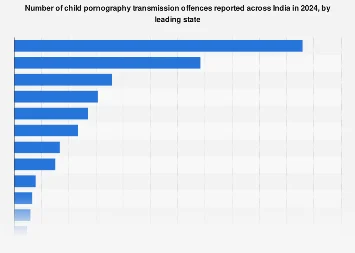
The pervasive and insidious nature of child sexual abuse material (CSAM) continues to pose a significant challenge to law enforcement and digital regulators worldwide, with India, a nation undergoing rapid digital transformation, grappling with its own escalating concerns. While precise, publicly accessible, and granular data on the prevalence of such offences by specific states in India for 2024 remains a closely guarded, often proprietary, or still-being-compiled figure, the underlying trends and contributing factors paint a stark picture of a growing digital threat. The sheer scale of India’s internet penetration, coupled with evolving online behaviours, necessitates a deeper examination of the socio-economic and technological landscapes that may be inadvertently fostering an environment where such illicit content can proliferate.
The digital economy in India has witnessed exponential growth, with hundreds of millions coming online for the first time in recent years, largely driven by affordable mobile data plans and the widespread availability of smartphones. This democratisation of internet access, while a boon for economic development and social connectivity, also opens new avenues for criminal activity, including the production, distribution, and consumption of child exploitation content. Unlike many developed economies with established, long-standing digital surveillance and reporting mechanisms, India’s regulatory frameworks are still maturing, often playing catch-up with the rapid pace of technological advancement and the ingenuity of those who seek to exploit it. This dynamic creates a complex environment for tracking and combating online child abuse.
Experts in cybersecurity and child protection often point to a confluence of factors contributing to the rise in such offences. These include the anonymising capabilities of the internet, the ease of cross-border data transfer, and the persistent demand for exploitative material. Furthermore, economic disparities and a lack of widespread digital literacy, particularly in rural and semi-urban areas, can leave vulnerable populations more susceptible to both victimisation and, in some instances, coercion into participating in the creation of such content. The psychological impact on victims, coupled with the societal stigma often attached to such crimes, further complicates data collection and reporting, potentially leading to underestimation of the true scale of the problem.
Globally, the challenge of combating CSAM is a shared one. The United Nations Office on Drugs and Crime (UNODC) and various international law enforcement agencies have consistently highlighted the transnational nature of these crimes, necessitating robust international cooperation. While specific national statistics for 2024 are still emerging, past reports from Indian law enforcement agencies and non-governmental organisations have indicated an upward trend in cybercrime, including cases related to child exploitation. These reports often cite increased reporting by internet service providers, social media platforms, and concerned citizens, suggesting a growing awareness and willingness to report, which, while positive, also reflects an underlying increase in detected incidents.
The economic implications of child exploitation are multifaceted and profound. Beyond the immediate suffering of the victims, the long-term societal costs include increased healthcare burdens (both physical and mental), educational disruption, and a reduced potential workforce. Furthermore, the criminal enterprises that profit from this trade often funnel funds into other illicit activities, undermining legitimate economic structures. Efforts to combat CSAM therefore not only protect children but also contribute to broader economic stability and security. The investment in robust digital infrastructure, advanced cyber forensics, and specialised law enforcement units capable of tackling online child abuse is, from an economic perspective, a critical preventative measure.
The role of technology companies and social media platforms in this fight is paramount. While many platforms have implemented content moderation policies and reporting mechanisms, the sheer volume of uploaded content presents an ongoing challenge. Artificial intelligence and machine learning are increasingly being deployed to detect and flag CSAM, but these technologies are not infallible and require constant refinement. Regulatory bodies worldwide are pushing for greater accountability from these platforms, demanding more proactive measures to prevent the hosting and dissemination of illegal content. In India, the Information Technology (Intermediary Guidelines and Digital Media Ethics Code) Rules, 2021, represent a significant step towards regulating online intermediaries and enhancing accountability, though their implementation and effectiveness in tackling specific issues like CSAM are under continuous scrutiny.
Analysing the landscape by state within India, it is reasonable to infer that regions with higher internet penetration, larger urban populations, and greater digital economic activity might also exhibit a higher number of reported or detected offences, simply due to the increased volume of online activity. However, this is not a definitive correlation, as rural areas with less digital infrastructure can still be hotspots for exploitation, often facilitated through less sophisticated but equally damaging means. States that have prioritised the establishment of dedicated cybercrime units and have fostered strong collaborations between law enforcement, NGOs, and the tech industry are likely to be more effective in both detection and prosecution.
The economic impact of child pornography offences extends beyond direct law enforcement costs. It includes the significant investment required for victim support services, rehabilitation programs, and long-term psychological care. Educational institutions also bear a burden when young people are unable to attend school or perform at their potential due to trauma. On a national level, a country’s ability to effectively combat such crimes can influence its attractiveness to foreign investment and its reputation on the global stage. A perception of lax digital security or a failure to protect its most vulnerable citizens can deter businesses and impact tourism.
Looking ahead, the challenge for India will be to balance its ambitious digital growth agenda with the imperative to create a safe online environment for all its citizens, especially its children. This requires a multi-pronged approach that includes strengthening legal frameworks, enhancing law enforcement capabilities through advanced technology and training, promoting digital literacy and awareness campaigns, and fostering greater collaboration between all stakeholders. The development of more comprehensive and transparent statistical reporting mechanisms, while sensitive to privacy concerns, will be crucial for understanding the true scope of the problem and for directing resources effectively. Without this detailed data, policymakers and law enforcement agencies are operating with incomplete information, potentially hindering their ability to formulate targeted and effective strategies to combat this pervasive digital threat. The economic and social future of India is intrinsically linked to its ability to safeguard its digital frontier and protect its youngest generation from the devastating consequences of online exploitation.