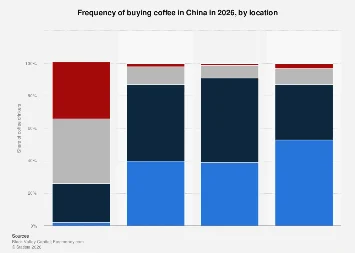
The year 2026 is poised to reveal a nuanced picture of coffee consumption across China, with a significant portion of the population embracing coffee culture with notable frequency. Projections indicate that a substantial percentage of Chinese consumers will frequent coffee shops on a regular, or even daily, basis. This trend underscores the rapid maturation of China’s coffee market, transforming it from a niche beverage to a mainstream daily ritual for many. Concurrently, the ubiquitous office coffee machine is set to remain a vital source of caffeine for a considerable segment of the workforce, highlighting the enduring convenience and integration of coffee within the professional environment.
The burgeoning coffee shop scene in China is not merely about quick caffeine fixes; it represents a broader societal shift. These establishments are evolving into social hubs, third spaces for remote work, and destinations for experiencing diverse coffee cultures. As urban populations grow and disposable incomes rise, particularly in Tier 1 and Tier 2 cities, consumers are increasingly seeking out premium coffee experiences. This includes a growing appreciation for specialty coffee, single-origin beans, and elaborate brewing methods. The ambiance, service, and the overall café experience have become as crucial as the coffee itself, driving foot traffic and repeat business. Major international chains and ambitious domestic brands are locked in a fierce competition, investing heavily in store expansion, innovative product development, and targeted marketing campaigns to capture this expanding consumer base. The sheer scale of China’s urban centers means that even a small percentage of frequent visitors translates into millions of daily coffee consumers, creating a robust and dynamic market.
However, the rise of coffee shops does not diminish the role of office coffee machines. For many white-collar professionals, the convenience of an in-office brew is unparalleled. These machines offer a cost-effective and time-efficient way to get their daily caffeine, especially during busy workdays. The prevalence of office coffee machines is particularly strong in corporate environments and co-working spaces, where providing such amenities is often seen as a perk to attract and retain talent. Furthermore, as more companies embrace flexible work arrangements and hybrid models, the office coffee machine continues to serve as a consistent touchpoint for employees, even if they are not present in the office full-time. This dual-pronged consumption pattern – the experiential aspect of coffee shops and the practical convenience of office machines – paints a comprehensive picture of how coffee is being integrated into the daily lives of Chinese consumers.
Beyond these two primary consumption points, other channels are also contributing to the overall coffee consumption figures. The increasing availability of ready-to-drink (RTD) coffee in supermarkets and convenience stores caters to consumers on the go. These products offer convenience and a wide range of flavors, appealing to a demographic that may not have the time or inclination to visit a coffee shop or rely on an office machine. The e-commerce landscape in China has also facilitated the growth of online coffee sales, from beans and ground coffee to subscription services and even direct delivery from online retailers. This digital-first approach is crucial for reaching consumers in less urbanized areas or those who prefer the convenience of home delivery.
The economic implications of this evolving coffee culture are substantial. The growth in coffee consumption is fueling significant investment in agriculture, processing, retail, and logistics. China’s domestic coffee production is expanding, though it still relies on imports to meet demand. The rise of skilled baristas and coffee professionals is creating new employment opportunities. Moreover, the coffee industry is a key driver of innovation in related sectors, such as packaging, vending technology, and digital payment solutions. The competition among coffee brands also stimulates marketing and advertising expenditure, further contributing to economic activity. The development of a sophisticated coffee market also aligns with China’s broader economic goals of shifting towards a consumption-driven economy and fostering domestic brands.
Globally, China’s coffee market is becoming increasingly influential. Its sheer size and rapid growth rate make it a focal point for international coffee companies. The preferences and purchasing habits of Chinese consumers are now closely watched by industry leaders worldwide. As China’s middle class continues to expand and its consumers become more sophisticated, the demand for diverse and high-quality coffee products is expected to grow. This presents both opportunities and challenges for global players, who must adapt their strategies to local tastes and market dynamics. The success of brands like Starbucks and Luckin Coffee, despite their different business models and controversies, demonstrates the immense potential of the Chinese market.
Looking ahead, several factors will continue to shape coffee consumption in China. Growing health consciousness may lead to increased demand for healthier coffee options, such as those with lower sugar content or plant-based milk alternatives. The ongoing digital transformation will likely see further integration of technology in the coffee experience, from personalized recommendations via apps to automated ordering and delivery systems. Sustainability is also emerging as a key concern for Chinese consumers, with a growing interest in ethically sourced beans and environmentally friendly packaging. The regulatory environment, consumer preferences, and the competitive landscape will all play a role in determining the ultimate trajectory of coffee consumption across different locations within China. The data for 2026 will serve as a crucial snapshot in this dynamic and rapidly evolving market.