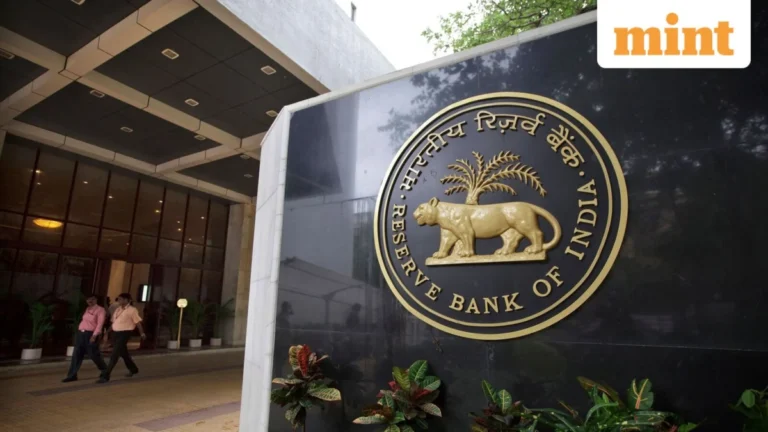


India’s central bank has embarked on a significant financial maneuver, establishing a special foreign exchange window that is rapidly drawing substantial capital, with economic analysts projecting total foreign currency inflows could reach an impressive $80-85 billion. This initiative, spearheaded by the Reserve Bank of India (RBI), is primarily leveraging Foreign Currency Non-Resident (Bank), or FCNR(B), deposits, which alone are anticipated to mobilize $65-70 billion by the time the special window concludes its primary phase on September 30. This robust mobilization effort underscores India’s proactive stance in strengthening its balance of payments amidst a challenging global economic landscape characterized by high inflation, rising interest rates, and geopolitical uncertainties.
The RBI introduced this temporary dollar-rupee swap facility for fresh FCNR(B) deposits on June 5, operationalizing it from June 8. This was part of a comprehensive package designed to bolster India’s external sector and attract vital foreign capital. The special measures for FCNR(B) deposits are available until September 30, 2026, while other eligible channels, such as Overseas Foreign Currency Borrowings (OFCBs) and External Commercial Borrowings (ECBs), extend their eligibility until December 31, 2026. These long tenors signal a commitment to sustained capital attraction rather than just a short-term fix.
The efficacy of these measures has been swift and remarkable. By July 23, merely 45 days after the facility became operational, FCNR(B) deposits had already reached an estimated $26-28 billion. This pace significantly outstrips the performance of a similar special FCNR(B) window implemented in 2013, which took nearly three months to accumulate approximately $26 billion. This accelerated accumulation highlights both the attractiveness of the current scheme and potentially a heightened need for foreign capital in the current global environment. FCNR(B) deposits are a crucial instrument for India, allowing non-resident Indians (NRIs), persons of Indian origin (PIOs), and overseas citizens of India (OCIs) to hold fixed-term foreign currency deposits in designated currencies like the US dollar, pound sterling, euro, Japanese yen, Canadian dollar, and Australian dollar. A key appeal of these deposits is their protection from exchange-rate risk for depositors, coupled with the free repatriability of both principal and interest, making them a secure and attractive investment avenue for the diaspora.
A deeper analysis into the mechanics of this capital surge reveals that public sector banks are at the forefront of this mobilization drive. These larger lenders are particularly effective, leveraging their extensive, long-standing relationships with overseas customers. Their strategy involves an "optimally blended onshore-offshore gameplan," indicating a coordinated effort to tap into NRI networks globally. Furthermore, there is an expectation that a substantial portion of FCNR(B) deposits maturing in August and September 2026 will be renewed under the more attractive interest rates offered by the current regime, potentially adding an additional $10 billion beyond initial baseline estimates, especially from jurisdictions offering favorable tax concessions. This suggests a sticky nature of these inflows, contributing to more stable capital accounts.
Despite the robust inflow figures, the full impact on India’s official foreign exchange reserves has not been immediately visible. This lag is due to the operational mechanism where banks swap these foreign currency deposits with the RBI at designated intervals to obtain rupee liquidity. The deposits are only added to the RBI’s Foreign Currency Assets (FCA) once these swaps are executed. For instance, while FCNR(B) inflows had reached $17.4 billion by July 17, India’s FCA had increased by only $7.6 billion since June 8, implying that roughly 44% of the deposits had been swapped with the RBI by that point. Projections indicate a significant rise in FCA, with an anticipated increase of $10-12 billion in the reporting weeks ending July 24 and July 31, bringing cumulative reserve accretion to an estimated $17-20 billion by the end of July, predominantly reflecting the FCNR(B) inflows. This process highlights the time lag between deposit mobilization and its eventual reflection in the central bank’s official reserve statistics.
Banking system data further corroborates the FCNR(B)-led mobilization. During the first fortnight of July, time deposits within the banking system saw an increase of approximately ₹87,995 crore. This occurred even as overall bank deposits experienced a seasonal decline of ₹2.59 trillion. The anomaly of rising time deposits amid a broader deposit contraction strongly suggests the significant influence of FCNR(B) inflows, indicating that these foreign currency deposits are translating into domestic rupee liquidity for banks, supporting credit growth and broader economic activity.
However, the success in capital mobilization is tempered by persistent concerns over the Indian rupee’s depreciation against major global currencies, particularly the US dollar. Despite the substantial inflows, the rupee’s trajectory remains a key challenge for policymakers. Initially, the currency did show some strengthening following the RBI’s announcement of concessional swap facilities. Yet, it subsequently came under renewed pressure, buffeted by a confluence of external factors, including the geopolitical conflict in West Asia, volatile global energy prices, and cautious foreign portfolio investment (FPI) flows, as international investors seek safe havens amidst global uncertainty.
The rupee has depreciated by approximately 12.5% since April 1, 2025. This weakening trend, despite robust capital inflows, raises alarm among analysts who warn that allowing the currency to weaken excessively could trigger an "endless fall driven by self-fulfilling prophecy" once the FCNR(B) window closes in September 2026. This dynamic creates a "chicken-and-egg problem" where a weaker rupee discourages further capital inflows, and diminished inflows, in turn, exert more downward pressure on the currency, creating a vicious cycle. Market data from the Clearing Corp. of India Ltd, for example, shows a significant imbalance: 81 instances where buy transactions exceeded $1 billion since March 2, 2026, compared to only 28 sell instances, indicating a much stronger demand for importer hedging, signaling underlying pressure on the rupee.
The effectiveness of the RBI’s direct intervention in the foreign exchange market has also come under scrutiny. Using a Censored Tobit model, analysts estimated that the RBI intervened in the foreign exchange market on 31 trading days between January and July 2026, with an average intervention of about $14 million per day in response to rupee depreciation. While intervention did respond to exchange-rate pressures, the analysis concluded that it was not statistically effective in significantly reducing exchange-rate volatility. This suggests that the scale of intervention, given India’s substantial foreign exchange reserves of around $676 billion, may have been inadequate to produce a sustained impact.
A historical comparison underscores this point. During the 1997-98 period, under former RBI governor Bimal Jalan, average intervention was about $55 million per day, despite India’s foreign exchange reserves being a mere $29 billion at the time. That intervention proved more successful in stabilizing the rupee. Further analysis of individual intervention episodes between January and July indicates that RBI intervention prevented further rupee depreciation beyond the intervention day in only about 40% of cases. In the remaining 60%, the rupee resumed weakening in the subsequent trading session, suggesting that recent interventions have largely served to contain intraday volatility rather than achieve sustained stabilization. This points to a dilemma for the RBI: whether to deploy its significant reserves more aggressively to signal a stronger commitment to rupee stability, or to conserve them for larger shocks, risking perceived inaction.
Looking ahead, these capital mobilization efforts are projected to significantly bolster India’s external sector. Analysts now expect the "others" component of the capital account, which includes loans, capital flows, and rupee debt service, to receive an additional $75-85 billion during FY27 due to the RBI’s measures. Furthermore, inward remittances are projected to exceed $150 billion, foreign direct investment (FDI) inflows are anticipated to be in the range of $15-18 billion, and portfolio flows are expected to improve during the first half of FY27.
As a direct consequence of these robust inflows, India’s balance of payments is now estimated to post a surplus of more than $50 billion in FY27, a remarkable turnaround from an earlier expectation of a $65-70 billion deficit. This dramatic shift underscores the profound impact of the RBI’s strategic interventions. Concurrently, the current account deficit is projected to narrow significantly to 1.0-1.2% of GDP, a healthy range that signals improved external sector stability. This positive outlook provides crucial macroeconomic support, allowing the RBI greater flexibility in managing monetary policy and supporting domestic growth, insulating the economy somewhat from global financial turbulence. The success of this special window could therefore be a critical determinant in India’s economic resilience in the face of ongoing global challenges.