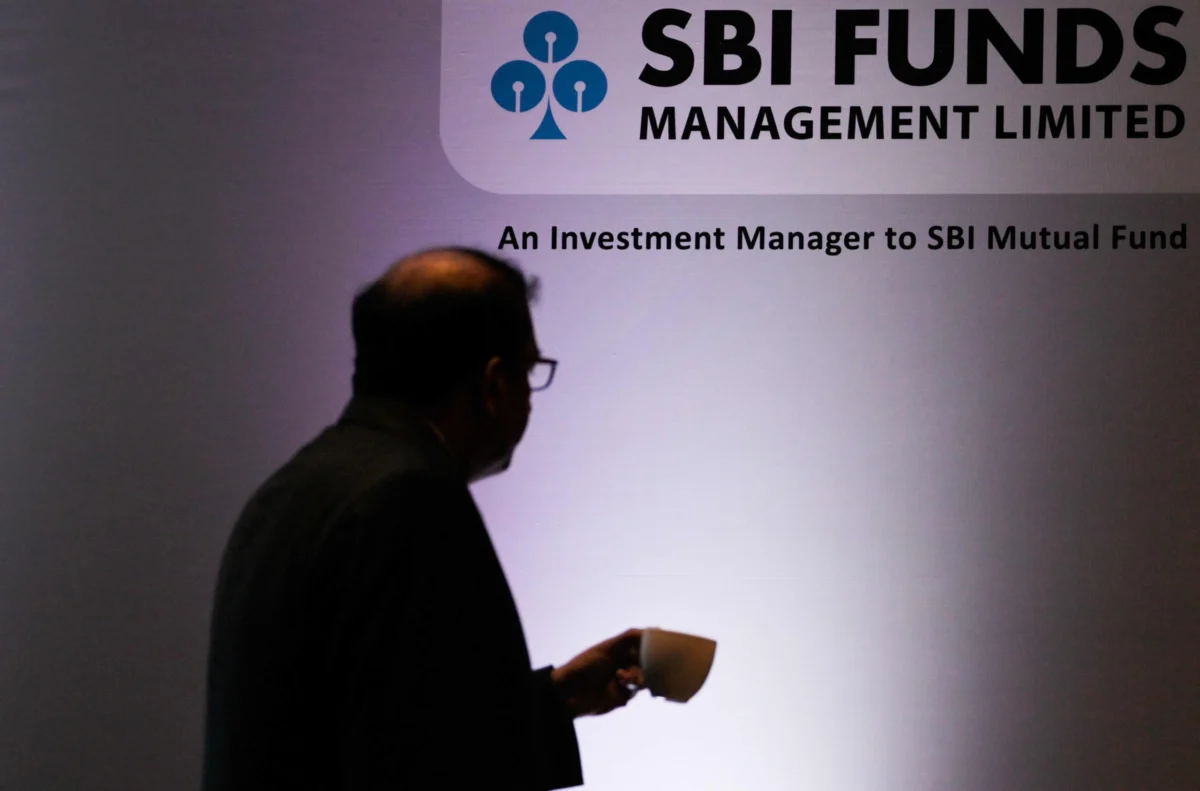
The Indian capital markets have witnessed a seismic shift in investor sentiment as the initial public offering (IPO) of SBI Funds Management Limited, the nation’s largest asset manager, attracted a staggering 2.97 trillion rupees (approximately $30.7 billion) in total bids. This massive influx of capital, representing an oversubscription of nearly 42 times the shares on offer, serves as a high-stakes bellwether for the Indian economy. The successful book-building process not only underscores the deep liquidity residing within domestic institutional coffers but also sets a definitive tone for a series of mega-listings scheduled for the latter half of 2026. Against a backdrop of geopolitical volatility and fluctuating energy prices, the sheer scale of this demand suggests that while retail caution persists, the "smart money" is doubling down on India’s long-term financialization story.
SBI Funds Management, a high-profile joint venture between the State Bank of India—the country’s largest public sector lender—and Europe’s asset management titan Amundi Group, entered the market with the intent to raise 97.9 billion rupees ($1 billion). The structure of the offering was designed to test the appetite of both local and international investors for a piece of India’s burgeoning mutual fund industry. As of March 2026, the firm managed assets totaling 29.5 trillion rupees ($395 billion), a figure that places it at the apex of the domestic investment landscape. The overwhelming response to the IPO reflects a broader institutional consensus that the management of Indian household wealth remains one of the most lucrative growth frontiers in emerging markets.
The disparity in subscription levels across different investor categories provides a nuanced look at the current state of the Indian market. While the overall issue was oversubscribed 41.6 times, the portion reserved for Qualified Institutional Buyers (QIBs) saw an extraordinary 140-fold subscription. This institutional frenzy was driven primarily by domestic players, including commercial banks, insurance conglomerates, and pension funds, all of whom are seeking stable, cash-generative assets to anchor their portfolios. Conversely, the retail segment showed a more measured enthusiasm, subscribing 3.6 times their allotted portion. This divergence highlights a "wait-and-see" approach among individual investors who have been squeezed by rising living costs and the inflationary pressures of the past year.
To understand the significance of this IPO, one must look at the turbulent macroeconomic environment that preceded it. For much of early 2026, the Indian equity market struggled under the weight of external shocks. The escalation of conflict in the Middle East, particularly the war involving Iran, sent global energy prices spiraling. As a net importer of crude oil, India is uniquely vulnerable to such spikes, which historically lead to a widening current account deficit and a weakening of the rupee. These factors took a heavy toll on the domestic consumption narrative that has traditionally driven Indian stocks. By mid-year, the benchmark BSE Sensex had retreated by more than 9.4%, while the Nifty 50 was down 7.9%, making India one of the lagging performers among major global indices.
Furthermore, the Indian market faced a structural disadvantage during the global artificial intelligence (AI) gold rush. As capital flowed into U.S. and East Asian tech giants capable of producing high-end semiconductors and large language models, India—a country whose tech sector is primarily built on IT services and software outsourcing—found itself without a direct "AI champion." This lack of exposure to the year’s most dominant investment theme led to a period of capital flight as foreign portfolio investors (FPIs) sought higher returns in the Nasdaq and other tech-heavy exchanges. However, the tide began to turn in June following a ceasefire agreement between the U.S. and Iran, which provided a much-needed cooling effect on oil prices and allowed the Indian markets to stage a partial recovery.
The successful conclusion of the SBI Funds Management IPO is widely viewed as the opening of the floodgates for a massive pipeline of public offerings. Market analysts at Mumbai-based Prime Database estimate that as much as $50 billion could be raised through IPOs in the coming months, provided the geopolitical situation remains stable. Two particular listings are being watched with intense scrutiny: the National Stock Exchange (NSE) of India and Jio Platforms, the digital and telecommunications arm of Reliance Industries. Both entities are expected to seek valuations that would lead to capital raises exceeding $3 billion each. The institutional appetite shown for SBI Funds Management suggests that there is more than enough depth in the market to absorb these multi-billion-dollar issues, even if retail participation remains secondary.
From a global perspective, India’s IPO market remains a statistical anomaly. Over the last two years, India has consistently recorded the highest number of new listings globally, even as activity in traditional hubs like London, Hong Kong, and New York fluctuated. The "India Story" has transitioned from a focus on manufacturing and labor arbitrage to one of financial depth and digital penetration. The asset management industry, in particular, is a beneficiary of the "SIP culture"—the Systematic Investment Plans through which millions of middle-class Indians now funnel their monthly savings into the stock market rather than traditional assets like gold or real estate. SBI Funds Management, as the market leader, is the primary vehicle for this systemic shift in how the world’s most populous nation manages its wealth.
The economic impact of these listings extends beyond simple capital raising. A robust IPO market facilitates the recycling of capital, allowing early-stage investors and promoters to exit and reinvest in new ventures. For a joint venture like SBI and Amundi, the public listing provides a market-determined valuation that enhances the balance sheets of the parent companies. For the broader economy, a successful string of IPOs signals to the global community that India’s financial infrastructure is resilient enough to withstand regional wars and global inflationary cycles. It reinforces the narrative of India as a "China Plus One" destination—not just for factories, but for institutional capital seeking a democratic, high-growth alternative in Asia.
However, the road ahead is not without significant hurdles. The primary risk remains the fragility of the peace in the Middle East. Any resumption of hostilities could immediately reignite energy inflation, prompting the Reserve Bank of India (RBI) to maintain a hawkish monetary stance, which would increase the cost of capital and dampen equity valuations. Additionally, the post-listing performance of SBI Funds Management will be a critical metric. In the world of IPOs, the "pop" on the first day of trading often dictates the momentum for subsequent issues. If the stock debuts at a significant premium and maintains its gains, it will likely draw the cautious retail investor back into the fold. If it falters, it may force companies like Jio Platforms and the NSE to reconsider their timing or pricing strategies.
As the market prepares for the listing of SBI Funds Management next week, the eyes of the global financial community are fixed on Mumbai. The $31 billion bid total is a testament to the fact that despite a difficult start to the year, the structural foundations of the Indian economy remain attractive to those with a long-term horizon. The transition from a "subdued" first half to a "frenzied" second half of the year highlights the cyclical nature of emerging markets and the rapid speed at which sentiment can pivot when the right asset hits the block. Whether this momentum can be sustained into a record-breaking $50 billion year remains to be seen, but for now, the Indian primary market has sent a clear message: the appetite for quality Indian assets has never been higher.