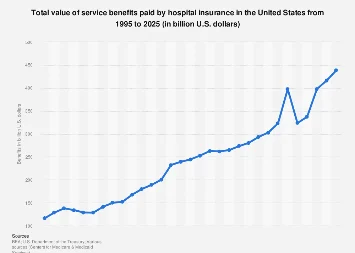
The U.S. healthcare system, a complex and ever-evolving sector, is poised for significant shifts in how hospital services are financed and reimbursed. Projections for 2025 indicate a continued emphasis on the critical role of hospital insurance in covering a vast array of medical interventions and patient care. Understanding the anticipated flow of funds through this insurance mechanism is paramount for stakeholders ranging from healthcare providers and insurers to policymakers and, ultimately, patients. This analysis delves into the projected financial dynamics of U.S. hospital insurance payouts for the upcoming year, exploring the underlying trends, economic implications, and potential challenges.
At its core, hospital insurance functions as a vital financial intermediary, mitigating the often-crippling costs associated with inpatient care, surgical procedures, emergency services, and diagnostic testing. In 2025, the aggregate value of these service benefits paid out by U.S. hospital insurance plans is expected to represent a substantial portion of the nation’s overall healthcare spending. While precise figures are subject to ongoing market fluctuations and policy adjustments, industry analysts anticipate a robust demand for hospital services, directly correlating with an increased volume of insurance claims and subsequent payouts. This demand is fueled by a confluence of factors, including an aging population requiring more intensive medical attention, advancements in medical technology that enable more complex and costly treatments, and the persistent burden of chronic diseases across various demographics.
The market for hospital insurance itself is characterized by intense competition and a dynamic regulatory environment. Major players, including private insurance companies, employer-sponsored plans, and government programs like Medicare and Medicaid, collectively determine the landscape of coverage and reimbursement rates. For 2025, a key area of focus is likely to be the negotiation and implementation of reimbursement models. Value-based care initiatives, which aim to tie provider payments to patient outcomes rather than the volume of services rendered, are expected to gain further traction. This shift could influence the types of services prioritized and the financial incentives for hospitals to deliver efficient and high-quality care. Insurers, in turn, will be scrutinizing claims more closely, seeking to optimize cost-effectiveness while ensuring adequate access to necessary treatments for their policyholders.
Economic indicators provide a backdrop against which these healthcare finance trends will play out. Inflationary pressures, while potentially moderating in some sectors, could still exert upward pressure on healthcare costs, from pharmaceuticals and medical supplies to labor expenses for healthcare professionals. This dynamic necessitates a careful balancing act for insurers, who must absorb rising costs while striving to maintain affordable premiums for consumers and employers. Furthermore, the overall economic health of the nation will influence employer-sponsored insurance enrollment and the ability of individuals to afford private plans. A robust economy might lead to greater employment and, consequently, broader insurance coverage, while an economic downturn could see a rise in the uninsured or underinsured population, placing greater strain on public health resources.
Global comparisons offer valuable perspective on the U.S. healthcare financing model. Many developed nations operate under universal healthcare systems, where government funding plays a more dominant role in covering hospital services. While the U.S. model relies heavily on private insurance, its per capita healthcare spending remains among the highest globally. The projected payouts for hospital insurance in 2025 will continue to reflect this high expenditure, prompting ongoing debates about efficiency, access, and equity within the American system. Understanding how other countries manage the financing of hospital care can offer insights into potential policy levers and structural reforms that could be considered in the U.S. context, although direct comparisons must account for fundamental differences in political, social, and economic structures.
The impact of technological advancements on hospital insurance payouts in 2025 cannot be overstated. Innovations in areas such as robotic surgery, precision medicine, advanced imaging, and minimally invasive procedures offer significant clinical benefits but often come with higher upfront costs. Insurers will need to develop strategies for evaluating and covering these new technologies, balancing their potential for improved patient outcomes against their financial implications. The increasing adoption of telehealth services also presents both opportunities and challenges. While it can reduce costs for certain types of consultations and follow-up care, it also necessitates new reimbursement frameworks and integration into existing insurance plans. The data generated by these technological shifts will become increasingly important for insurers in predicting risk, managing claims, and negotiating provider contracts.
From a market data perspective, tracking trends in hospital admission rates, average length of stay, and the utilization of specific high-cost procedures will be crucial for forecasting insurance payouts. For instance, a projected increase in cardiac procedures or specialized cancer treatments would directly translate into higher reimbursement demands. Similarly, shifts in the prevalence of elective versus emergency procedures can significantly impact the overall financial outlay. Insurers often rely on actuarial models that incorporate these data points, alongside demographic trends and historical claims data, to project future liabilities. The accuracy of these projections is vital for maintaining financial solvency and ensuring that sufficient reserves are in place to meet anticipated claims.
Expert insights from healthcare economists and insurance industry analysts suggest that 2025 will likely see a continued emphasis on cost containment measures. This could involve more aggressive negotiation of provider contracts, the implementation of pre-authorization requirements for certain procedures, and the expansion of preferred provider networks. There is also a growing expectation that insurers will invest more heavily in data analytics and artificial intelligence to identify potential fraud, waste, and abuse within the claims process, thereby safeguarding their financial resources. Furthermore, the ongoing discourse around healthcare affordability at the federal and state levels could lead to policy changes that directly affect insurance markets and, consequently, hospital insurance payouts.
The patient experience is intrinsically linked to the financial mechanisms of hospital insurance. For individuals, the clarity of coverage, the predictability of out-of-pocket expenses, and the ease of navigating the claims process are paramount. As insurance plans evolve, there will be a continued need for transparency and patient education to ensure that individuals understand their benefits and responsibilities. The trend towards higher deductibles and co-payments in some insurance plans means that patients may bear a larger portion of the initial costs of hospital care, underscoring the importance of comprehensive financial planning for healthcare needs. The projected payouts for 2025 will ultimately reflect the collective healthcare needs of the population and the complex interplay between providers, payers, and policyholders.
Looking ahead, the financial sustainability of the U.S. hospital insurance system will depend on its ability to adapt to a rapidly changing healthcare landscape. The ongoing integration of digital health technologies, the persistent challenge of managing chronic diseases, and the imperative to control escalating costs will all shape the future of reimbursements. As 2025 approaches, stakeholders will be closely monitoring legislative developments, market trends, and technological innovations to anticipate and respond to the evolving demands placed upon the nation’s hospital insurance infrastructure. The projected service benefits paid out represent not just financial transactions, but a crucial indicator of the health and accessibility of medical care for millions of Americans.