Mexico is on the cusp of a transformative economic era, driven by a confluence of powerful global and domestic forces. The long-anticipated reorganisation of international supply chains, a discernible trend towards greater fragmentation in global trade, a renewed focus on critical infrastructure development, and the significant maturation of domestic pension savings into a substantial source of long-term capital are all converging to present an unprecedented opportunity. At the heart of this dynamic convergence lie Mexico’s formidable pension funds, the Administradoras de Fondos para el Retiro, or Afores. Once primarily seen as custodians of retirement accounts, these entities are rapidly evolving into sophisticated institutional investors, possessing both the financial scale and the necessary long-term investment horizon to underwrite the nation’s next phase of developmental expansion. The conversation has transcended mere pension management; it is now fundamentally about how the collective savings of millions of Mexican workers can be strategically deployed to finance the robust infrastructure essential for sustained economic prosperity.
In an increasingly volatile global landscape characterized by persistent inflation pressures and pervasive geopolitical uncertainties, infrastructure has emerged as a highly attractive asset class for long-term investors. For pension funds, the appeal is intrinsically clear. Infrastructure assets, spanning sectors such as transportation, logistics, energy, telecommunications, and water systems, typically generate predictable and stable cash flows over extended periods. Furthermore, they offer a degree of protection against inflation and exhibit distinct performance characteristics when compared to traditional public-market investments. For institutional investors managing liabilities that stretch across decades, these attributes are exceptionally valuable, aligning perfectly with their long-term obligations. Beyond the tangible financial returns, however, infrastructure possesses a unique capacity to expand productive economic capacity. Unlike many other asset classes, it directly influences a nation’s economic competitiveness and its potential for long-term growth.
This distinction is particularly salient in the current global economic climate. As multinational corporations actively re-evaluate and reconfigure their supply chain strategies, and as governments worldwide increasingly prioritize economic resilience and security, institutional investors are systematically increasing their allocations to real assets. This is not merely a short-term tactical adjustment but rather a reflection of a profound, structural shift in how global capital is being deployed. The statistics already underscore this trend: approximately 49 percent of institutional investors globally currently hold exposure to infrastructure assets, a figure projected to approach 60 percent by the year 2030.
Mexico’s Strategic Advantage in the Nearshoring Era
Within this global paradigm shift, Mexico stands out as one of the most pronounced beneficiaries. The concept of nearshoring, the practice of relocating manufacturing and production facilities closer to end markets, has moved far beyond theoretical discussions. Companies across a diverse range of industries are actively pursuing this strategy to mitigate logistical risks, shorten delivery timelines, and enhance overall operational resilience. North America, in particular, has solidified its position as a strategically vital region within the global economy. The United States-Mexico-Canada Agreement (USMCA) bloc collectively accounts for nearly 30 percent of global Gross Domestic Product (GDP) and over 24 percent of world trade. Mexico occupies an exceptionally advantageous position within this framework, benefiting from its geographical proximity to the United States, a deeply integrated industrial ecosystem, an extensive trade network, and a manufacturing base that continues its robust expansion.
Foreign investment flows are already a clear testament to these advantages. In the first quarter of 2026, Mexico attracted approximately $40.8 billion in foreign direct investment (FDI), representing a significant 10.8 percent increase compared to the same period in the preceding year, marking a new record high. Concurrently, the demand for industrial and logistics facilities is experiencing a rapid surge, placing considerable pressure on existing capacity and underscoring the urgent need for expansion.
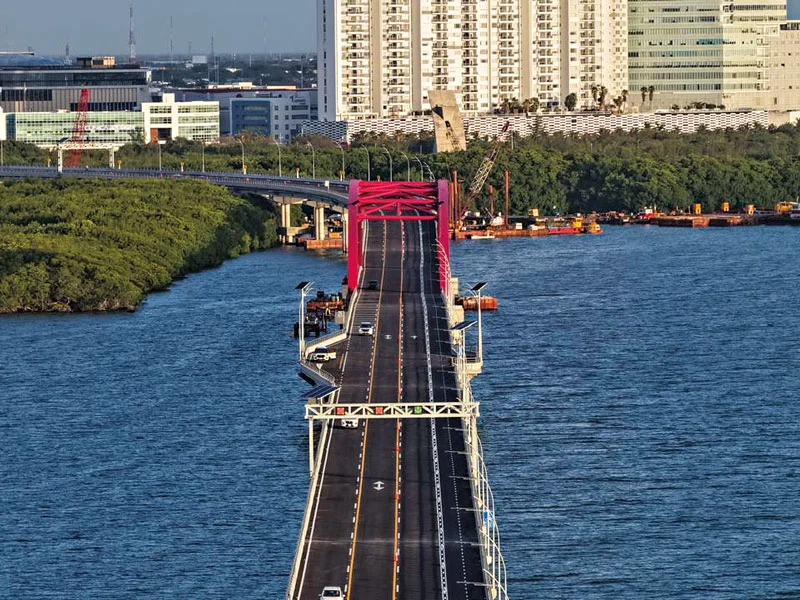
However, the realization of nearshoring potential is intrinsically dependent on the availability of robust physical infrastructure. The relocation of manufacturing necessitates the development of facilities capable of supporting large-scale industrial activity, including reliable power generation, modern transportation networks such as highways and efficient ports, extensive rail connectivity, and advanced digital communication infrastructure. In essence, it requires substantial and sustained investment.
The Mexican government appears to have adopted a more pragmatic and collaborative approach to infrastructure development. Public investment is not being framed as a replacement for private capital but rather as a strategic catalyst designed to attract and "crowd in" private sector funding. This evolving philosophy is evident in the scale of planned infrastructure expenditures. For the fiscal year 2026 alone, the government has outlined an ambitious infrastructure investment program totaling approximately $41.3 billion, equivalent to around two percent of the nation’s GDP. Over the entire current presidential administration, cumulative infrastructure investment is projected to reach an impressive $320.5 billion.
A closer examination of the planned spending allocation reveals clear national priorities:
- Energy: Accounts for a substantial 54.1 percent of the total, amounting to $52.6 billion, reflecting the critical need for enhanced power generation and distribution capacity.
- Rail Infrastructure: Represents 15.6 percent of the budget, with $14.9 billion earmarked for the expansion and modernization of rail networks, crucial for efficient freight transport.
- Highways: Constitutes 13.9 percent, with $13.5 billion dedicated to improving and expanding the national highway system, vital for logistics and trade.
- Ports: Receives 6.5 percent of the allocation, totaling $6.3 billion, aimed at modernizing key maritime gateways to facilitate international trade.
The operational targets associated with this investment are equally ambitious. They include the rehabilitation of 4,000 kilometers of existing roads, the construction of over 3,000 kilometers of new rail lines, the comprehensive modernization of 11 strategic ports, and the execution of 51 critical energy projects projected to add more than 22,600 megawatts of generating capacity to the national grid.
The financing model underpinning these ambitious plans is as significant as the planned spending itself. The current strategy increasingly emphasizes mixed-investment structures, where the state provides essential coordination and long-term strategic direction while actively creating space for institutional private capital. This approach prioritizes improved project design, risk mitigation, early-stage risk sharing, and the establishment of regulatory frameworks that offer investors predictable, long-term visibility. This philosophy is clearly articulated in both the National Development Plan and the 2026-2030 Infrastructure Investment Programme, both of which place a strong emphasis on structured public-private partnership schemes and the development of more sophisticated financing vehicles. Concurrently, ongoing regulatory adjustments are progressively facilitating greater participation from long-term institutional capital in productive investment opportunities. This is precisely where the Afores play an indispensable role.
The Afores: A Reservoir of Long-Term Development Capital
As of March 2026, Mexico’s Afores collectively managed assets exceeding $480 billion, a figure equivalent to approximately 23.6 percent of the nation’s GDP. This substantial sum positions the Afore system as one of the largest pools of domestic savings in Latin America, and its growth trajectory remains robust. The landmark pension reform implemented in 2020 gradually increased mandatory employer and employee contributions from 6.5 percent to 15 percent of salary by 2030. This significant policy shift is projected to dramatically expand the long-term growth potential of the entire retirement savings system.
Current projections indicate that by 2040, assets managed through the SIEFORES Target Date Funds could reach as high as 56 percent of GDP, a substantial increase from an estimated 35 percent without the reform. However, the significance of the Afore system extends beyond its sheer size; its evolving investment profile is equally crucial. Mexico’s regulatory framework has been progressively enhanced to permit pension funds greater exposure to long-duration assets, including infrastructure. The introduction of structured instruments, such as Fibras (Fideicomisos de Inversión en Bienes Raíces), streamlined issuance processes, and more flexible investment vehicles have collectively broadened the spectrum of investment opportunities available to institutional investors.
Existing regulations currently permit Afores to allocate up to 30 percent of their portfolios to structured instruments like CKDs (Certificados de Capital de Desarrollo) and CERPIs (Certificados de Proyectos de Inversión), and up to 12.5 percent exposure through Fibras and other Real Estate Investment Trust (REIT)-style vehicles. It is crucial to note that these expanded allocations do not represent a dilution of investment discipline. Afores remain subject to stringent governance, valuation, and risk-management requirements, with their fiduciary obligations remaining paramount. What has fundamentally changed is the enhanced ability to strategically align long-term retirement savings with long-term productive investments that fuel national development.
This strategic shift is already reflected in investment data. As of March 2026, Afores had deployed over $57.4 billion into infrastructure-related assets, constituting approximately 12 percent of their total managed assets. Investments specifically linked to the energy sector alone surpassed $17 billion. This is no longer a marginal allocation but signifies a broader, strategic repositioning of capital towards sectors critical for economic growth and resilience.
The Critical Conditions for Sustained Success
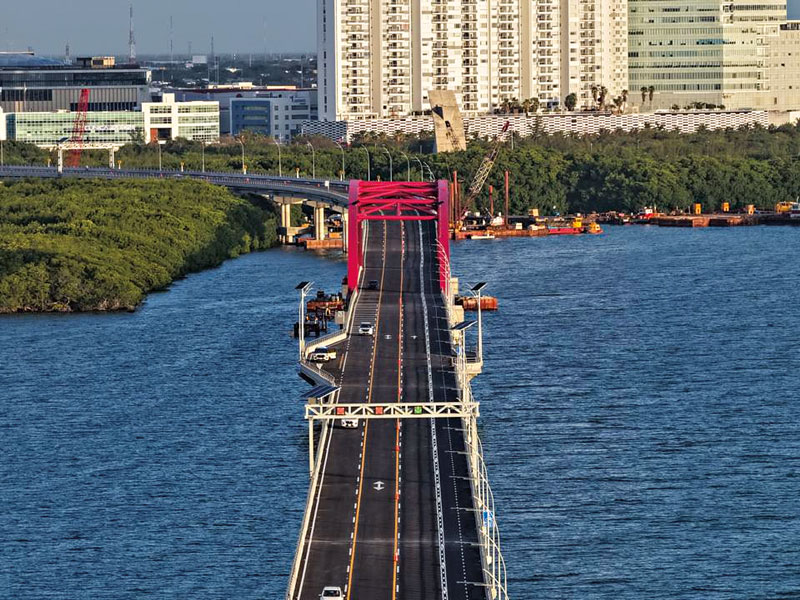
The overarching economic rationale is compelling: retirement savings are channeled into infrastructure development, which in turn enhances productivity and fosters economic growth, ultimately leading to improved investment returns and higher living standards. However, this virtuous cycle is not an automatic outcome. Infrastructure investing is inherently complex, often involving protracted execution timelines, a multiplicity of stakeholders, inherent political and regulatory uncertainties, and significant technical and financial risks.
The value generated by infrastructure projects can vary considerably. Some projects may yield attractive financial returns but offer limited broader economic spillover effects. Conversely, others might deliver substantial social benefits while struggling to meet purely commercial investment thresholds. This underscores the critical importance of institutional quality in project selection and execution. The challenge is not merely to attract capital; it is to develop projects and establish frameworks that effectively balance profitability, public value, and long-term sustainability. This necessitates credible regulatory environments, robust contractual certainty, more developed financial markets, enhanced project preparation capabilities, and a deeper reservoir of technical expertise across both the public and private sectors.
In essence, the imperative is to cultivate an ecosystem capable of supporting and sustaining long-term investment. The nearshoring phenomenon may ultimately serve as the definitive test of Mexico’s capacity to translate its inherent structural advantages into durable economic gains. Global manufacturers operate within specific investment windows, and capital is not inclined to wait indefinitely. If Mexico can consistently deliver reliable infrastructure, ensure sufficient energy capacity, and provide unwavering regulatory clarity, it possesses a profound opportunity to solidify its position as one of the world’s preeminent industrial platforms over the next decade. Failure to do so, however, risks seeing that investment capital flow to alternative destinations. This highlights the paramount importance of effective coordination between public policy, institutional savings, and private capital.
The Afores are uniquely positioned to play a pivotal role in this environment due to their inherently long-term investment horizon. Unlike volatile short-term capital flows, their investment decisions are not dictated by quarterly performance pressures or tactical market repositioning. They possess the capacity to support projects through their entire development cycles. However, the commitment of such long-term capital is contingent upon long-term certainty and stability.
A Paradigm Shift in Economic Framework
For decades, Mexico’s economic discourse has often been framed by familiar dichotomies: state versus market, public versus private investment, regulation versus liberalization. This traditional framework is increasingly proving inadequate for the complexities of the modern global economy. What is emerging instead is a more pragmatic and collaborative model centered on coordination: the state acting as a facilitator, private enterprise serving as the primary operator, and institutional savings providing the essential long-term financing foundation.
Within this evolving framework, infrastructure is being redefined. It is transitioning from being viewed primarily as a component of public expenditure or political symbolism to being recognized for what it fundamentally is: a critical platform for enhancing productivity, boosting competitiveness, and driving sustained economic growth. Government estimates suggest that infrastructure investment alone could potentially increase Mexico’s GDP growth by as much as three percent. In this transformative process, the Afores are shedding their peripheral status to become central architects of the nation’s long-term development strategy.
Mexico is not embarking on this journey from a position of weakness. It possesses significant strategic geographic advantages, a deeply integrated industrial sector, an increasingly sophisticated financial system, and one of the largest domestic savings pools among emerging economies. However, structural advantages alone are insufficient. The true challenge lies in effective execution: the ability to transform well-conceived plans into viable projects, to convert these projects into tangible investments, and ultimately, to translate that investment into measurable and inclusive economic growth. This comprehensive approach holds the potential not only for Mexico to fully capitalize on the nearshoring trend but to fundamentally reshape its long-term development trajectory, with the Afores playing a far more instrumental role than merely managing retirement accounts. They may well become the crucial financial bridges connecting the nation’s accumulated savings to the vital infrastructure required to power its future prosperity.