The global landscape for artificial intelligence underwent a fundamental shift this week as 21 member economies of the Asia-Pacific Economic Cooperation (APEC) reached a landmark consensus on the future of open-source technology. During the APEC Digital Weeks in Chengdu, China, a high-level ministerial meeting culminated in the release of the "Chengdu Statement," a document that signals the end of the unregulated "Wild West" era of open-source AI and the beginning of a new, state-aligned framework defined by rigorous security protocols and national interests. This multilateral agreement, which includes both the United States and China, marks the first time that open-source cooperation has been codified at the ministerial level, reflecting a growing global urgency to balance rapid innovation with the preservation of national security and intellectual property rights.
The consensus reached in Chengdu highlights a deepening paradox in the technology sector: while governments are increasingly eager to harness the collaborative power of open-source models to drive economic growth, they are simultaneously moving to exert unprecedented levels of control over how these models are built and deployed. The Chengdu Statement explicitly calls for the support of open-source development but hedges this support with a demand for "strong security assurance." This phrasing represents a significant departure from the traditional, libertarian roots of the open-source movement, which historically prioritized the free and unfettered exchange of code. Instead, the APEC economies are advocating for a model of "trusted" open source—one where transparency, data protection, and deployment controls are mandated by the state.
At the heart of this shift is the intensifying rivalry between the United States and China over AI supremacy. For years, the dominant narrative in the industry focused on the "closed-door" models developed by American giants such as OpenAI and Anthropic, which guard their proprietary algorithms behind paywalls and strict licensing agreements. However, the tide has turned toward "open-weight" systems, a trend led largely by Chinese firms. Models such as DeepSeek and GLM 5.2 have gained significant traction by offering high-performance capabilities that are free to download and modify. This strategy has allowed Chinese developers to bypass some of the barriers to entry in the AI market, though it has also drawn sharp criticism from Washington. U.S. officials have frequently alleged that China’s open-source rapid development is fueled by the misappropriation of American intellectual property—a claim that Beijing continues to deny.
The Chengdu Statement’s explicit alignment around open-source ecosystems suggests that the Asia-Pacific region is moving toward a more integrated approach to digital sovereignty. Experts note that the focus is shifting away from isolated software models toward a holistic "compute infrastructure" that combines AI with state-coordinated energy, telecommunications, and digital hardware. This "sovereign AI" movement is particularly attractive to APEC’s developing economies, which see open-source models as a way to avoid total dependence on a handful of Silicon Valley corporations. By backing open-source systems that are integrated into national infrastructure, these nations hope to build domestic AI capabilities that are tailored to their specific cultural and linguistic needs while maintaining a level of oversight that closed models do not allow.
The economic stakes of this transition are immense. The generative AI market is projected to contribute trillions of dollars to the global economy by the end of the decade, and the APEC region—which accounts for approximately 40% of the world’s population and 60% of global GDP—is the primary theater for this growth. The transition from "open versus closed" to "who can build a trusted open ecosystem" is now the defining challenge for policymakers. For enterprises, the appeal of open-source AI lies in its cost-effectiveness and flexibility; companies can fine-tune existing models for specific industrial tasks without the recurring costs of API access. However, without the "strong security assurance" highlighted in Chengdu, large-scale enterprise adoption remains risky. The APEC agreement seeks to mitigate these risks by encouraging dialogue across the public and private sectors to share information regarding cybersecurity vulnerabilities, supply chain resilience, and the rising threat of AI-generated scams.
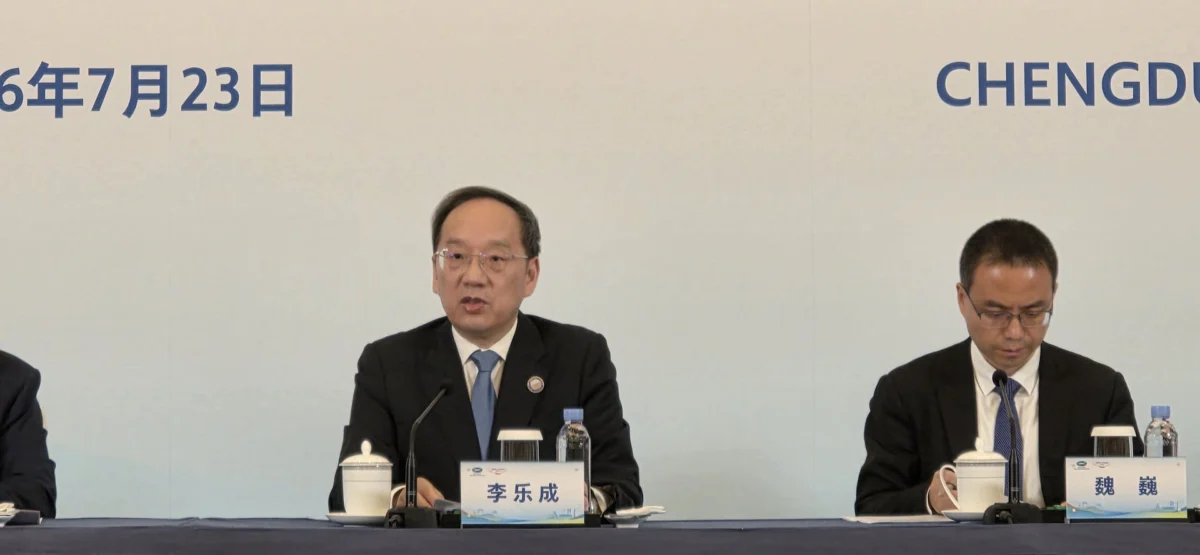
The ministerial discussions, chaired by China’s Minister of Industry and Information Technology, Li Lecheng, also addressed the physical underpinnings of the AI revolution. The statement emphasized that AI development cannot be divorced from the underlying supply chains that produce the semiconductors and servers necessary to run these models. As the U.S. continues to tighten export controls on high-end chips to China, the Chengdu Statement serves as a diplomatic attempt to maintain some level of technical cooperation in an increasingly fragmented world. By agreeing on shared security standards for open-source AI, the 21 economies are attempting to create a "floor" for safety that prevents the most dangerous misuse of the technology while allowing for continued commercial competition.
However, even as the world grapples with the implications of current AI models, new technological frontiers are already threatening to upend the existing security landscape. During the summit, the APEC Business Advisory Council urged ministers to look beyond the current AI horizon and prepare for the era of quantum computing. The council warned that the advent of viable quantum computers could render current encryption methods obsolete, posing an existential threat to the global financial system. The call for "trusted encryption" underscores the reality that AI security is not a static goal but a moving target. If quantum computing can crack the codes that protect international bank transfers and state secrets, the "security assurance" promised in the Chengdu Statement will need to be entirely reinvented.
The Chengdu Statement also highlights a divergence in regulatory philosophies. While the European Union has taken a more prescriptive, legislative approach with the EU AI Act, the APEC nations appear to be favoring a more flexible, industry-led framework that emphasizes "dialogue" and "cooperation." This approach reflects the diverse economic stages of APEC members, ranging from high-tech hubs like Singapore and Japan to emerging markets in Southeast Asia and Latin America. For many of these nations, the goal is not just to regulate AI but to ensure that they are not left behind in the "compute divide." By supporting open-source models, the APEC agreement provides a roadmap for technology transfer that could help bridge the gap between the world’s digital leaders and those still building their basic digital infrastructure.
The role of the private sector and academia was also a central theme in the Chengdu discussions. Minister Li Lecheng noted that all parties recognized the multifaceted risks of AI, ranging from algorithmic bias to the potential for large-scale job displacement. The Chengdu Statement encourages a multi-stakeholder approach to governance, recognizing that governments alone do not have the technical expertise to monitor the rapidly evolving AI landscape. By fostering a "trusted ecosystem," the APEC nations hope to create an environment where researchers can collaborate on safety benchmarks and where companies can be held accountable for the impact of their deployments.
As the summit concluded, the message from Chengdu was clear: the future of AI will be open, but it will not be free of oversight. The transition to state-overseen open source represents a pragmatic middle ground for nations that are wary of American corporate dominance but equally fearful of the security risks inherent in unmonitored code. Whether this "trusted" model can survive the escalating geopolitical tensions between Washington and Beijing remains to be seen. However, for the 21 economies of the Asia-Pacific, the Chengdu Statement represents a vital first step toward a coordinated digital future where the benefits of artificial intelligence are balanced against the non-negotiable requirements of national security and economic stability. The race to build the world’s most powerful AI has now become a race to build the world’s most secure and trusted AI ecosystem.