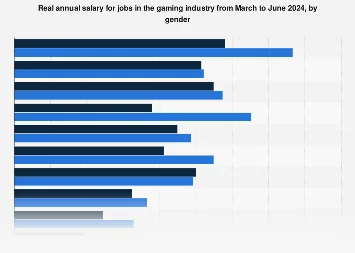
A comprehensive survey conducted between March and June 2024, encompassing 1,832 respondents within the global gaming industry, has illuminated a persistent and significant gender pay gap across a majority of job functions. The findings reveal that, on average, male employees in the sector command substantially higher real annual salaries than their female counterparts. This disparity is particularly pronounced in revenue-generating and leadership roles, raising critical questions about equity and advancement within one of the world’s fastest-growing entertainment sectors.
The data indicates that in several key areas, the difference in annual earnings between men and women is substantial. The most striking imbalance was observed in marketing and acquisition roles, where men earned a significantly higher percentage more than women annually. While precise figures require premium access, the reported gap suggests a systemic issue in how compensation is structured for these vital business functions. Similarly, in top management and executive positions, the absolute difference in annual salary between male and female leaders was considerable, translating to tens of thousands of euros in favor of men. This suggests that as individuals ascend to higher levels of responsibility and influence within gaming companies, the pay gap not only persists but, in some cases, widens.
The gaming industry, a dynamic and rapidly evolving sector projected to reach hundreds of billions of dollars in revenue globally in the coming years, has historically struggled with diversity and inclusion. While there have been concerted efforts in recent years to recruit more women into technical and creative roles, the compensation data suggests that these efforts have not yet translated into equitable pay. The industry’s economic power is undeniable, with global revenue surpassing that of the film and music industries combined. However, this economic success is not being uniformly reflected in the remuneration of its workforce, particularly when viewed through the lens of gender.
The survey’s findings are not entirely uniform, however. In a few specific areas, the gender pay gap was either minimal or reversed. Game design and Human Resources/Recruiting emerged as categories where women’s average salaries were comparable to, or slightly exceeded, those of men. This suggests that in roles that may be perceived as more creatively focused or where HR initiatives are actively addressing pay equity, progress is being made. Nevertheless, these positive outliers are overshadowed by the broader trend of male dominance in higher-paying positions.
Understanding the nuances of these disparities requires looking beyond simple averages. Factors such as years of experience, specific skill sets, geographical location of employment, and the size and type of gaming company can all influence salary. However, the consistency of the gap across multiple job categories, from entry-level positions to senior leadership, points to underlying structural issues. These could include unconscious bias in hiring and promotion processes, differences in negotiation strategies influenced by societal expectations, and a historical lack of female representation in certain high-paying technical and leadership roles, which can create a self-perpetuating cycle.
The economic implications of such a pay gap are multifaceted. For the individuals affected, it represents a direct loss of income, impacting their financial well-being, career progression, and long-term earning potential. For the industry as a whole, it risks alienating talented female professionals, potentially leading to higher turnover rates and a loss of valuable expertise. In an era where talent acquisition and retention are paramount, companies that fail to address pay equity may find themselves at a competitive disadvantage. Furthermore, a diverse workforce with equitable compensation is often linked to greater innovation and better business outcomes. Studies in various sectors have shown that companies with greater gender diversity in leadership roles tend to outperform their less diverse counterparts financially.
Globally, the gaming industry’s compensation landscape is diverse, influenced by regional economic conditions, labor laws, and cultural norms. However, the issue of the gender pay gap is a recurring theme across many developed economies. In North America and Europe, for instance, where the gaming industry is particularly robust, similar discussions around pay equity are ongoing, driven by both employee advocacy and regulatory pressures. The disparity highlighted in this survey underscores the need for a global re-evaluation of compensation practices within the industry.
Experts in labor economics and diversity and inclusion suggest several potential pathways to address this issue. These include implementing transparent salary bands for all positions, conducting regular pay equity audits, providing unconscious bias training for hiring managers and leadership, and actively promoting women into leadership development programs. Mentorship and sponsorship programs specifically designed to support women’s career advancement can also play a crucial role. Companies that proactively foster a culture of inclusivity and fairness are likely to benefit from a more motivated, engaged, and loyal workforce, ultimately contributing to their long-term success and sustainability.
The gaming industry’s continued growth presents a significant opportunity to build a more equitable future. As the sector matures and its economic influence expands, ensuring that its benefits are shared fairly among all its contributors is not just a matter of social justice, but also a strategic imperative for sustained innovation and prosperity. The data from this 2024 survey serves as a stark reminder that while the gaming industry is a powerhouse of entertainment and technological advancement, there is still significant work to be done to achieve true gender parity in compensation. The focus must shift from simply acknowledging the gap to implementing concrete, measurable, and sustainable solutions that foster an environment where all talent is recognized and rewarded equitably.