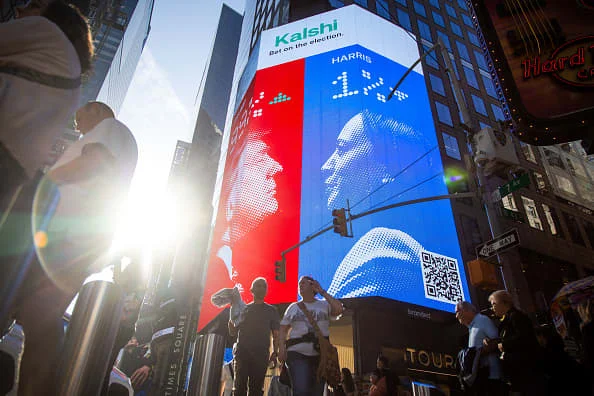
The landscape of American political forecasting is undergoing a fundamental transformation as traditional polling faces a crisis of confidence, replaced by the cold, hard logic of financial incentives. Kalshi, the first regulated exchange for event contracts in the United States, has announced the launch of its "Midterms Hub," a sophisticated data dashboard designed to aggregate and visualize market sentiment ahead of the upcoming congressional elections. This move signifies a broader shift in the information economy, where the "wisdom of the crowds"—expressed through real-money wagers—is increasingly viewed as a more reliable barometer of public sentiment than conventional statistical surveys.
The Midterms Hub is positioned not merely as a trading platform, but as a comprehensive information terminal. It integrates real-time odds for control of the U.S. Senate and House of Representatives, mapped across the entire national landscape. Beyond simple betting lines, the hub synthesizes a diverse array of data points, including polling averages, Federal Election Commission (FEC) fundraising reports, and curated political analysis. By placing market odds side-by-side with traditional data, Kalshi is inviting a direct comparison between what voters say to pollsters and where investors are actually placing their capital.
This strategic expansion comes at a pivotal moment for prediction markets. Historically relegated to the fringes of the financial world or offshore crypto-platforms, event contracts have moved into the mainstream of American political discourse. The utility of these markets extends far beyond the speculators themselves. According to internal data from Kalshi, approximately 75% of the platform’s visitors do not actually execute trades; instead, they utilize the exchange as a discovery tool to gauge the probability of future events. This suggests that the primary product of a prediction market is not the contract itself, but the price discovery—a clear, fluctuating percentage that represents the collective intelligence of the market.
Tarek Mansour, Kalshi’s co-founder and CEO, argues that the financial stakes inherent in these markets act as a powerful filter against the partisan bias that often plagues traditional media and polling. Mansour, an MIT alumnus with a pedigree that includes stints at Citadel and Goldman Sachs, posits that when individuals are required to back their opinions with capital, the incentive to be "right" outweighs the desire to be "partisan." In an era of extreme political polarization, these markets provide a rare form of objective clarity. The "Midterms Hub" is designed to amplify this clarity, offering a centralized location where the noise of rhetoric is replaced by the signal of market prices.
The institutionalization of this sector is further evidenced by Kalshi’s recent product innovations. Earlier this year, the exchange introduced the "American Power Index" (KPOW), which functions as a political equivalent to the S&P 500. By tracking the fluctuating fortunes of political parties as if they were corporate entities, Kalshi is effectively commoditizing political outcomes. This allows institutional investors and corporate entities to hedge against legislative risks. For instance, a renewable energy firm might use these contracts to hedge against the risk of a congressional shift that could lead to the repeal of specific tax credits.
The economic impact of these markets is already becoming visible in the sheer volume of capital they attract. While the 2024 Presidential election saw a massive surge in activity, the upcoming midterms are already generating significant liquidity. More than $30 million has already been traded on contracts specifically tied to the 2026 battle for the House and Senate. This level of early engagement suggests that the market is no longer just a seasonal novelty but a perennial fixture of the financial ecosystem. As liquidity increases, the accuracy of these markets typically improves, as the cost for a single actor to manipulate the price becomes prohibitively high.
From an economic perspective, the rise of prediction markets like Kalshi represents an application of the "Efficient Market Hypothesis" to the realm of social and political events. Economists have long argued that markets are the most efficient processors of dispersed information. In a political context, this means that a trader in Ohio might have local insights into a Senate race that a national pollster misses, while a trader in Washington D.C. might understand the nuances of a candidate’s fundraising momentum. The exchange aggregates these disparate pieces of information into a single, actionable price.
However, the path to this level of mainstream integration has not been without regulatory hurdles. Kalshi’s ability to offer these contracts is the result of a protracted and high-stakes legal battle with the Commodity Futures Trading Commission (CFTC). The regulator had long been skeptical of political betting, citing concerns over market integrity and the potential for "gaming" the democratic process. Kalshi’s eventual victory in the courts has paved the way for a regulated, transparent, and US-based alternative to offshore platforms like Polymarket, which operates on blockchain technology and often exists in a regulatory gray area.
The global context of this trend is equally illuminating. In the United Kingdom, political betting has been a legal and culturally accepted practice for decades, often providing more accurate predictions of general elections and referendums than traditional exit polls. In the United States, the emergence of Kalshi and its competitors represents a "catching up" to this global standard, albeit within a much stricter domestic regulatory framework. The presence of a regulated exchange brings a level of oversight—including anti-money laundering (AML) and know-your-customer (KYC) protocols—that was previously absent from the sector.
As the 2026 midterm cycle intensifies, the data provided by the Midterms Hub will likely be scrutinized by a wide range of stakeholders, from campaign managers and lobbyists to retail investors and political junkies. The inclusion of FEC fundraising data is particularly noteworthy. In modern American politics, capital is often a leading indicator of a campaign’s viability. By integrating this data with market odds, Kalshi allows observers to see the correlation between a candidate’s "war chest" and their perceived probability of victory in real-time.
Critics of prediction markets often worry that they could be used to manipulate public perception or that they treat the democratic process as a game. However, proponents argue that these markets actually democratize information. Previously, high-level political intelligence was the exclusive domain of well-funded lobbyists and internal party pollsters. Today, any individual with an internet connection can access the same "odds" that are being used by Wall Street analysts to price in political risk.
The launch of the Midterms Hub is a testament to the maturing of the "event contract" as a legitimate asset class. By moving beyond a simple "buy/sell" interface and toward a comprehensive data ecosystem, Kalshi is positioning itself as the Bloomberg Terminal for the political world. As we approach the next major electoral hurdles, the focus will not just be on who is winning the polls, but on what the market believes the cost of victory truly is. In the high-stakes world of American governance, Kalshi’s new hub suggests that the most accurate way to predict the future is to look at how much people are willing to pay for it.