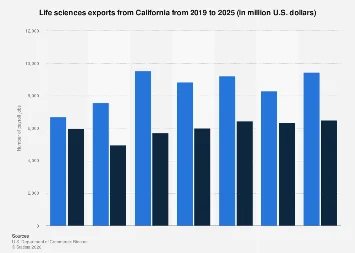
California’s dynamic life sciences industry is on track to experience substantial growth in its export value, with projections indicating a significant upward trajectory through 2025. This robust expansion underscores the state’s continued dominance as a global hub for innovation in biotechnology, pharmaceuticals, and medical devices, and its increasing importance in international trade. While specific figures for projected export values are often proprietary and subject to market analysis, the underlying trends point towards a sustained surge in demand for California-developed life science products and services worldwide.
The Golden State has long been a fertile ground for scientific discovery and entrepreneurial ventures. Its ecosystem, characterized by world-renowned research institutions, a deep pool of highly skilled talent, and substantial venture capital investment, has fostered a pipeline of cutting-edge technologies and life-saving therapies. This environment not only drives domestic market growth but also fuels an increasing appetite for California’s innovations on the global stage. Factors contributing to this projected export boom include ongoing advancements in areas such as personalized medicine, gene editing technologies, advanced diagnostics, and novel drug development.
The United States, as a whole, consistently ranks as a leading exporter of pharmaceutical and medical products. California, with its concentration of major biopharmaceutical companies, emerging startups, and leading academic medical centers, plays a disproportionately large role in this national export narrative. The state’s life sciences sector is a significant contributor to the U.S. trade balance, reflecting the high value and critical importance of its scientific output. Projections for 2025 suggest that this contribution will only deepen, driven by both the introduction of new products and the expanded market reach of established ones.
Several key indicators support this optimistic outlook. Venture capital funding in California’s life sciences sector has remained exceptionally strong, providing the necessary capital for research, development, and scaling of production. In recent years, this funding has channeled into areas with high international market potential, including oncology, rare diseases, and advanced biologics. Furthermore, regulatory approvals for innovative treatments and medical devices originating from California-based companies often pave the way for rapid global adoption, as healthcare systems worldwide seek to improve patient outcomes.
The global demand for advanced healthcare solutions is a primary driver of California’s export growth. Aging populations in many developed nations, coupled with rising healthcare expenditures and a growing middle class in emerging economies, are creating unprecedented opportunities for life science exports. California companies are well-positioned to meet this demand, offering a diverse range of products from complex biologic drugs and sophisticated medical equipment to essential diagnostic tools and innovative health IT solutions. The state’s adherence to stringent quality and safety standards also enhances the credibility and desirability of its exports in regulated international markets.
Market data from industry analysts and economic forecasters consistently point to a positive trend for U.S. life sciences exports. While specific dollar values for California’s exports by 2025 are subject to forecasting models, the underlying growth rate is expected to outpace many other sectors. This is partly due to the inelastic nature of demand for critical healthcare products and the continuous need for innovation to address evolving health challenges. The global pharmaceutical market, for instance, is projected to continue its steady expansion, and California’s segment within it is a significant contributor to that growth.
The competitive landscape for life sciences is intensely global. California’s success in exporting is not merely a function of its internal strengths but also its ability to compete effectively against established players and emerging hubs in Europe, Asia, and other parts of North America. The state’s advantages lie in its unique concentration of talent, its robust intellectual property protection frameworks, and its agile regulatory environment, which, while rigorous, is often seen as supportive of innovation. This allows California-based firms to bring novel products to market efficiently and subsequently pursue international commercialization.
Economic impact analyses often highlight the ripple effects of a thriving export sector. For California, increased life sciences exports translate into job creation, both directly within the industry and indirectly through its extensive supply chains and service providers. It also bolsters the state’s tax base and contributes to its overall economic competitiveness. The revenue generated from international sales can be reinvested into further research and development, creating a virtuous cycle of innovation and growth. This economic multiplier effect is a key reason why state and federal policies often aim to support and promote life sciences exports.
Furthermore, international partnerships and collaborations are increasingly becoming a vital component of growth for California’s life sciences companies. Licensing agreements, joint ventures, and strategic alliances with foreign entities facilitate market access, share development costs, and leverage complementary expertise. These cross-border relationships not only enhance export potential but also contribute to the global advancement of scientific knowledge and healthcare solutions. The ongoing efforts to strengthen trade ties and reduce barriers to market entry for high-value goods like pharmaceuticals and medical devices are likely to further accelerate this trend.
Looking ahead to 2025, the California life sciences sector is expected to continue its impressive growth trajectory, driven by relentless innovation, strong global demand, and a supportive ecosystem. The state’s role as a critical exporter of life-saving technologies and treatments is set to expand, reinforcing its position as a linchpin in the global healthcare economy and a powerhouse of scientific and economic advancement. The sustained investment, the caliber of its research, and its ability to translate discoveries into marketable products ensure that California will remain at the forefront of the international life sciences arena for years to come.