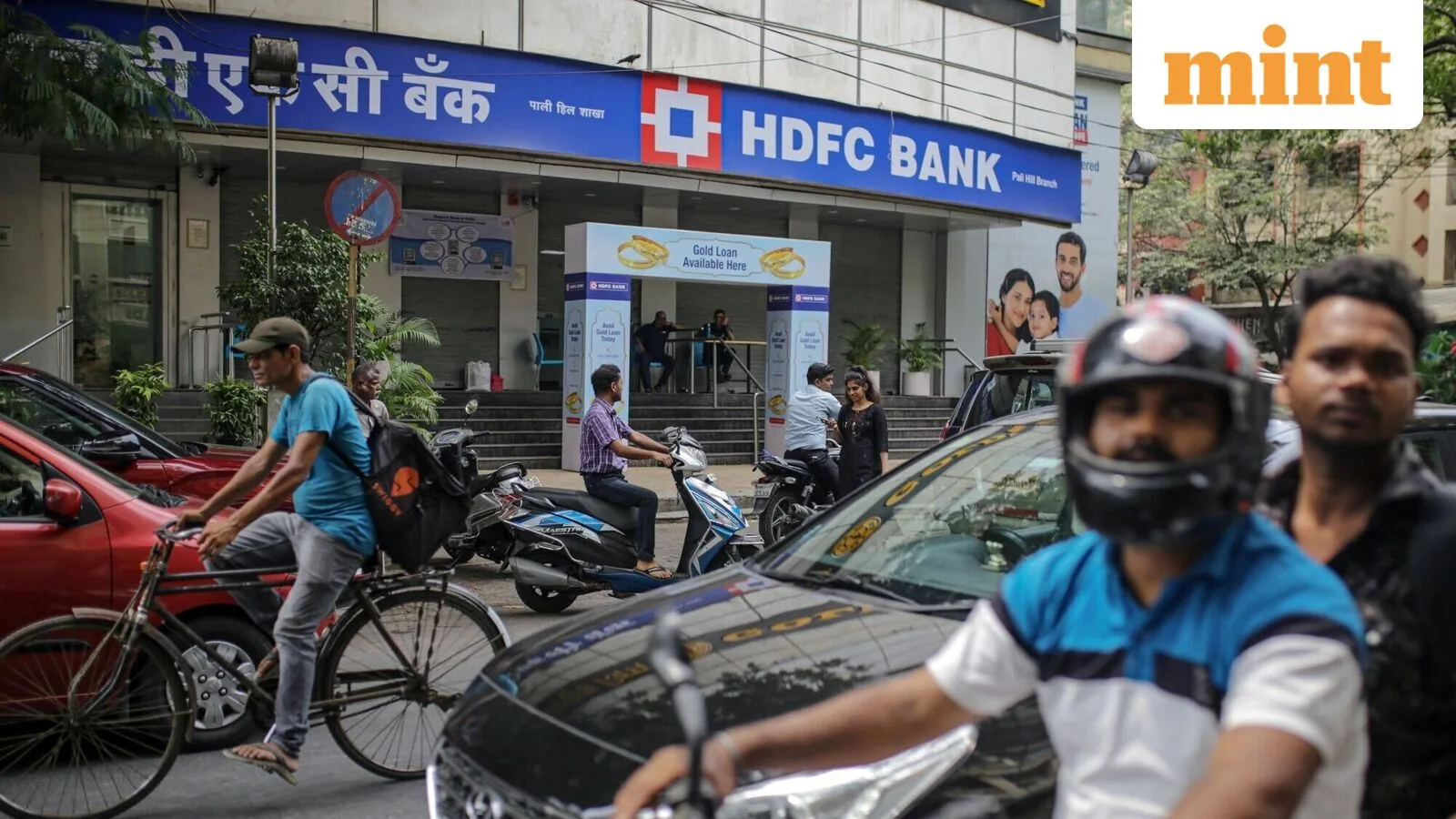
As the calendar turns to April 18th, 2026, a routine Saturday in the national banking schedule unfolds, with financial institutions across India, including major players like the State Bank of India, HDFC Bank, and ICICI Bank, maintaining full operational status. This particular Saturday, being the third of the month, aligns with the Reserve Bank of India’s (RBI) stipulated working days, ensuring that a vast array of in-person banking services remains accessible to millions. This seemingly straightforward aspect of daily commerce, however, belies a complex and evolving interplay of traditional regulatory frameworks, burgeoning digital capabilities, and the ever-present demand for uninterrupted financial services in a rapidly modernizing economy.
The RBI’s comprehensive holiday calendar delineates the periods when physical bank branches observe closures, primarily on the second and fourth Saturdays of each month, in addition to all Sundays. These nationwide closures, alongside public holidays observed under the Negotiable Instruments Act, are designed to provide respite for banking sector employees while also facilitating system maintenance and back-end operations. However, the economic landscape no longer pauses with the shuttering of physical branches. The proliferation of digital banking channels has fundamentally redefined accessibility, transforming what was once a complete halt in services into a seamless continuum for most essential financial transactions.
Historically, bank holidays presented significant logistical challenges for businesses and individuals alike. Cheque clearing processes would be delayed, cash-intensive transactions for small and medium-sized enterprises (SMEs) faced interruptions, and urgent financial transfers required meticulous pre-planning. In a developing economy like India, where a substantial portion of economic activity traditionally relied on cash and physical branch interactions, such closures could translate into tangible economic friction. Analysts previously estimated that widespread, unexpected bank closures could shave basis points off quarterly GDP growth, particularly impacting sectors with tight liquidity cycles such as retail, manufacturing, and agriculture. The reliance on physical branches for everything from payroll processing to supply chain payments underscored their critical role as economic conduits.
However, the past decade has witnessed a dramatic shift, propelled by aggressive digital transformation initiatives and the widespread adoption of innovative payment technologies. India stands as a global leader in digital payments, driven largely by the Unified Payments Interface (UPI). Launched in 2016, UPI has revolutionized retail transactions, facilitating billions of transactions monthly, with volumes often exceeding 10 billion transactions in recent periods, valued at trillions of rupees. This robust infrastructure, alongside internet banking, mobile banking applications, and an extensive network of Automated Teller Machines (ATMs), ensures that the core functions of banking — from cash withdrawals and deposits (via select intelligent ATMs) to interbank fund transfers like NEFT (National Electronic Funds Transfer) and RTGS (Real-Time Gross Settlement) — remain operational 24/7, irrespective of branch working hours.
The RBI’s holiday framework categorizes closures primarily under the Negotiable Instruments Act, RTGS holidays, and annual account closing days. The Negotiable Instruments Act, 1881, governs instruments like cheques, promissory notes, and bills of exchange. Declaring a holiday under this act implies that certain financial instruments cannot be presented or processed on that day, affecting clearing cycles. Yet, even here, digital solutions offer workarounds. While physical cheque clearing might be paused, electronic funds transfers bypass this traditional mechanism entirely. For businesses, this means payroll can be disbursed digitally, vendor payments can be made instantaneously, and e-commerce transactions can proceed without interruption, mitigating the economic drag of physical closures.

Beyond the national framework, regional festivals and observances add another layer of complexity to the banking calendar. For instance, the remainder of April 2026 includes several state-specific closures. On April 20th, branches in Karnataka will observe a holiday for Basava Jayanti, while Akshaya Tritiya might also lead to closures in certain states. The subsequent day, April 21st, will see banks in Tripura shut for Garia Puja. These localized holidays, while culturally significant, underscore the need for a robust digital infrastructure that transcends geographical and temporal limitations. A business operating nationally, or an individual travelling across states, can continue their financial activities uninterrupted, a stark contrast to a few decades ago when such regional variations could cause considerable inconvenience and delay. The fourth Saturday, April 25th, will again mark a pan-India banking holiday, followed by the customary Sunday closure on April 26th.
The shift towards digital banking is not merely a convenience; it represents a fundamental change in financial inclusion and economic efficiency. For remote and rural populations, where physical bank branches may be sparse, mobile banking applications and banking correspondent networks bridge critical access gaps. This democratization of financial services contributes to broader economic development, enabling micro-enterprises to participate more fully in the formal economy and facilitating direct benefit transfers from government schemes. According to a recent report by a global consultancy, India’s digital payments market is projected to grow exponentially, driven by factors like increasing smartphone penetration, government push for digital transactions, and innovation in fintech.
Comparing India’s approach to bank holidays with other global economies reveals interesting parallels and divergences. In many Western countries, the number of public holidays impacting banking operations is often lower, and the reliance on digital platforms is equally pronounced. However, the sheer scale and diversity of India’s population, coupled with its rapid digital adoption curve, make its journey particularly noteworthy. The robust digital public infrastructure, often lauded by international bodies, provides a blueprint for other developing nations seeking to enhance financial accessibility and resilience.
Despite the advancements, challenges persist. A digital divide, though narrowing, still exists, particularly in very remote areas where internet connectivity remains a barrier. Cybersecurity threats also demand constant vigilance, as the increasing volume and value of digital transactions make the financial ecosystem a prime target for malicious actors. Furthermore, certain complex transactions, such as opening new types of accounts, resolving intricate disputes, or availing specialized advisory services, still often necessitate a physical visit or at least direct interaction with bank personnel. These scenarios highlight the enduring, albeit evolving, role of the human element and physical infrastructure in banking.
Looking ahead, the trajectory of banking in India points towards a hybrid model where physical branches will likely transform into advisory hubs, focusing on high-value services, complex financial planning, and customer relationship management, rather than routine transactions. The convenience of digital channels will continue to absorb the bulk of transactional activity, driven by further innovations in AI, blockchain, and personalized banking experiences. The regulatory landscape, spearheaded by the RBI, will continue to play a crucial role in fostering innovation while ensuring stability, security, and consumer protection within this dynamic environment. The third Saturday of April 2026, with its open bank branches, serves as a poignant reminder of this transitional phase, where traditional access points still matter, but the future of finance is increasingly being shaped by an always-on, digital imperative.