A silent ecological crisis has long threatened one of the world’s most coveted culinary treasures: the Gucchi mushroom, or morel (Morchella esculenta), native to the pristine Himalayan forests of Jammu and Kashmir. Esteemed by gourmands and fetching exorbitant prices in international markets, this elusive fungus has seen its wild populations plummet dramatically over the past three decades. However, a groundbreaking scientific achievement from researchers in Kashmir now offers a glimmer of hope, potentially shifting the paradigm from precarious wild foraging to controlled, sustainable cultivation, with profound implications for regional economies and global supply chains.
The decline of the Gucchi mushroom in its natural habitat has been stark and alarming. Data reveals a catastrophic collapse in output across Jammu and Kashmir, with annual yields plummeting from approximately 2,000 quintals (200,000 kg) in 1991 to a mere 88 quintals (8,800 kg) by 2018 – a staggering reduction of over 95%. This precipitous drop is attributed primarily to the escalating impacts of climate change, manifesting as erratic snowfall patterns, unpredictable rainfall, and widespread forest degradation. The Gucchi morel thrives in specific microclimates, typically on damp pine floors layered with decaying needles and logs in districts such as Poonch, Doda, Kishtwar, Ramban, Anantnag, Bandipora, Kupwara, and Pulwama. These precise ecological conditions, once reliably present during the spring season, have become increasingly volatile and difficult to predict, disrupting the mushroom’s delicate life cycle and reproductive patterns.
Adding to the pressure, global demand for morels continues to surge, fueling a robust international trade where the mushrooms can command prices upwards of €500 per kilogram for dried varieties. This high value has intensified foraging efforts, inadvertently contributing to the depletion of wild stocks. Simultaneously, the global market for morels is witnessing heightened competition, particularly from countries like China, which has made significant strides in developing scalable morel cultivation techniques. This dual pressure of diminishing domestic supply and rising international competition has underscored the urgent need for an alternative, controlled production method for Kashmir’s Gucchi.
Against this backdrop of ecological fragility and market urgency, scientists at Sher-e-Kashmir University of Agricultural Sciences and Technology (SKUAST-K) have announced a major breakthrough. Researchers there claim to have successfully standardized the cultivation of Gucchi morels under both controlled greenhouse and open-field conditions. This development marks a significant milestone, as morels have historically resisted conventional cultivation methods due to their highly specific and complex environmental requirements, including precise soil composition, temperature, moisture levels, and symbiotic relationships with surrounding vegetation.
"This is a game-changing breakthrough for the region," stated Nazir Ahmad Ganai, vice chancellor of SKUAST-K. "This innovation signifies a paradigm shift from reliance on uncertain wild collection to a controlled, scalable production system. It unlocks new avenues for farmers, youth, and entrepreneurs, while simultaneously contributing to vital ecological conservation efforts by reducing pressure on wild populations." The path to this achievement was arduous, demanding years of meticulous research aimed at deconstructing and then reconstructing the mushroom’s intricate ecological and biological needs from first principles.
Dr. Tariq Ahmad Sofi, a leading plant pathology scientist at SKUAST-K, elaborated on the intensive research methodology. "We embarked on an exhaustive collection mission, gathering Morchella samples from over 1,000 diverse locations across the Kashmir Valley," he explained. "At each site, we meticulously documented every environmental variable – the soil profile, the microclimate, the surrounding flora, from small shrubs to large deodar and pine trees. This allowed us to build a comprehensive ecological blueprint for each specific location where Gucchi thrived." The most formidable hurdle, according to Dr. Sofi, was the development of viable spawn – the fungal equivalent of seeds – capable of initiating growth under controlled conditions. "We experimented with numerous formulations. The true novelty lay in perfecting a specific blend that finally yielded consistent results." Out of ten strains meticulously tested, three have successfully produced fruiting bodies, signaling robust progress.

While Dr. Sofi and his PhD scholar Kamran Muneer spearheaded the controlled polyhouse cultivation, open-field trials were simultaneously conducted at SKUAST-K’s Wadura campus, led by Dr. Vikas Gupta, an assistant professor in the faculty of agriculture. "Our objective was to replicate the natural habitat in an open-field setting, and we achieved initial success in growing it," Dr. Gupta confirmed. However, he maintained a cautious perspective, emphasizing that the technology remains in its nascent stages. "This is only the first trial. We require at least two more successful trials before the technology can be confidently transferred to farmers and commercial entities." Interestingly, these scientific findings also challenged long-held local beliefs that Gucchi growth is linked to lightning or thunder, with Dr. Sofi affirming, "We found no scientific evidence to support such a connection."
The successful cultivation of Gucchi holds immense promise for transforming Kashmir’s agricultural landscape and bolstering its rural economy. Gucchi morels remain one of the region’s highest-value forest products, with a kilogram fetching anywhere from ₹30,000 to ₹40,000 (approximately $360-$480 USD) in the domestic market, a price that can easily double or triple in international gourmet circuits. The commercialization of cultivated Gucchi could provide a stable, high-income agricultural alternative, reducing reliance on the increasingly unreliable and ecologically damaging practice of wild foraging. This shift aligns with broader governmental initiatives aimed at strengthening rural incomes and enhancing research capabilities within the region, as articulated by former Chief Minister Omar Abdullah.
Beyond Gucchi, mushroom cultivation has already begun to reshape rural livelihoods in Kashmir. Hundreds of women-led self-help groups, often supported by government schemes and microfinance initiatives, have successfully adopted the farming of button and oyster mushrooms. These enterprises, typically operating from small indoor units, generate year-round supplementary income, diversifying household economies and fostering financial independence, particularly for women in remote areas. The introduction of cultivated Gucchi could significantly amplify this trend, positioning Kashmir as a hub for high-value mycological products. Moreover, the controlled cultivation could alleviate the immense pressure on fragile forest ecosystems, promoting sustainable resource management and biodiversity conservation.
However, experts caution that scaling Gucchi cultivation could also alter its intrinsic identity and market perception. Dr. Rukhsar Sayeed, a Srinagar-based food entrepreneur and former MasterChef India contestant, articulated this concern: "While it has the potential to transform Gucchi from a scarce, forest-dependent delicacy into a scalable agricultural resource, increasing availability risks eroding its inherent exclusivity, which is a significant component of its high market value." She stressed the importance of clear market differentiation, suggesting that cultivated and wild varieties may need distinct labeling to preserve existing value hierarchies and consumer preferences. Furthermore, consistent supply could enable deeper exploration of the mushroom’s nutritional and medicinal properties, potentially unlocking new markets in health and wellness, given morels are known for their rich vitamin content, antioxidants, and potential anti-inflammatory compounds.
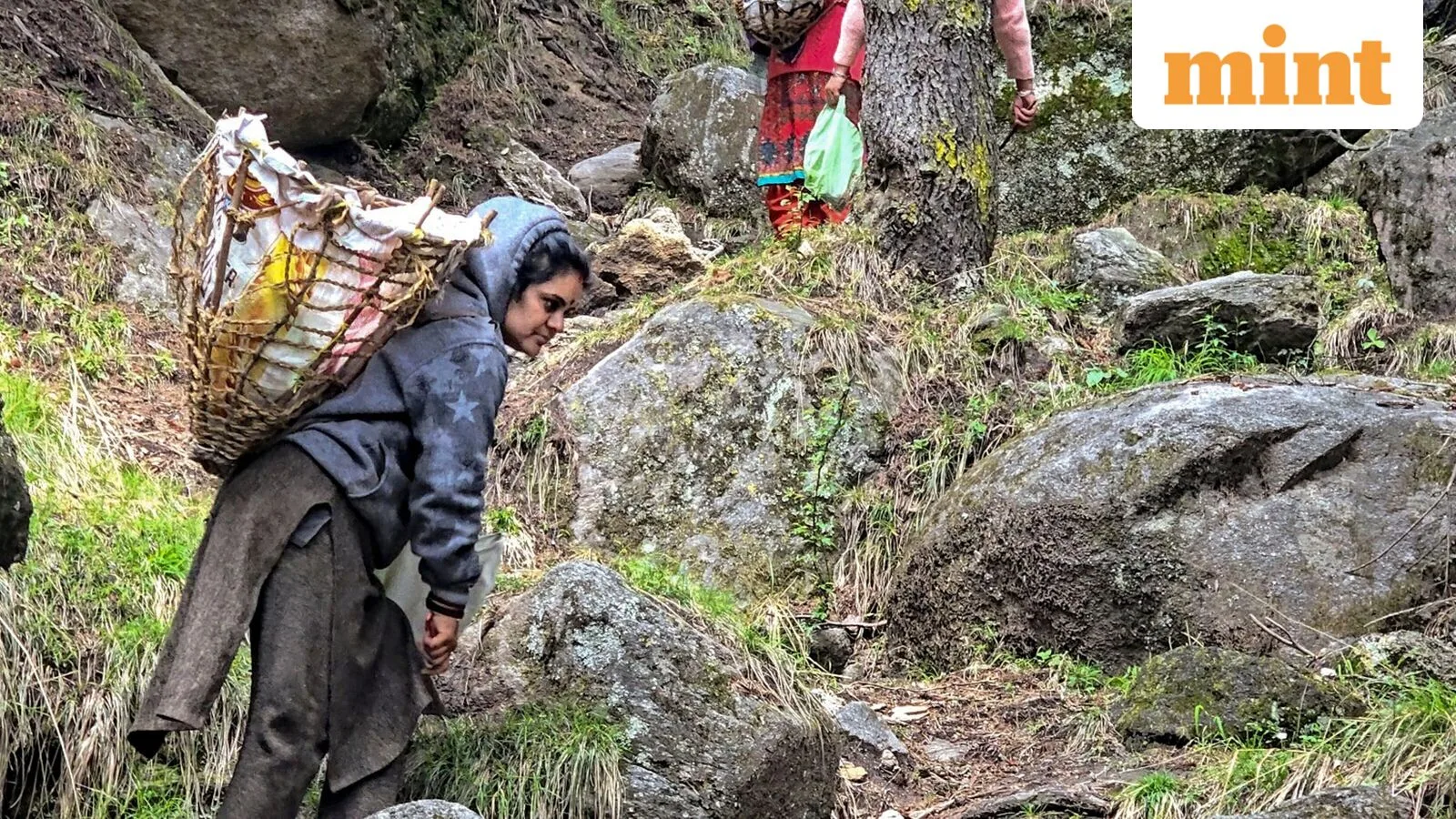
For individuals like Mushtaq Ahmad Mir, a 43-year-old forager from Aripal in Tral, the prospect of cultivated Gucchi remains a distant hope. For a quarter-century, Mir has navigated the dense pine and deodar forests of south Kashmir each spring, meticulously scanning the forest floor for the prized mushroom. What was once a reliable source of income, supporting his family, has become increasingly precarious. "Earlier, I could collect up to 4 kilograms in a season. Now, it’s hardly 1 kilogram," Mir recounted. "I used to earn around ₹50,000; now it’s barely ₹15,000. Many days, we return empty-handed." His struggle reflects the broader economic vulnerability of thousands of families across Kashmir whose livelihoods are inextricably linked to the health of the forests and the unpredictable bounty of nature.
While the scientific breakthrough at SKUAST-K offers a promising future, the cultivation of Gucchi morels is still in its experimental phases, with critical trials yet to be completed. In the sprawling, silent forests of south Kashmir, traditional collectors like Mushtaq Ahmad Mir continue their seasonal quest, their lives intrinsically tied to an ecosystem that grows harder to read, and less generous, with each passing year. The journey from the lab’s controlled environment to widespread commercial adoption will be complex, requiring careful consideration of market dynamics, cultural heritage, and the socio-economic fabric of the region. Yet, the possibility of a sustainable, cultivated future for Kashmir’s Gucchi mushroom represents a beacon of hope for both ecological resilience and economic prosperity in the Himalayas.