Energy has historically been the bedrock of national prosperity and, in an era marked by escalating geopolitical tensions and supply chain vulnerabilities, it has emerged as a critical fault line for national security. For a rapidly expanding economy like India, reliable and affordable energy is not merely a commodity; it is intrinsically linked to sustained economic progress, industrial expansion, and national resilience. With a burgeoning population exceeding 1.4 billion and an economy projected to be among the world’s largest, India’s energy demand is set to surge, driving an imperative for a secure and sustainable supply. Yet, the nation’s entrenched reliance on imported fossil fuels exposes it to significant risks that originate far beyond its borders, making energy independence a central pillar of its long-term economic and strategic policy.
The financial implications of this dependency are stark. In recent years, India’s oil and gas import bill has approached an astounding $140 billion annually, a substantial drain on foreign exchange reserves that underscores the urgent need for diversification. A significant portion of this vulnerability is concentrated in maritime chokepoints, particularly the Strait of Hormuz. This narrow passage, through which approximately 20% of the world’s total oil supply flows, is an artery for global energy markets. India’s exposure is considerable, with an estimated 35-40% of its crude imports traversing this strait, primarily from key producers such as Saudi Arabia, Iraq, Kuwait, and the United Arab Emirates. Any disruption, whether from regional conflict, piracy, or political instability, could trigger severe supply shocks, fuel price spikes, and exert immense pressure on India’s economy, leading to inflation, trade deficits, and fiscal strain. Beyond Hormuz, other global factors, from OPEC+ production decisions to currency fluctuations and conflicts in distant oil-producing regions, continually destabilize India’s energy budget. The International Energy Agency (IEA) reports India imports nearly 85% of its crude oil and over half of its natural gas, highlighting the deep-seated nature of this reliance and the strategic imperative to mitigate it.
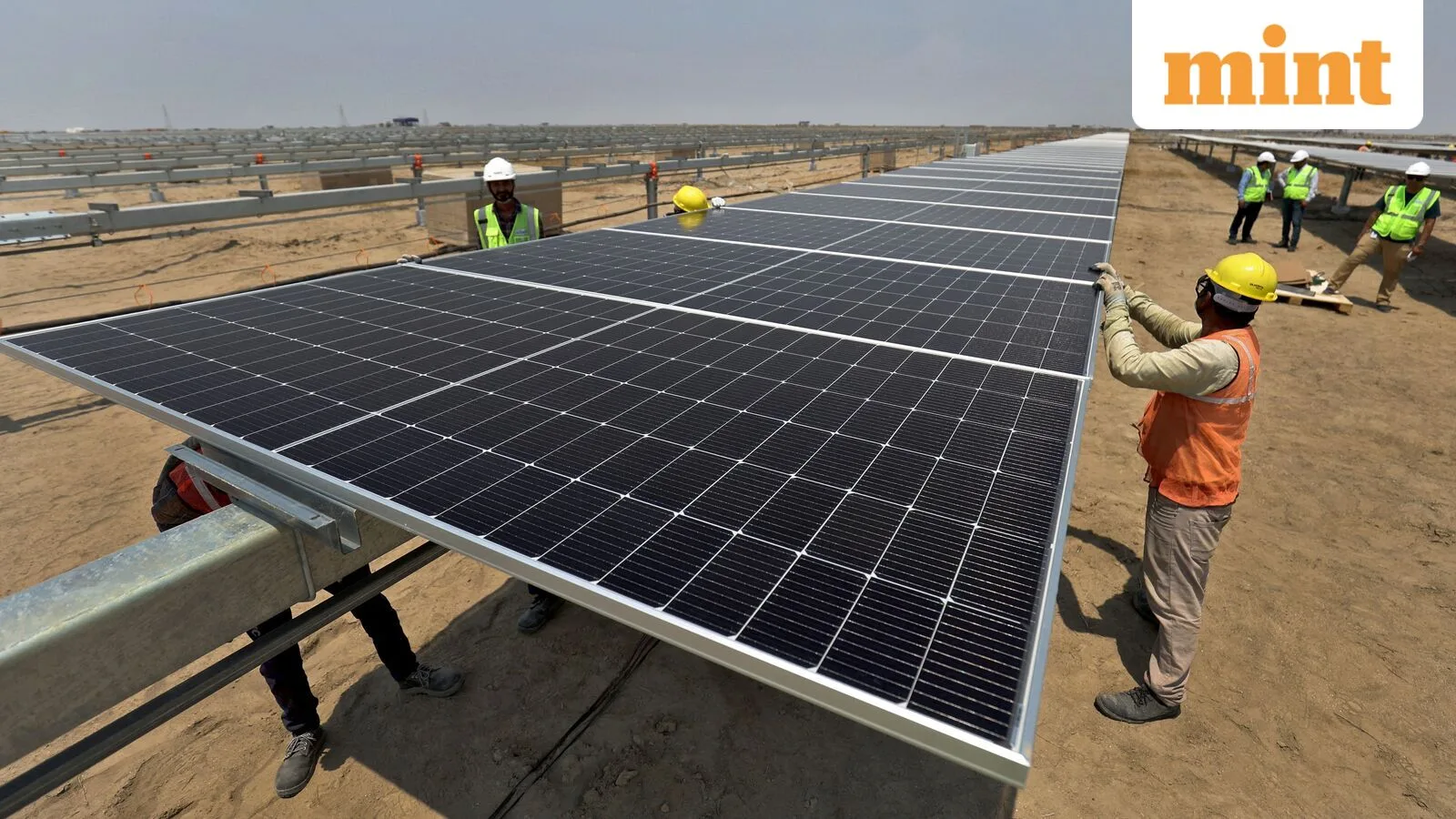
In this context, renewable energy presents not just an environmental solution but a profound strategic pathway to de-risk India’s energy future. Every gigawatt of domestic renewable capacity added contributes directly to reducing exposure to volatile global commodity markets and strengthens the nation’s long-term energy security. Over the past decade, India has demonstrated decisive commitment to this transition, accelerating its shift towards sustainable power generation at an unprecedented pace. The nation is exceptionally blessed with abundant solar irradiation, extensive wind corridors (both onshore and offshore), viable pumped hydro storage sites, and a robust, continually expanding national grid capable of evacuating power from resource-rich regions to high-demand centers. Critically, India also possesses one of the world’s largest pools of engineering and digital talent, a foundational asset for innovation and deployment in the clean energy sector.
This commitment was powerfully articulated at COP26 in Glasgow, where India pledged to achieve 50% of its power capacity from non-fossil fuel sources by 2030 and install 500 GW of such capacity. The progress has been substantial; according to the Ministry of New and Renewable Energy, over 180 GW of non-fossil fuel capacity has already been installed, with solar energy leading the expansion, supported by significant momentum in the wind sector. This trajectory positions India as a global leader in the clean energy transition, rivaling nations like China, the US, and Germany in its ambitious scale and rapid deployment. The dramatic reduction in the cost of solar photovoltaic (PV) and wind power generation over the past decade has further bolstered this shift, making renewables not just environmentally sound but economically competitive.
However, as India accelerates this monumental shift, the renewable energy sector is confronting two immediate and critical constraints: capital and grid absorption. The scale of India’s energy transition demands colossal capital investment, estimated to be in the trillions of rupees, or several hundred billion US dollars, over the coming decades. Renewable energy projects are typically financed with a high debt-to-equity ratio, often 75-80% debt, with equity providing the balance. India has set an ambitious annual target of adding roughly 50 gigawatts of renewable capacity. Yet, the internal cash generation from existing renewable assets can only support a fraction of this necessary expansion. Historically, global pension funds, private equity, and public market capital have bridged this gap. However, tighter global liquidity conditions, driven by rising interest rates and inflation, coupled with subdued renewable equity markets globally, are making it increasingly challenging to secure the requisite capital. To overcome this, India will need to explore innovative financing mechanisms, including green bonds, blended finance structures, participation from sovereign wealth funds, and de-risking instruments to attract more private and international investment.
The second constraint is technical but equally fundamental: the electrical grid’s ability to effectively absorb and integrate intermittent solar and wind power. Solar generation is concentrated during daylight hours, peaking in the middle of the day, and producing nothing at night. Similarly, wind power is dependent on wind speeds. A 100-megawatt solar plant, for instance, might average 25 megawatts across a full day but generates near its full capacity only in the afternoon. As renewable penetration increases, a significant mismatch arises between when electricity is generated and when it is consumed, leading to potential grid instability or curtailment of renewable power. The solution lies in energy storage, which is rapidly emerging as the essential backbone for the next phase of renewable growth. BloombergNEF projects global energy storage deployment to exceed 400 GW by 2030, a more than tenfold increase from today’s installed base. Grid-scale batteries, capable of responding within milliseconds, are crucial for maintaining grid stability, managing frequency, and balancing peak demand as renewable generation fluctuates. Pumped hydro storage (PHS) provides an equally critical capability for large-scale, long-duration energy storage. India already boasts over 4.7 GW of operational PHS capacity, with an ambitious pipeline of over 40 GW of projects under various stages of development and planning. Beyond batteries and PHS, emerging technologies like green hydrogen are also being explored for long-term seasonal storage.
Furthermore, India’s energy system is evolving towards a hybrid architecture, combining solar, wind, and storage to deliver more stable and reliable power. India is already among the top five wind markets globally, with major contributions from states like Tamil Nadu, Karnataka, Gujarat, Maharashtra, and Rajasthan. The replacement of smaller, older turbines with modern 5 MW+ machines is expected to accelerate annual wind installations to 8-10 GW in the short term, with long-term ambitions to tap into offshore wind potential to reach 30-40 GW of capacity. Hybrid renewable projects, by integrating multiple generation sources with storage, can provide round-the-clock renewable electricity, significantly improving plant utilization and enhancing overall grid stability. Crucially, this transition necessitates a rapid and substantial expansion of transmission infrastructure. India plans to invest hundreds of billions of dollars in developing "green energy corridors" and strengthening its inter-state transmission networks over the coming decades. Without this critical expansion, the physical constraints of the grid could severely impede renewable growth, preventing power from resource-rich regions from reaching major demand centers efficiently.
For India, the clean energy transition transcends environmental stewardship; it is a fundamental re-alignment of the nation’s economic and strategic future. Economically, reduced fossil fuel imports will alleviate pressure on the trade deficit, stabilize the rupee, and free up significant capital for domestic investment. The sector promises massive job creation across manufacturing, installation, operations, maintenance, and research and development, fostering new industries and driving technological innovation. Geopolitically, greater energy independence will enhance India’s strategic autonomy, reducing its exposure to global price shocks and allowing for more flexible foreign policy decisions. It will also elevate India’s standing as a responsible global actor committed to climate action, potentially strengthening its diplomatic leverage and fostering new partnerships in sustainable development.
In essence, India’s ambitious pivot to renewable energy is more than a policy shift; it is a foundational transformation designed to secure its economic sovereignty, enhance its strategic resilience, and position it as a leading force in the global green economy of the 21st century. The path ahead is challenging, requiring sustained investment, technological innovation, and robust policy support, but the dividends – economic stability, energy security, and environmental sustainability – are indispensable for India’s future prosperity and global influence.