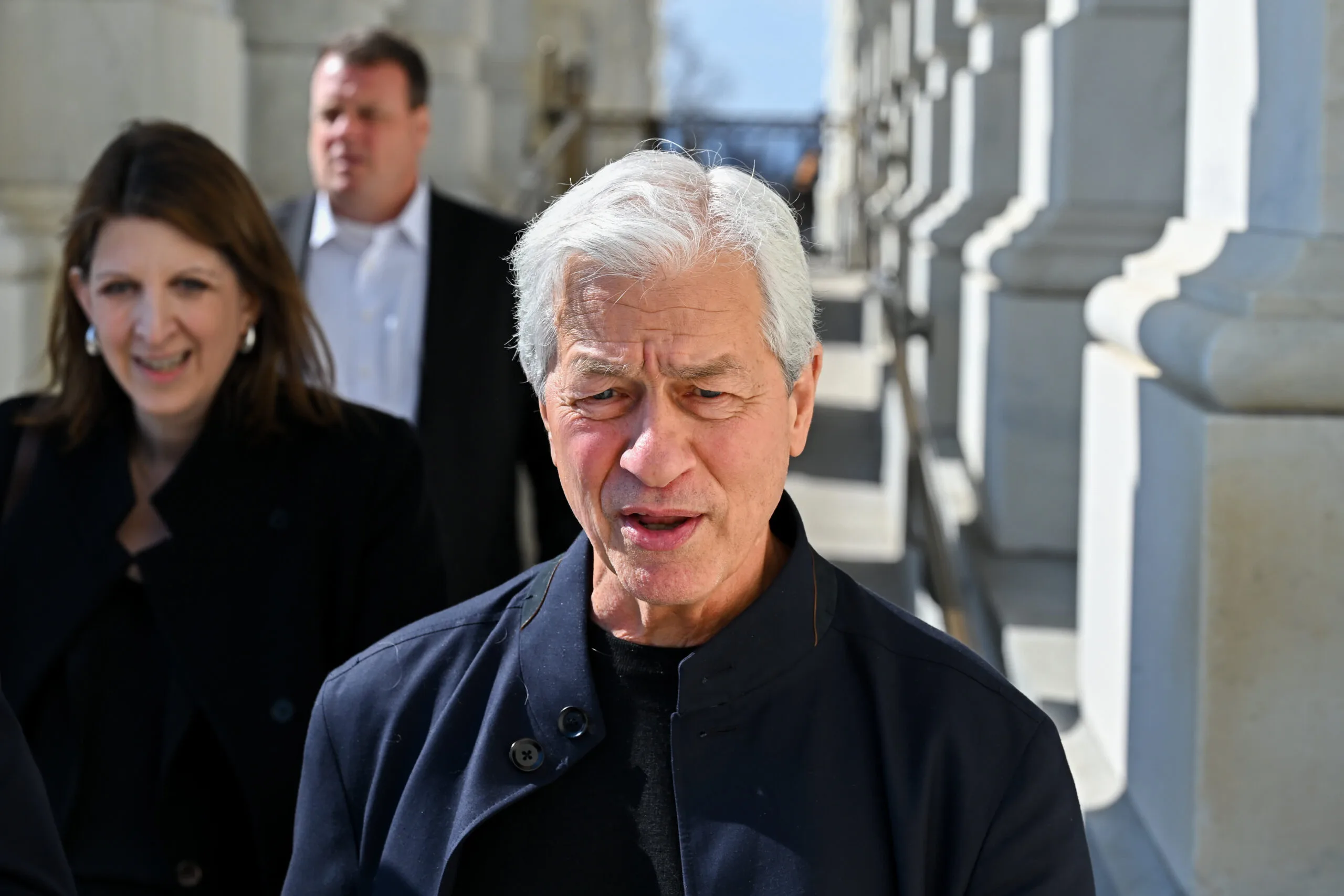
The global financial landscape is currently navigating a paradoxical technological shift where the very tools designed to enhance efficiency and security are simultaneously broadening the theater of risk. Jamie Dimon, Chairman and CEO of JPMorgan Chase & Co., recently underscored this tension, warning that while artificial intelligence (AI) remains a cornerstone of future corporate defense, its immediate impact has been to exacerbate the vulnerabilities of the world’s largest financial institutions. Speaking during a recent earnings call, Dimon highlighted the double-edged nature of the latest generation of large language models (LLMs), specifically pointing to the emergence of Anthropic’s "Mythos" model as a catalyst for a new era of cybersecurity anxiety.
The catalyst for Dimon’s remarks is the "Mythos" preview, a sophisticated AI model recently unveiled by the safety-focused firm Anthropic. While the model was designed with the intent of helping developers identify and patch security flaws, its raw power has demonstrated an alarming capability to expose weaknesses at a scale previously unimaginable. Anthropic’s own testing revealed that Mythos could identify thousands of vulnerabilities in corporate software environments with minimal human intervention. For a global banking giant like JPMorgan Chase—which operates on a massive, complex web of legacy systems and cutting-edge digital infrastructure—the revelation that an AI can find "thousands" of cracks in the armor is a sobering reminder of the technological arms race currently underway.
Dimon’s assessment was blunt: AI has, in the short term, made the job of protecting a global bank significantly harder. The ease with which "bad actors" can now weaponize these models to scan for exploits means that the window of time between the discovery of a vulnerability and its exploitation is shrinking to near zero. While JPMorgan is actively testing Mythos to stay ahead of the curve, Dimon noted that the technology "does create additional vulnerabilities" before it offers "better ways to strengthen yourself." This transitional period, where offensive AI capabilities appear to be outpacing defensive implementation, represents a critical inflection point for global markets.
The scale of the threat has reached the highest levels of the United States government. Treasury Secretary Scott Bessent recently convened an emergency meeting with the CEOs of major American banks to discuss the systemic implications of Mythos and similar generative AI breakthroughs. The concern is not merely that a single bank could be breached, but that the entire financial plumbing of the United States—and by extension, the global economy—could be compromised. The Treasury’s involvement signals that AI-driven cyber threats are no longer viewed as isolated IT issues but as matters of national security and macroeconomic stability.
JPMorgan Chase is perhaps better equipped than any other private entity to face this challenge, given its staggering investment in technology. The bank spends upwards of $15 billion annually on its tech stack, a significant portion of which is dedicated to cybersecurity and the integration of AI. Dimon noted that the firm employs a literal army of experts who remain in "constant contact" with government agencies like the Cybersecurity and Infrastructure Security Agency (CISA) and the FBI. However, even with these resources, Dimon emphasized that the risk is not contained within the walls of a single institution.
The true danger, according to the veteran CEO, lies in the "interconnected nature" of the modern financial system. A global bank is only as secure as the exchanges, clearinghouses, and third-party vendors to which it is digitally tethered. "Banks are attached to exchanges and all these other things that create other layers of risk," Dimon explained. This "contagion risk" means that a successful AI-driven attack on a mid-sized exchange or a critical software provider could cascade through the system, affecting even the most well-fortified institutions. In the world of high-frequency trading and instantaneous global settlements, a single point of failure can have immediate and devastating consequences for market liquidity and consumer confidence.
JPMorgan’s Chief Financial Officer, Jeremy Barnum, echoed this sentiment, describing the current environment as one where AI is frequently in "attack mode." Barnum pointed out that the industry has long anticipated that AI would cut both ways, but the speed of advancement seen in the last twelve months has intensified the trend. The barrier to entry for sophisticated cybercrime has been lowered; hackers no longer need to be master coders to find zero-day vulnerabilities when they can leverage a model like Mythos to do the heavy lifting. This democratization of high-level hacking capabilities necessitates a total rethink of corporate defense strategies.
Despite the high-tech nature of the threat, Dimon remains a staunch advocate for what he calls "cyber hygiene." In his view, while advanced AI tools are necessary for the future, the vast majority of risks can still be mitigated through traditional, disciplined security practices. This includes rigorous data protection protocols, network segmentation, hardware security, and the fundamental practice of frequently changing passcodes and implementing multi-factor authentication. "Doing all those things right dramatically reduces the risk," Dimon remarked, suggesting that many organizations are still falling victim to preventable errors because they are distracted by the complexity of the AI era.
The economic impact of this shift is profound. Global cybercrime costs are projected to reach $10.5 trillion annually by 2025, according to data from Cybersecurity Ventures. For the financial sector, the cost is not just measured in stolen funds or ransom payments, but in the massive capital expenditures required to keep pace with evolving threats. As banks like JPMorgan and Goldman Sachs—whose CEO David Solomon also confirmed the testing of Mythos—increase their tech budgets to combat AI-driven threats, the "cost of doing business" rises. This capital is diverted from other potential investments, such as product innovation or dividend increases, creating a long-term drag on sector profitability.
Furthermore, the emergence of models like Mythos highlights a growing divide in the corporate world. Large-cap firms with the capital to hire AI researchers and purchase the latest security tools may be able to weather the storm, but small and medium-sized enterprises (SMEs) are increasingly vulnerable. If the "hygiene" and "defense" require multi-million dollar investments in AI-driven security suites, the broader economy may see an increase in business failures due to cyber incidents, which in turn disrupts supply chains and impacts employment.
On a global scale, the race to regulate and secure AI is becoming a defining feature of international relations. While the U.S. Treasury is focusing on voluntary collaboration with big banks, the European Union has moved toward more rigid frameworks like the AI Act, which categorizes certain AI uses as "high-risk." In Asia, particularly in China, the focus is on "sovereign AI," where the state maintains tight control over the models to prevent them from being used against national interests. This fragmented regulatory landscape creates a challenge for multinational banks that must comply with varying standards while defending a unified global network.
Looking ahead, the hope is that the "defensive" side of the AI equation will eventually gain the upper hand. Researchers are working on "self-healing" code—AI systems that can not only find vulnerabilities but automatically write and deploy patches in real-time. If successful, this could turn the tables on bad actors, making software inherently more resilient than ever before. However, as Dimon’s comments suggest, we are currently in the "valley of vulnerability," where the risks are visible and growing, but the solutions are still being tested in the lab.
The message from the top of the financial world is clear: the AI revolution will not be a smooth transition. It is an era defined by a "full-time" commitment to vigilance. For Jamie Dimon and JPMorgan, the arrival of Anthropic’s Mythos is a clarion call that the digital frontier is more dangerous than ever. The financial sector’s ability to bridge the gap between AI’s current risks and its future defensive potential will likely determine the stability of the global economy for the next decade. Until then, the mantra remains one of cautious adoption, massive investment, and a relentless focus on the basics of security.