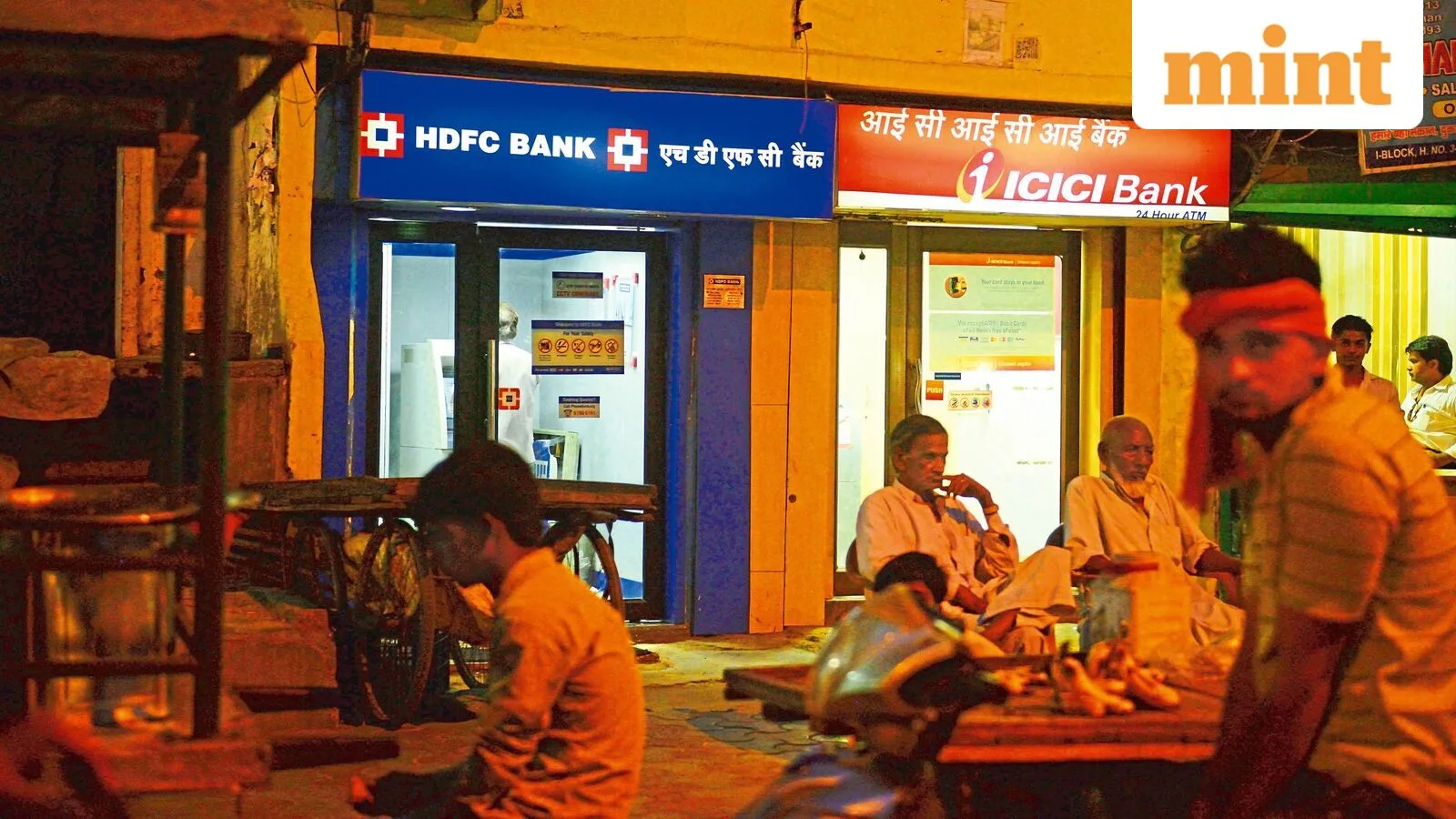
India’s expansive financial ecosystem, a critical pillar of its burgeoning economy, periodically navigates a complex interplay of cultural tradition and modern operational demands, particularly evident during regional bank holidays. As the nation observed Ram Navami on March 26th and 27th, financial institutions across various states experienced staggered closures, underscoring the unique regulatory framework governing public and private lenders. This regional variation in banking schedules, a characteristic feature of India’s diverse cultural tapestry, is meticulously outlined by the Reserve Bank of India (RBI) in its annual holiday calendar, a document that dictates adherence for all banking branches nationwide.
Ram Navami, a revered Hindu festival commemorating the birth of Lord Rama, an incarnation of Vishnu and the central figure of the epic Ramayana, saw its observances spread over two days in late March. Consequently, banking operations were halted in specific jurisdictions on both days. On March 26th, cities such as Ahmedabad, Aizawl, Belapur, Chandigarh, Dehradun, Jaipur, Kanpur, Kolkata, Lucknow, Mumbai, Nagpur, and Shimla witnessed bank closures. The following day, March 27th, saw similar shutdowns in Bhopal, Bhubaneswar, Gangtok, Hyderabad, Patna, and Vijayawada. This nuanced approach to holiday scheduling highlights the RBI’s strategy to balance widespread religious and cultural celebrations with the imperative of maintaining financial continuity where possible. The festival itself is marked by widespread prayers, fasting, and devotional activities, deeply embedded in the social fabric of these regions.
The Reserve Bank of India, as the central banking authority, classifies bank holidays into three distinct categories to ensure clarity and operational guidance: holidays under the Negotiable Instruments Act, holidays under the Real-Time Gross Settlement (RTGS) system, and holidays for banks’ closing of accounts. The Negotiable Instruments Act holidays typically pertain to days when physical banking transactions, such as cheque clearances or loan disbursements, are suspended. RTGS holidays impact large-value interbank funds transfers, although the underlying infrastructure often remains operational for automated processes. Finally, account closing holidays are specific to the end of the financial year or half-year, allowing banks to reconcile their books. Beyond these specific classifications, all banks uniformly observe national holidays like Republic Day, Independence Day, and Gandhi Jayanti, alongside mandatory weekly closures on all Sundays and the second and fourth Saturdays of every month. The cumulative effect of these designated holidays means that India’s banking sector, on average, observes a significant number of non-working days annually; March alone, for instance, can see up to 18 bank holidays including weekly offs, varying by region.
The economic implications of such regional and staggered bank holidays are multifaceted. While major national holidays lead to widespread economic pauses, regional closures present a more granular impact. Local economies heavily reliant on cash transactions or physical branch interactions, particularly in semi-urban and rural areas, can experience minor disruptions. Small and Medium Enterprises (SMEs) might face temporary delays in payment processing, supply chain financing, or access to working capital, potentially affecting their daily operations. However, the macro-economic impact is increasingly mitigated by India’s robust and rapidly evolving digital payments infrastructure. According to recent reports, India’s digital payment ecosystem processes billions of transactions monthly, with platforms like the Unified Payments Interface (UPI) leading the charge. In fact, UPI alone recorded over 13.4 billion transactions worth approximately ₹19.78 lakh crore (about $237 billion) in February 2024, a testament to its pervasive adoption.
This digital transformation has profoundly reshaped how individuals and businesses interact with banking services during holidays. While physical branches may be closed, essential financial functionalities remain accessible 24/7. Automated Teller Machines (ATMs) continue to dispense cash and provide basic services like balance inquiries and mini-statements. More critically, online banking platforms and mobile applications facilitate a wide array of services, including fund transfers via National Electronic Funds Transfer (NEFT), Immediate Payment Service (IMPS), and Real-Time Gross Settlement (RTGS) for larger sums. NEFT and IMPS are particularly vital, enabling instantaneous or near-instantaneous transfers around the clock, even on holidays. The advent of UPI has further revolutionized this, allowing seamless peer-to-peer and peer-to-merchant payments using a simple mobile interface, making cash withdrawals or physical branch visits largely unnecessary for routine transactions.
Expert insights suggest that this digital resilience is a significant advantage for India. "While traditional bank holidays might have once represented a significant economic friction, the proliferation of digital payment gateways has largely decoupled financial access from physical branch availability," notes Dr. Anya Sharma, a senior economist specializing in financial markets. "This not only ensures business continuity for digitally-enabled enterprises but also empowers individual consumers, reducing the ‘cost’ of a holiday to a minimal level, primarily affecting only those services that strictly require in-person interaction, like specific loan applications or complex advisory." Fintech innovators further emphasize this shift, with many developing AI-driven customer support and automated solutions that ensure service availability irrespective of banking calendars.
From a global perspective, India’s approach to bank holidays, with its significant regional variations, stands in contrast to many developed economies. In countries like the United States or the United Kingdom, federal or national bank holidays are generally uniform across the entire nation, simplifying operational planning for businesses and consumers. However, these nations also rely heavily on advanced digital banking infrastructure to maintain service during closures. China, with its vast population and economic scale, also has a set of national holidays, though regional variations can exist for specific ethnic or local festivals. India’s model, driven by its unique federal structure and cultural diversity, necessitates a more intricate holiday calendar. This complexity underscores the RBI’s role in harmonizing diverse cultural needs with the imperative of a functional financial system.
Looking ahead, the evolving landscape of banking in India will likely see an even greater reliance on digital platforms to bridge the gap during holiday periods. This trend contributes not only to convenience but also to financial inclusion, allowing individuals in remote areas to access banking services without the constraints of geographical proximity to a physical branch or its operating hours. Challenges remain, including ensuring robust cybersecurity measures for digital transactions and addressing the digital divide to ensure equitable access to online banking for all segments of the population. However, the overarching trajectory is clear: holidays, while rooted in tradition, are increasingly becoming non-events for the digital-savvy customer, transforming the role of physical bank branches into hubs for complex transactions, advisory services, and relationship management, rather than mere transactional points.
Ultimately, the observance of Ram Navami bank holidays, like many others throughout the year, serves as a periodic reminder of the intricate balance India maintains between its rich cultural heritage and its dynamic economic aspirations. The country’s banking sector, guided by the RBI, continues to adapt, ensuring that while the spirit of celebration thrives, the engine of financial activity never truly stops, thanks to a judicious blend of regulatory foresight and technological innovation. This dual rhythm – respecting tradition while embracing progress – defines the modern Indian financial narrative, ensuring resilience even amidst a diverse calendar of national and regional observances.