The global economic landscape, characterized by rapid technological shifts and intense competitive pressures, is compelling corporations to fundamentally rethink their innovation strategies. Traditional research and development (R&D) pipelines and even conventional corporate venture capital (CVC) models often struggle to deliver the sustained, disruptive growth required to maintain market leadership. In response, a structured and systematic approach to building multiple new ventures, known as the venture studio model, has emerged as a potent mechanism for organizations seeking to unlock value creation through accelerated innovation. Pioneered by tech giants like Google, the studio model offers a deliberate framework for internal venture creation, but its adoption demands a rigorous assessment of strategic fit, resource allocation, and long-term organizational commitment.
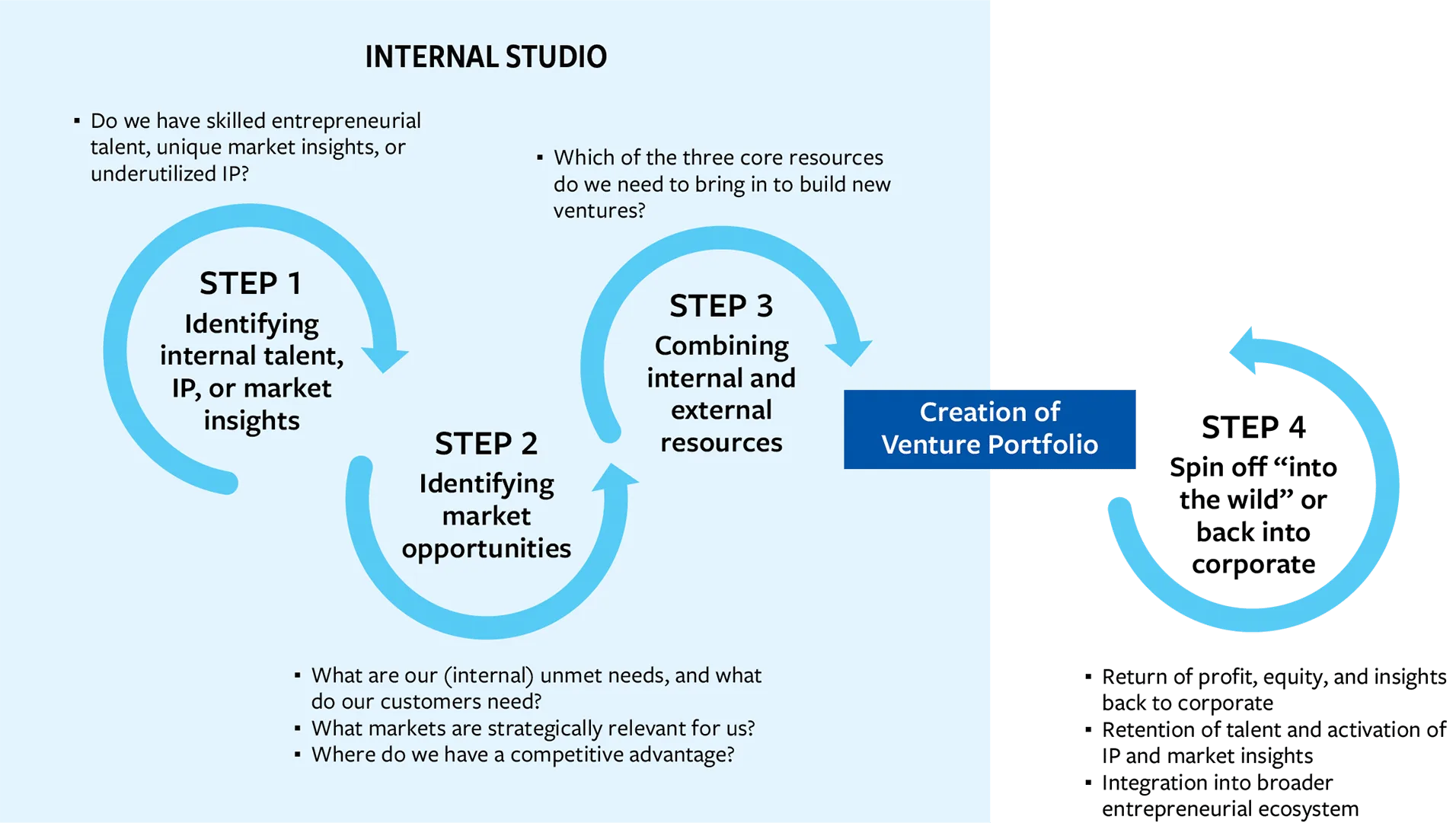
Whether operating as independent entities, embedded within investment funds, or integrated into large corporations, universities, or governmental organizations, venture studios are designed to systematically coalesce ideas, talent, and resources to incubate and scale a portfolio of new businesses. Unlike the sequential nature of traditional serial entrepreneurship, where individuals or teams launch ventures one after another, the studio model thrives on parallel venture creation, leveraging shared capabilities and infrastructure across multiple projects simultaneously. This systematic approach typically involves a multi-stage process: first, identifying and meticulously shaping promising market opportunities; second, recruiting visionary entrepreneurs to co-found ventures within these defined spaces, often with shared equity; third, advancing these ventures through structured experimentation and rapid iteration; and finally, applying rigorous down-selection criteria to narrow the field, providing ongoing operational support until ventures are either successfully spun out as independent companies, integrated into the parent organization, or, if unsuccessful, efficiently terminated. This model’s efficacy is underscored by its remarkable growth, with the number of independent and in-house venture studios reportedly doubling between 2018 and 2023, reaching an estimated 870 globally, signaling a significant shift in corporate innovation paradigms.
Despite its burgeoning popularity and the promise of de-risked innovation, the venture studio model is not without its inherent challenges. One critical hurdle lies in the significant equity stakes and operational control that studios often retain in their portfolio companies. While this level of involvement provides crucial strategic guidance and resources, it can, paradoxically, deter highly competent founders seeking greater autonomy and dilute the appeal for external investors in subsequent funding rounds. Moreover, the simultaneous support of multiple ventures necessitates substantial upfront capital investment before any tangible returns materialize. This capital intensity, coupled with the risk of pipeline dilution if down-selection processes are not sufficiently rigorous, can strain available resources and undermine the funnel logic essential for effective venture development and scaling. For internal venture studios within large corporations, these challenges are compounded by organizational complexities. While some, like Google X (now Alphabet’s X), have achieved remarkable success with ventures such as Waymo, valued at over $100 billion, and Standard Chartered’s SC Ventures, which incubated Mox, Hong Kong’s fastest-growing digital bank, corporate studios are often subject to the parent organization’s shifting priorities, intricate governance structures, and layers of bureaucracy. Functions such as legal, risk, and compliance, while essential, can inadvertently stifle the agility critical for early-stage ventures, making corporate studios vulnerable to funding reductions or outright shutdown if strategic alignment falters or internal champions depart.
For an organization to truly harness the transformative potential of a venture studio, four fundamental conditions must be met, ensuring both strategic alignment and operational efficacy. The first critical prerequisite is the availability of specialized talent, a rich internal intellectual property (IP) portfolio, or profound market insights. Successful studios are built on a foundation of deep expertise, whether it’s a team of seasoned venture architects, product developers, and growth hackers, or access to proprietary technologies and patents that can form the bedrock of new ventures. Furthermore, an intimate understanding of unmet market needs, emerging trends, and customer pain points derived from the parent company’s core operations or dedicated market research provides an invaluable compass for identifying high-potential opportunity spaces. This intrinsic knowledge acts as a powerful differentiator, allowing studios to develop solutions that resonate deeply with specific industry challenges.

The second condition emphasizes the need for a strategic combination of internal assets and external capabilities. While leveraging the parent company’s brand recognition, customer base, distribution channels, and data infrastructure offers significant advantages, relying solely on internal resources can lead to insular thinking. The most effective venture studios actively seek to integrate external entrepreneurial talent, fresh market perspectives, and specialized skills that may not exist within the corporate ecosystem. This hybrid approach fosters a dynamic environment where corporate scale and stability meet startup agility and innovation. It also allows for the de-risking of new ventures by providing them with a "soft landing" within a supportive corporate framework, while simultaneously exposing the parent organization to new methodologies and market insights.
Third, establishing the right governance mechanisms is paramount for a venture studio’s longevity and success. This involves striking a delicate balance between granting ventures sufficient autonomy to innovate rapidly and ensuring strategic alignment with the parent organization’s overarching goals. Clear decision-making processes, transparent reporting lines, and well-defined incentive structures are crucial. The leadership of the venture studio must possess a high degree of operational independence, shielded from day-to-day corporate politics, while simultaneously maintaining strong channels of communication and accountability to the parent company’s executive board. This often necessitates creating bespoke legal and operational frameworks that streamline processes such as contracting, hiring, and budget allocation, bypassing the bureaucratic inertia that can plague traditional corporate structures. Effective governance also includes a robust system for performance measurement and a clear understanding of the metrics for success, which often extend beyond immediate financial returns to include strategic learning, market penetration, and talent development.
Finally, and perhaps most critically, a long-term commitment of both time and financial resources is indispensable. The venture studio model is not a mechanism for quick wins or short-term gains; it is a strategic investment in future growth and resilience. The incubation and scaling of successful ventures typically require a multi-year horizon, often ranging from three to seven years, before significant returns can be expected. Organizations embarking on this journey must exhibit patience and a willingness to embrace iterative learning, including the inevitable failures that are part of the innovation process. As Google X co-founder Astro Teller famously articulated, celebrating "smart failures" as valuable learning opportunities is crucial for fostering a culture of experimentation and risk-taking. Without sustained executive sponsorship and a dedicated capital allocation that can withstand market fluctuations and internal priority shifts, even the most promising venture studio initiatives are likely to falter. This long-term perspective transforms the venture studio from a temporary project into a fundamental pillar of an organization’s strategic innovation infrastructure.
The economic impact of a thriving venture studio ecosystem extends far beyond individual corporate gains. By systematically de-risking the venture creation process and providing structured support, studios contribute significantly to job creation, foster new market formation, and enhance overall economic diversification. They act as powerful engines for regional innovation, attracting entrepreneurial talent and capital. As the global economy continues to evolve, venture studios are poised to play an increasingly central role, potentially becoming more specialized by sector (e.g., climate tech, AI, biotech), leveraging advanced analytics for idea generation, and fostering greater collaboration between independent studios and large corporations. For leaders navigating an era of unprecedented change, the venture studio offers a compelling, albeit demanding, blueprint for building the next generation of value-creating enterprises and securing a competitive edge in the innovation race.