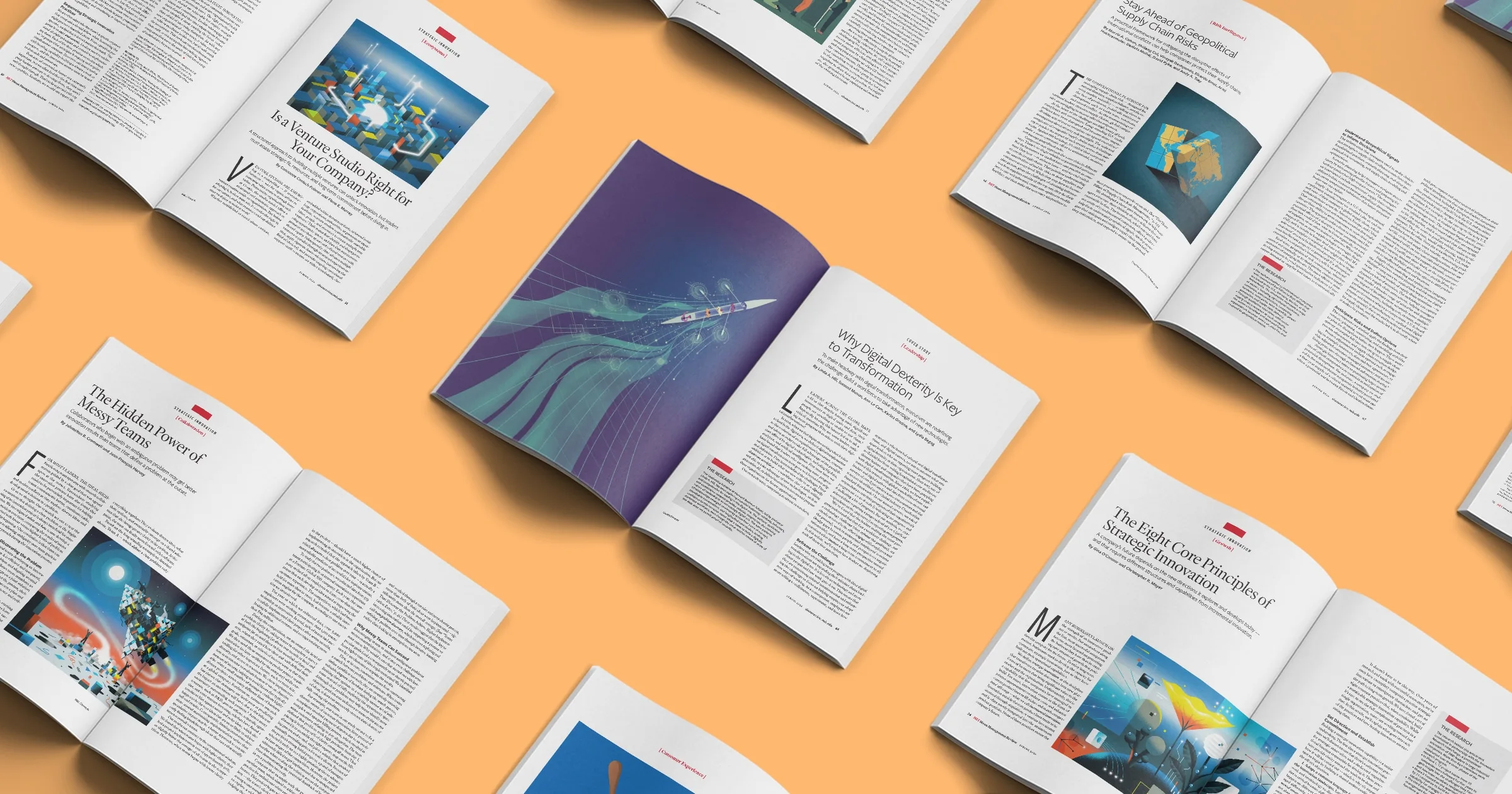
In an era defined by accelerated technological change, intricate geopolitical landscapes, and shifting market dynamics, corporate leaders are increasingly focused on cultivating agile strategies that foster both innovation and enduring resilience. The pursuit of sustainable growth demands a nuanced understanding of internal capabilities and external pressures, pushing organizations to rethink long-held operational paradigms and embrace adaptive leadership. This comprehensive outlook delves into critical strategic areas, from the foundational principles of innovation and the evolving models for venture creation to the complexities of digital transformation, performance measurement, and risk mitigation, all essential for navigating the contemporary global business environment.
At the heart of sustained competitiveness lies the ability for mature enterprises to systematically refresh their product and service portfolios through strategic innovation. While many companies achieve initial success with groundbreaking offerings, the subsequent focus often gravitates towards incremental improvements of existing lines, inadvertently sidelining the vital development of truly novel solutions. Research underscores that businesses successfully maintaining a consistent flow of innovation adhere to practices that collectively forge a robust strategic innovation capability. A cornerstone of this approach is the institutionalization of a permanent innovation practice, grounded in a clear strategic vision and unwavering commitment from leadership. This goes beyond ad-hoc projects, embedding a culture of continuous exploration and development that allows organizations to anticipate market shifts and preempt disruption, rather than merely react to it. Global R&D spending, projected to reach over $2.5 trillion by the mid-2020s, highlights the economic imperative, yet effective deployment of these resources often depends more on strategic frameworks than sheer investment volume.
Complementing internal innovation efforts, the venture studio model is gaining traction as a powerful vehicle for corporate innovation, though its successful deployment hinges on specialized resources and sustained commitment. These studios enable corporations to deploy talent, ideas, and capital into multiple new ventures operating in parallel, targeting key strategic areas. Despite inherent challenges such as high capital requirements and intricate governance, their growth reflects a strategic imperative for corporations to externalize innovation processes while retaining strategic alignment. Success is contingent upon securing specialized talent, leveraging an internal intellectual property portfolio, and integrating deep market insights. Furthermore, effective studios seamlessly combine internal assets with external capabilities, establish agile governance structures, and secure long-term financial and temporal commitment from the parent organization. This contrasts with traditional corporate venture capital by actively building companies rather than just investing, demanding a hands-on, operational approach to foster new growth engines.
Paradoxically, the initial stages of innovation often thrive not on rigid problem definitions but on open-ended exploration, challenging conventional wisdom that prioritizes clear goals from the outset. Studies involving numerous ad hoc teams participating in global innovation competitions revealed a counterintuitive finding: teams commencing with ambiguous problem definitions, yet successfully converging on a single idea by their project’s midpoint, demonstrated a significantly higher likelihood of successful implementation compared to those that began with well-defined problems. This suggests that allowing for a period of "messiness" or unstructured ideation can unlock greater creative potential and lead to more viable solutions. This approach aligns with modern design thinking methodologies, emphasizing discovery and iteration over premature problem scoping. For organizations, fostering an environment where teams are empowered to explore broadly before narrowing their focus can be a powerful antidote to incrementalism, potentially leading to truly disruptive breakthroughs.
The journey of digital transformation, a multi-trillion-dollar global endeavor, is fundamentally a cultural shift, not merely a technological upgrade. Leaders who grasp this distinction make demonstrably greater progress than those adopting a technology-first mindset. It is insufficient to merely acquire new digital tools or provide technical training; the critical element is fostering a workforce willing and able to integrate digital capabilities and data into their daily roles and processes. Research identifies four pivotal "people-first" leadership practices for successful transformation: reframing the challenge from a technical to a human-centric one, ensuring engagement and sponsorship from the highest levels of leadership, bridging diverse people and perspectives across organizational silos, and sustaining long-term commitment despite inevitable setbacks. The economic impact of successful digital transformation is profound, with digitally mature companies often outperforming their peers in revenue growth, profitability, and market capitalization, while studies indicate that up to 70% of digital transformations fail, largely due to cultural resistance.

In the realm of performance management, lessons from artificial intelligence (AI) model training offer a novel perspective on designing more effective Key Performance Indicators (KPIs) that deter gaming behaviors. A common pitfall for organizations is an over-reliance on narrow metrics, which can incentivize employees to optimize for short-term gains, such as sales figures, at the expense of long-term strategic objectives like customer retention or brand equity. When incentives are closely tied to such limited indicators, the risk of unethical practices to achieve rewards escalates. Traditional solutions, including balanced scorecards and conventional KPIs, remain susceptible to manipulation and necessitate rigorous oversight. By adapting strategies drawn from AI and machine learning research—such as using diverse data inputs, considering multi-objective optimization, and building in adversarial training mechanisms—organizations can rethink their approach to metrics, designing measurements that are more robust, holistic, and resistant to unintended consequences, thereby truly reaping the benefits of performance measurement.
Beyond individual project assessments, a structured approach to learning from outcomes is crucial for promoting sustained organizational growth and resilience. A longitudinal study investigating factors behind sustainable growth and longevity across various countries and industries culminated in the development of a framework designed to help managers systematically determine the drivers of project success or failure. This framework, termed DIRS (Decompose, Interpret, Reward, and Scale), emphasizes structured learning that leaders can apply to identify future opportunities and cultivate repeatable growth strategies. Decomposing outcomes involves breaking down complex initiatives into their constituent parts; interpreting focuses on understanding causal links and underlying mechanisms; rewarding acknowledges and reinforces successful behaviors and learnings; and scaling involves propagating validated insights and processes across the organization. This disciplined approach moves beyond superficial post-mortems, embedding a continuous learning loop that enhances strategic decision-making and fosters an adaptive organizational culture, which is increasingly vital in volatile markets.
Building business advantage in the modern economy often hinges on the capacity for real-time decision-making (RTDM). Enterprises that master this capability consistently outperform competitors by empowering employees to make better-informed decisions and execute them with unparalleled speed. These "Real-Time Businesses" (RTBs) achieve significantly higher customer satisfaction, enhanced operational efficiency, and superior market responsiveness. Key capabilities distinguishing successful RTBs include ubiquitous real-time data availability and the analytical tools to process it, an empowered workforce capable of decentralized decision-making, superior business agility to pivot rapidly, and a deeply integrated customer experience across all touchpoints. Case studies from diverse sectors, including airlines, retail giants, and financial services firms, illustrate how strategic investments in data infrastructure, employee training, and agile operational models translate into tangible competitive advantages, driving revenue growth and reducing operational costs through dynamic adaptation.
The increasing volatility of the global political landscape demands a sophisticated, structured approach to managing geopolitical supply chain risks. Traditional risk management playbooks, often focused on operational efficiencies and natural disasters, are proving inadequate against the backdrop of escalating trade wars, economic sanctions, armed conflicts, and shifting international alliances. A comprehensive study of multinational corporations has led to a three-part framework enabling leaders to interpret complex geopolitical signals proactively. This framework emphasizes understanding geopolitical dynamics, anticipating potential risks to the supply chain and defining a range of response options, and critically, adapting swiftly to current conditions. Strategies such as supply chain diversification, near-shoring, friend-shoring, and enhanced inventory management are becoming essential components of resilience. The economic fallout from recent global disruptions underscores this urgency, with industry estimates suggesting that major supply chain shocks can cost global companies trillions annually in lost revenue and increased operational expenses, making proactive geopolitical risk management a strategic imperative, not just an operational concern.
Despite rigorous due diligence, nearly half of all mergers and acquisitions (M&A) deals ultimately unravel, with corporate "divorces" often occurring a decade after the initial transaction. This high failure rate represents a significant destruction of shareholder value, drains leadership attention, and erodes organizational credibility. Research indicates that poor initial strategic or cultural fit, coupled with unforeseen market disruptions or integration challenges, are primary catalysts for these failures. A newly developed "Corporate Divorce Matrix" offers leaders a diagnostic tool to identify critical risks throughout the M&A process, helping to predict a deal’s likely trajectory and inform more sound decisions at every stage. This framework helps evaluate factors such as cultural compatibility, strategic alignment, operational integration complexities, and market foresight, enabling organizations to either mitigate identified risks or, if necessary, avoid value-destructive deals altogether, thereby safeguarding capital and strategic focus.
Finally, in an age of data proliferation, a smarter approach to measuring customer experience (CX) is paramount. Marketers frequently grapple with an overwhelming volume of CX metrics, often struggling to extract meaningful, actionable insights. Research highlights the importance of paring down the number of metrics collected, focusing instead on those that yield the deepest understanding of customer sentiment and behavior. Aligning these streamlined metrics with detailed customer journey mapping enables businesses to track key touchpoints and understand the emotional and functional drivers at each stage. This targeted approach not only enhances tracking and reporting efficiencies but, more importantly, provides CX managers with genuinely actionable insights. By focusing on fewer, more impactful metrics connected directly to the customer’s journey, companies can optimize investments in CX, bolster customer loyalty, and ultimately drive sustainable revenue growth, as a superior customer experience remains a potent differentiator in competitive markets.