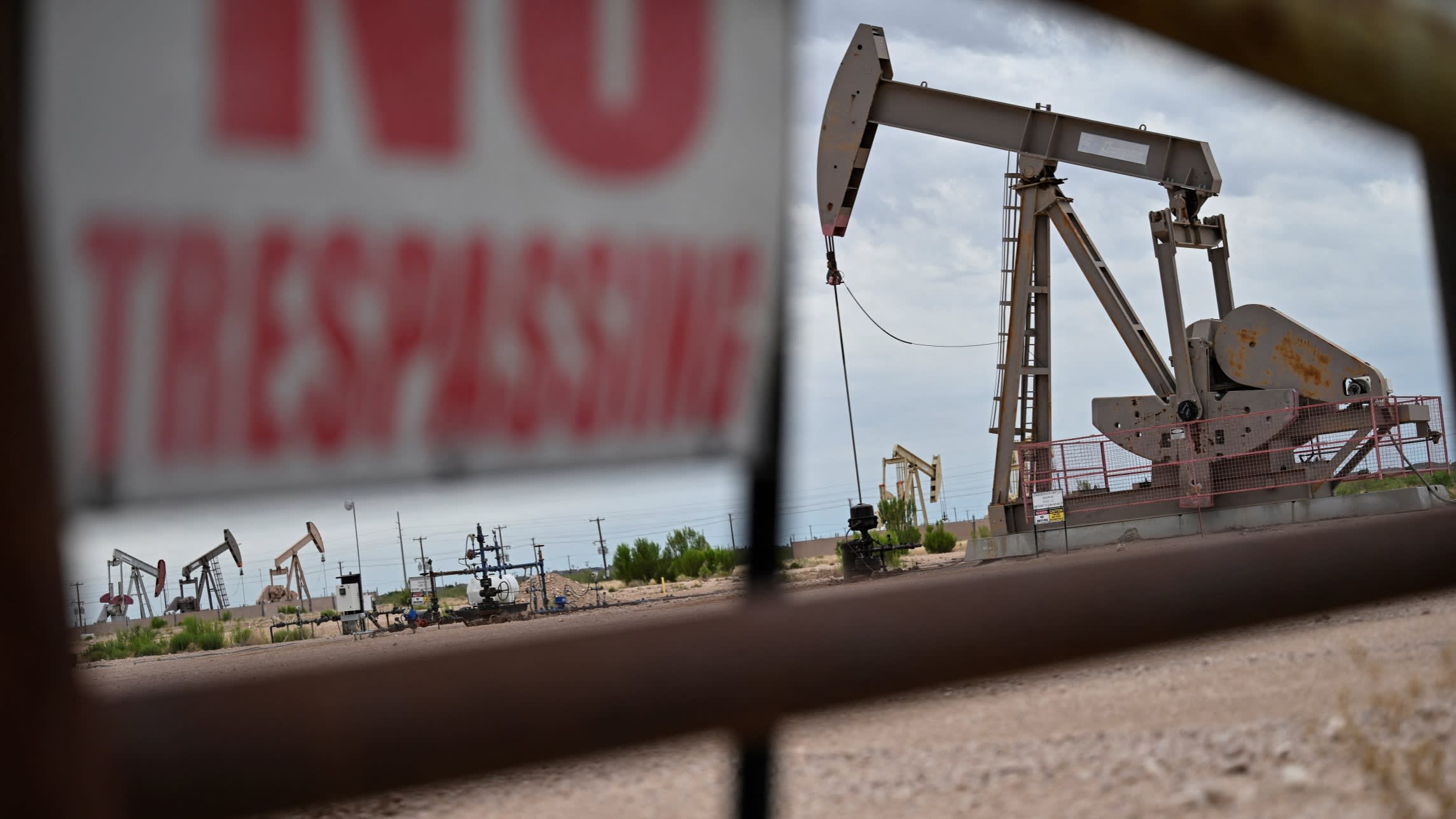
The global energy sector, long accustomed to the ebb and flow of regional instabilities, is currently grappling with a profound sense of inertia as the threat of a widening conflict involving Iran casts a long shadow over domestic dealmaking. For much of the past eighteen months, the United States oil and gas industry was defined by a historic wave of consolidation, characterized by multi-billion-dollar "mega-mergers" that sought to unify the fractured landscapes of the Permian Basin and other shale-rich territories. However, that momentum has hit a formidable wall. The escalating tensions in the Middle East, particularly the heightened risk of direct confrontation between regional powers and the potential for disrupted maritime corridors, have effectively placed American energy M&A (mergers and acquisitions) in a state of strategic paralysis.
This standstill is not merely a product of caution but is rooted in the fundamental mechanics of energy valuation. In the world of high-stakes oil and gas transactions, the "bid-ask spread"—the difference between what a buyer is willing to pay and what a seller is willing to accept—is dictated by long-term price projections for Brent and West Texas Intermediate (WTI) crude. When the geopolitical landscape is stable, these projections are based on supply-demand fundamentals, inventory levels, and macroeconomic growth forecasts. But when the threat of a major regional war involving Iran enters the equation, the "geopolitical risk premium" becomes an unpredictable wild card. This volatility makes it nearly impossible for corporate boards to agree on the fair value of an asset that may produce oil for the next thirty years.
Market analysts observe that the current environment has created a "valuation gap" that is too wide to bridge. Sellers, eyeing the possibility of a supply shock that could send prices soaring toward $100 per barrel, are reluctant to offload assets at current market rates. Conversely, buyers are wary of overpaying for production at a cyclical peak, fearing that if tensions de-escalate, prices could rapidly retreat to the $70 range. This stalemate has resulted in a significant cooling of activity, with many deals that were reportedly in the "data room" phase being quietly shelved or postponed indefinitely until a clearer geopolitical horizon emerges.
The significance of Iran in this equation cannot be overstated. As a pivotal player in the Persian Gulf and a nation with the capacity to influence the Strait of Hormuz—a chokepoint through which approximately 20 percent of the world’s total petroleum consumption passes—Iran’s strategic maneuvers dictate global energy sentiment. Any escalation that threatens the flow of crude through this corridor doesn’t just affect Middle Eastern producers; it sends shockwaves through the global pricing mechanism. For US shale producers, who have spent the last decade shifting from a "growth at all costs" model to one of "capital discipline and shareholder returns," the risk of a sudden price collapse following a geopolitical spike is a risk many are unwilling to take.
This period of paralysis follows one of the most active eras in the history of the American oil patch. In 2023, the industry witnessed a staggering $250 billion in total deal value, headlined by ExxonMobil’s $60 billion acquisition of Pioneer Natural Resources and Chevron’s $53 billion deal for Hess. These transactions were driven by a desire for "inventory depth"—the need to secure high-quality drilling locations that can sustain production for decades. While the logic for further consolidation remains sound—larger companies benefit from economies of scale and better access to capital—the macro environment has turned hostile to the execution of such strategies.
Beyond the immediate impact on crude oil prices, the paralysis extends to the liquefied natural gas (LNG) sector. The United States has recently ascended to the position of the world’s largest LNG exporter, a role that has become vital to European energy security following the disruption of Russian pipeline gas. However, the prospect of a broader Middle Eastern war threatens to involve other major gas producers, such as Qatar. The resulting uncertainty complicates the long-term supply contracts that underpin the financing of new LNG export terminals on the US Gulf Coast. Investors are increasingly hesitant to commit tens of billions of dollars to infrastructure projects when the global trade routes for these commodities are under threat of systemic disruption.
Furthermore, the economic backdrop of high interest rates has exacerbated the dealmaking slowdown. While the Federal Reserve has signaled a potential shift in monetary policy, the cost of financing large-scale acquisitions remains significantly higher than it was during the post-pandemic recovery. When combined with geopolitical uncertainty, the "hurdle rate"—the minimum rate of return required for a project or acquisition—has climbed. Boardrooms are now scrutinizing every potential deal with a level of rigor that borders on aversion. The "easy deals" have been done; what remains are more complex, mid-cap consolidations that require stable market conditions to justify the risk.
The impact of this paralysis is also being felt in the services sector. Oilfield service providers, which rely on a steady stream of drilling and completion activity, often see their fortunes tied to the M&A cycle. When large operators merge, they often high-grade their portfolios, leading to a temporary lull in activity as they integrate operations. However, a total freeze in dealmaking creates a different kind of problem: it prevents the efficient reallocation of capital and equipment. Small and mid-sized producers, who might have been targets for acquisition, are instead forced to operate in a "maintenance mode," limiting their capital expenditures and slowing the overall growth of US domestic production.
International comparisons highlight the unique position of the US market. While state-owned enterprises in the Middle East or Asia can make strategic decisions based on decades-long national interests, US independent producers are beholden to quarterly earnings reports and the immediate demands of Wall Street. This makes the American market far more sensitive to the "noise" of geopolitical headlines. While a state-backed firm might ignore a temporary price spike caused by a drone strike in the Gulf, a US public company must answer to shareholders who are hypersensitive to volatility.
The current situation also poses a challenge for the energy transition. Many of the larger integrated oil companies have sought to use the cash flow from their traditional fossil fuel assets to fund investments in low-carbon technologies, such as carbon capture and hydrogen. When dealmaking in the core business stalls, it can slow the strategic pivot toward these newer sectors. Consolidation was seen as a way to create "super-majors" with the balance sheet strength to navigate the transition; without the ability to consolidate, some firms may find themselves "stuck" with aging assets and insufficient capital to pivot.
Looking ahead, the "thaw" in US oil and gas dealmaking will likely require a definitive de-escalation of the Iran-Israel friction or a new "floor" in oil prices that provides a sense of permanence. Market participants are closely watching not only the military movements in the region but also the diplomatic efforts to contain the conflict. Until there is a sense that the "geopolitical floor" is stable, the appetite for transformative acquisitions will remain suppressed.
In the interim, the industry is seeing a shift toward smaller, "bolt-on" acquisitions—deals where a company buys a smaller neighbor’s acreage to extend a lateral well. These transactions are easier to price, require less debt, and do not carry the same level of boardroom risk as a multi-billion-dollar corporate merger. While these smaller deals keep the lights on for investment bankers, they do little to change the fundamental structure of the industry or provide the scale needed to face the challenges of the coming decade.
Ultimately, the "paralysis" described by industry insiders is a testament to how interconnected the global energy market has become. An explosion in the Middle East is no longer just a tragedy occurring half a world away; it is a direct input into the spreadsheets of analysts in Houston, Denver, and New York. As long as the threat of a major war involving Iran looms, the American energy industry will likely remain in a defensive crouch, prioritizing liquidity and stability over the ambitious growth and consolidation that defined its recent past. The gears of the world’s most dynamic energy market are not broken, but they are certainly locked, waiting for a signal that the global stage is once again safe for the long-term deployment of capital.