In an era defined by intensely splintered attention and an explosion of digital platforms, intellectual property (IP) owners are strategically redesigning narrative universes to transcend traditional formats, a critical pivot aimed at maximizing audience reach, deepening engagement, and securing new monetization pathways. This sophisticated multi-format approach, often termed transmedia storytelling, moves beyond simple spin-offs, instead reimagining core narratives for diverse consumption windows, from cinematic spectacles to on-the-go audio experiences and bite-sized micro-dramas. The underlying economic logic is clear: to extract maximum value from existing creative assets while mitigating the considerable risks associated with entirely new content development in a hyper-competitive market.
The contemporary media landscape is characterized by a profound shift in consumer behaviour, driven by pervasive mobile technology and an insatiable demand for content tailored to specific contexts and attention spans. Audiences are no longer passive recipients but active participants, curating their media diets across an array of devices throughout their day. This fragmentation has given rise to the "attention economy," where content creators and distributors are locked in a fierce battle for fleeting moments of engagement. Traditional long-form television and film, while still dominant in certain spheres, increasingly compete with the immediacy of short-form video platforms, the convenience of audio content, and the immersive appeal of interactive digital experiences. Global data underscores this shift: podcast listenership has surged by over 20% year-on-year in many markets, while daily consumption of short-form video content now often surpasses two hours for younger demographics, indicating a strong preference for "snackable" narratives that fit seamlessly into daily routines like commutes, workouts, or brief downtime.
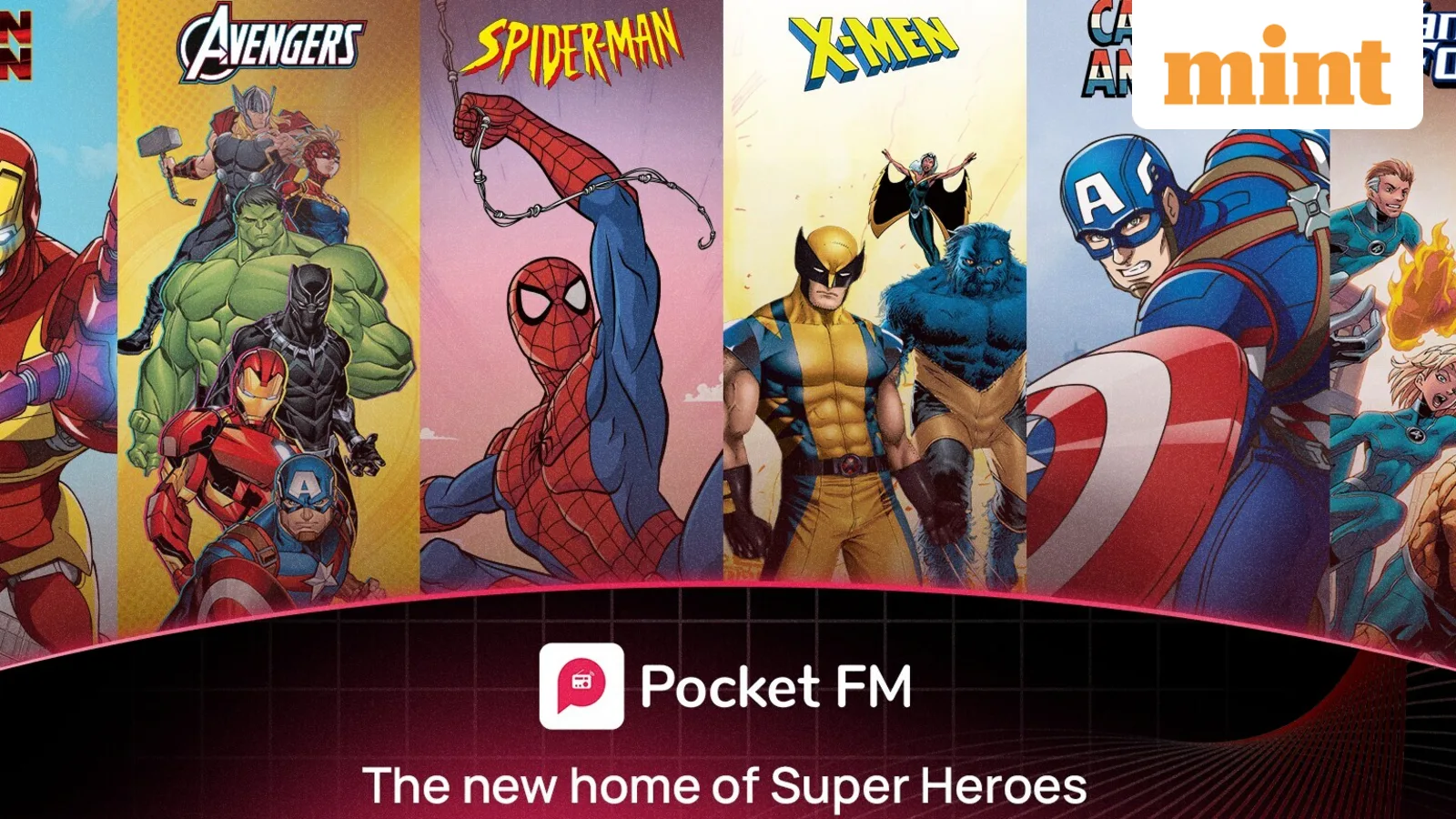
This evolving dynamic has compelled major media conglomerates and independent IP holders alike to adopt a more fluid approach to content distribution. For instance, broadcast network Zee Entertainment’s strategic move to stream its popular television shows on micro-drama platform Story TV exemplifies this trend. Concurrently, global entertainment behemoths like Marvel are extending their cinematic universes into audio adaptations available on platforms such as Audible and Pocket FM. While such multi-format partnerships are still nascent in rapidly developing markets like India, they represent a mature and well-established strategy in Western media ecosystems, where franchises like Star Wars and Harry Potter have long expanded into video games, theme park attractions, immersive VR experiences, and extensive merchandising, creating vast, interconnected narrative worlds.
The primary economic driver behind this strategy is capital efficiency. Industry experts highlight that leveraging a known IP across disparate formats offers a potent mechanism to extend a story’s universe and monetize existing catalogues without incurring the substantial production risks and capital expenditure associated with large-scale, original productions. Developing a new blockbuster film or high-budget television series can cost hundreds of millions of dollars, with no guarantee of audience acceptance. In contrast, adapting an existing, beloved narrative into an audio series or a micro-drama involves significantly lower upfront investment while benefiting from established brand recognition and a pre-existing fan base. This approach accelerates user acquisition for new-age platforms, which can attract fresh subscribers without substantial marketing outlays, by offering them familiar content in novel formats.

As Vineet Singh, a senior executive at Pocket FM, notes, "Taking a known IP into formats like audio or micro-drama is about unlocking new value from existing storytelling equity. A strong story is not tied to one screen. If it has emotional depth and a loyal audience, it can travel." This sentiment underscores the belief that the core emotional resonance of a narrative is its most valuable asset, capable of transcending medium-specific limitations. The rise of audio, in particular, caters to an increasing demand for "eyes-free" content consumption, fitting into moments where screens are impractical. Similarly, micro-dramas appeal to mobile-native audiences who prefer vertical-format, high-impact storytelling that can be consumed quickly. Saurabh Pandey, founder of Story TV, emphasizes the symbiotic benefits: "For Zee, it monetizes a deep legacy library… reaching younger mobile-native audiences that traditional television no longer captures. For Story TV, it expands our title slate and deepens engagement."
Beyond the immediate benefits of audience expansion and cost efficiency, this multi-format strategy is also a sophisticated form of risk hedging. By diversifying content across various platforms, IP owners reduce their reliance on any single format’s performance. A strong showing in one medium can offset weaker performance in another, creating a more robust and resilient revenue portfolio. This structural shift transforms IP from a static asset tied to a single medium into a scalable narrative engine that can plug into multiple audience behaviours and monetization models, including subscription fees, advertising revenue, licensing deals, and in-app purchases within interactive experiences.
Looking ahead, the evolution of content consumption is pushing IP owners towards even more immersive formats, marking the next frontier in this cross-platform strategy. Beyond audio and short-form video, there is growing exploration into gaming, augmented reality (AR), virtual reality (VR), and highly interactive experiences. These formats offer unparalleled opportunities for deeper engagement, allowing fans to step directly into their favourite fictional worlds. For example, a popular fantasy series could inspire an AR game that blends digital elements with the real world, or a VR experience that transports users to iconic locations from the narrative. Such initiatives build cross-platform ecosystems, strengthening brand loyalty and fostering "superfans" who interact with the brand across various touchpoints, from passive viewing to active participation.
However, the pursuit of transmedia expansion is not without its challenges. Industry observers caution against the perils of narrative fatigue and brand dilution. As IP lawyer Simrean Bajwa points out, "Overuse may not only erode the distinctiveness of the brand but also result in diminishing returns on its licensing value." The key lies in ensuring that each new format genuinely adds value to the original IP, rather than merely being a repetitive rehash. Creative reinterpretation, staggered releases, and a focus on maintaining narrative integrity are crucial to avoid alienating audiences who might perceive adaptations as mere cash grabs. Furthermore, the cost and complexity of developing high-quality content for emerging formats like AR and VR can be daunting, requiring significant investment in specialized technology, skilled personnel, and novel production pipelines. Not every IP is inherently suited for such transitions, and careful strategic assessment is required to ensure a viable return on investment.
Ultimately, the core of this transformation lies in recognizing that the format is secondary to the enduring power of a compelling story. As Harikrishnan Pillai, CEO of digital agency TheSmallBigIdea, eloquently states, "Most people will choose the format that fits their life. Cinema-goers want the big screen experience, commuters want audio, scrollers want micro-dramas." The goal is not necessarily to have every fan consume every iteration, but rather to ensure that the narrative remains accessible and engaging to diverse segments of the global audience, wherever and whenever they choose to interact. In this dynamic landscape, a robust IP strategy is no longer about creating a single hit, but about cultivating a versatile, multi-dimensional narrative universe capable of adapting and thriving across the ever-evolving canvas of human attention.