The narrative of a definitive "pivot" in American monetary policy has encountered a harsh collision with geopolitical reality and stubborn price pressures, forcing a dramatic recalibration of expectations across global financial markets. As the first quarter of 2026 unfolds, the optimistic consensus that the Federal Reserve would begin a steady cycle of interest rate reductions by early summer has largely evaporated. In its place is a growing realization that the "higher-for-longer" mantra may not just be a temporary posture, but a multi-year necessity driven by a volatile cocktail of energy shocks and resilient core inflation.
Just weeks ago, the CME Group’s FedWatch tool suggested a high probability of a quarter-percentage-point cut in June, with subsequent reductions in September and December. This outlook was predicated on a cooling labor market and a steady glide path toward the central bank’s 2% inflation target. However, the escalation of hostilities between Israel and Iran has injected a massive dose of uncertainty into the global economy. With Brent crude oil prices surging to the $100-a-barrel threshold following attacks in the Persian Gulf and threats to the vital Strait of Hormuz, the inflationary calculus has shifted from a question of "when" prices will fall to "how high" they might climb again.
The energy sector’s resurgence acts as a double-edged sword for the Federal Open Market Committee (FOMC). Not only do $100 oil prices directly inflate headline consumer price indices, but they also seep into the broader economy through increased transportation costs, higher manufacturing expenses, and elevated utility bills. This "cost-push" inflation is notoriously difficult for central banks to manage, as it occurs independently of domestic demand. For a Federal Reserve that has spent the better part of four years battling the most significant inflationary surge in a generation, the prospect of a secondary spike driven by Middle Eastern instability is a scenario that precludes any immediate easing of credit conditions.
Recent data from the Commerce Department has only reinforced the central bank’s cautious stance. The Personal Consumption Expenditures (PCE) price index—the Fed’s preferred inflation gauge—is projected to show a core annual rate of 3.1% for January. This represents not just a failure to cool, but an actual acceleration from December’s figures. Crucially, this data suggests that inflationary pressures were already beginning to percolate well before the most recent geopolitical flare-up. When the core PCE remains a full percentage point above the target, the institutional appetite for rate cuts diminishes, regardless of political pressure or market anticipation.
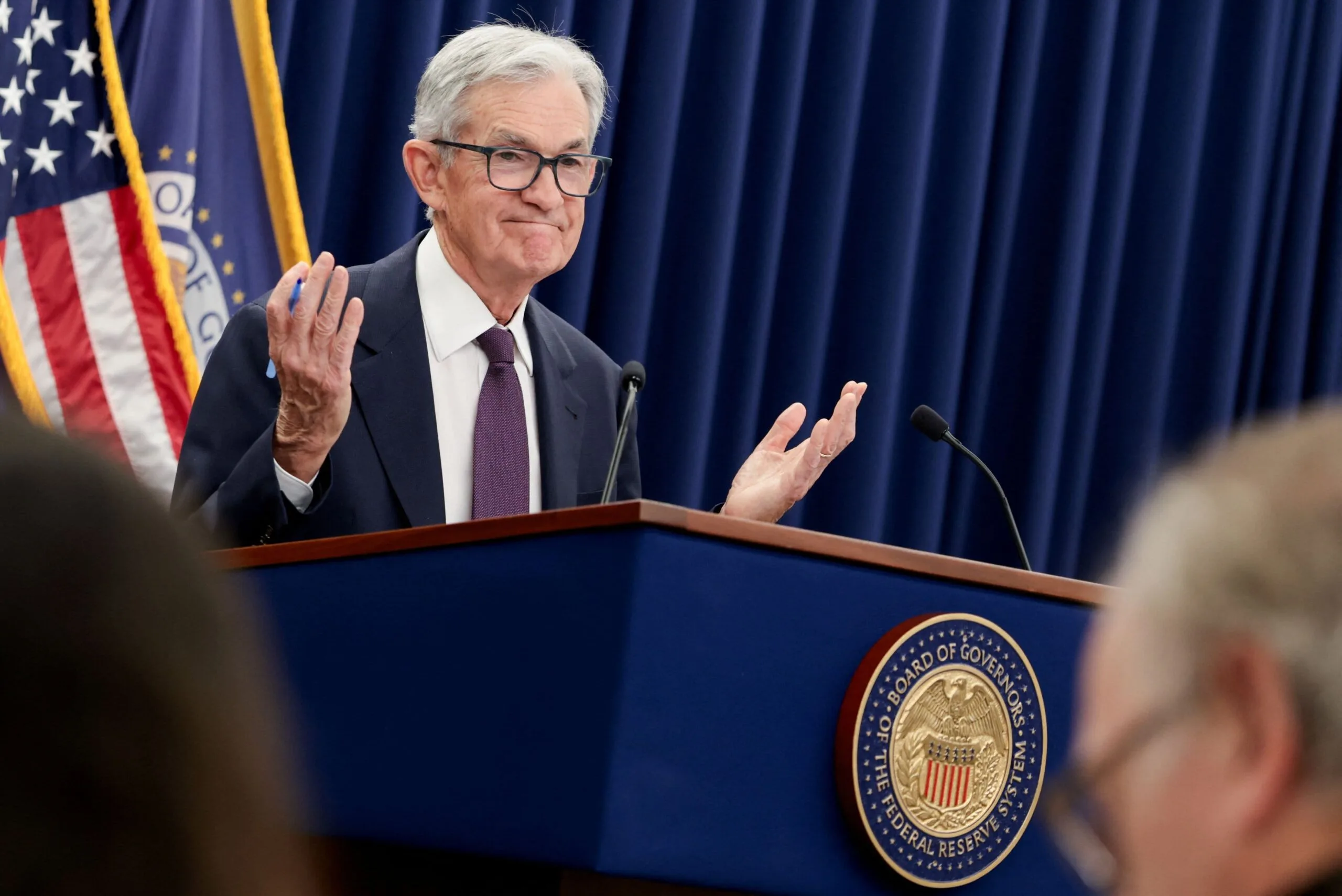
The timing of this economic turbulence is particularly sensitive given the looming leadership transition at the Federal Reserve. Current Chair Jerome Powell is slated to vacate his position in May, with Kevin Warsh positioned as the presumptive successor. While Warsh was tapped by President Donald Trump with the expectation of a more aggressive approach to lowering rates, he now faces what many analysts are calling an "economic perfect storm." The incoming chair will inherit a mandate to support growth while being hemmed in by a commodity-driven inflation spike that could make early rate cuts look like a policy error.
Goldman Sachs, which had previously been among the more optimistic voices for an early summer cut, has been forced to adjust its forecast. The firm’s economists now anticipate the first reduction will not occur until September, and even that projection remains contingent on the labor market showing significant signs of distress. Goldman’s analysts noted that while they still see the potential for two cuts before the end of 2026, the path has become significantly narrower. If the labor market remains robust, the Fed will have little incentive to risk a resurgence of inflation by easing too soon.

Other market participants are taking an even more hawkish view. In the fed funds futures market, traders have effectively priced out the possibility of a September cut, with many now looking toward December as the earliest window for relief. Some more pessimistic models suggest that no further cuts may be forthcoming until well into 2027 or even early 2028. This shift represents a massive repricing of risk, as the "Goldilocks" scenario of a soft landing—where inflation falls without a significant increase in unemployment—appears increasingly elusive.
The political dimension of these economic shifts remains a constant background noise. President Trump has been vocal in his criticism of the current Fed leadership, taking to social media to demand immediate rate cuts to offset the impact of high energy prices. "Where is the Federal Reserve Chairman, Jerome ‘Too Late’ Powell, today?" Trump posted recently, arguing that the central bank should be dropping rates "IMMEDIATELY" rather than waiting for scheduled meetings. However, the Fed’s historical commitment to independence usually means that such public pressure has the opposite effect, reinforcing the committee’s resolve to follow the data rather than political dictates.
From a broader perspective, the persistence of high interest rates in the United States has profound implications for the global economy. A "higher-for-longer" Fed typically supports a strong U.S. dollar, which in turn puts pressure on emerging markets that hold dollar-denominated debt. It also exports inflation to other nations by making dollar-priced commodities, like oil, even more expensive in local currency terms. If the Fed is unable to cut rates because of energy prices, it creates a feedback loop that could slow global growth and increase the risk of a synchronized international downturn.
Internal dynamics within the U.S. economy are also showing signs of strain. While the labor market has begun to soften from its post-pandemic highs, it has not yet reached the "pain threshold" that would force the Fed to prioritize employment over price stability. Bank of America economist Stephen Juneau pointed out that while some components of the inflation basket, such as housing, are showing signs of stabilization, the overall trend remains rangebound and above levels consistent with the Fed’s goals. Juneau’s assessment is blunt: the Federal Reserve is in no rush to ease.
The upcoming FOMC meeting on March 18 is now viewed by the market as a non-event in terms of policy changes, with a nearly 100% probability assigned to rates staying on hold. The focus will instead be on the "dot plot"—the individual projections of FOMC members—and the subsequent press conference. Investors will be scouring the Fed’s language for any sign that the committee is beginning to view the energy shock as a long-term structural change rather than a temporary disruption.
As the conflict in the Middle East continues to dictate the rhythm of the energy markets, the prospect of "normalcy" remains a distant hope. Should the situation in the Strait of Hormuz stabilize and oil prices retreat toward the $70–$80 range, the window for a summer or autumn rate cut could theoretically reopen. However, for as long as the geopolitical risk premium remains embedded in the price of crude, the Federal Reserve’s hands are effectively tied. The transition from the Powell era to the Warsh era will thus be defined not by a change in philosophy, but by the cold, hard reality of an economy where the cost of living remains the primary threat to stability.
Ultimately, the fading hopes for rate cuts reflect a broader realization that the post-pandemic era of easy money is not returning anytime soon. The structural forces of deglobalization, geopolitical instability, and energy transitions are creating an environment where inflation is more volatile and more persistent than in the previous two decades. For businesses and consumers who had been holding out for lower borrowing costs, the message from both the markets and the central bank is clear: the era of high interest rates is here to stay for the foreseeable future, and the path back to the 2% target will be longer and more arduous than anyone had anticipated.