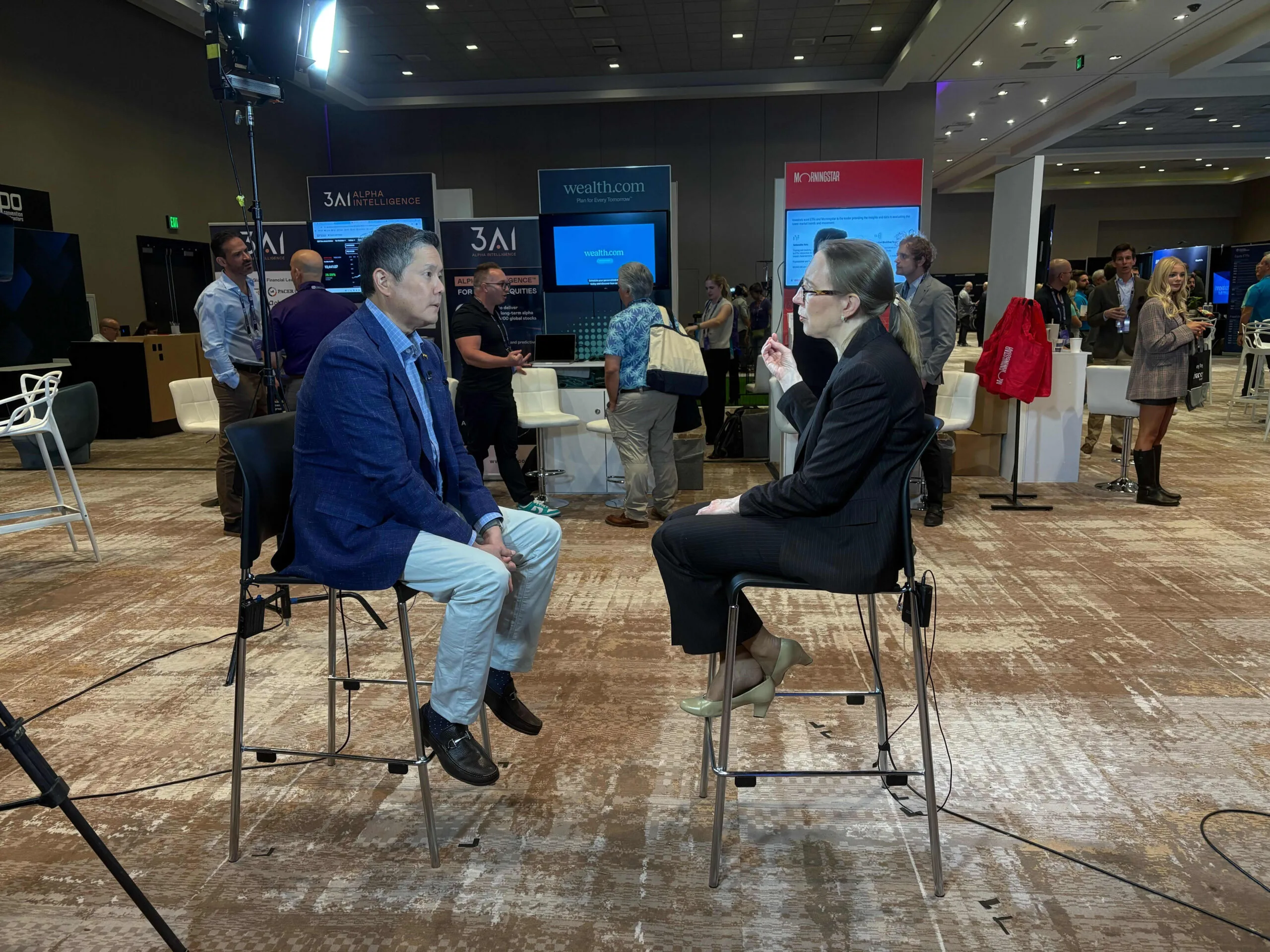
The landscape of American finance is undergoing a profound transformation as the lines between traditional exchange-traded products and decentralized ledger technology continue to blur. Speaking at the VettaFi Exchange conference in Las Vegas, Securities and Exchange Commission (SEC) Commissioner Hester Peirce delivered a message that resonated through the halls of the global investment community: the regulatory "closed-door" era may be giving way to a period of active engagement. Peirce’s invitation for Wall Street innovators to "come in and talk" represents more than just a change in tone; it signals a potential pivot in how the world’s most influential regulatory body approaches the next generation of financial instruments, from tokenized assets to complex crypto-linked derivatives.
The shift in the SEC’s posture comes at a critical juncture for the exchange-traded fund (ETF) industry, which has seen explosive growth over the last decade. As of 2024, the U.S. ETF market manages over $9 trillion in assets, driven by a relentless appetite for low-cost, transparent, and liquid investment vehicles. However, the frontier of this growth is no longer found in simple S&P 500 trackers. Instead, the industry is looking toward "tokenization"—the process of converting rights to an asset into a digital token on a blockchain—and more sophisticated cryptocurrency products. Peirce, often affectionately referred to by the industry as "Crypto Mom" for her long-standing dissent against overly restrictive digital asset policies, emphasized that the commission’s role is not to act as a gatekeeper of investment quality, but as a facilitator of disclosure and market integrity.
A New Philosophy of Regulatory Engagement
For years, the relationship between the SEC and the digital asset sector was characterized by what many industry participants termed "regulation by enforcement." The approval of spot Bitcoin ETFs in early 2024 marked a watershed moment, but it was a victory won largely through the judicial system rather than administrative enthusiasm. Commissioner Peirce’s recent remarks suggest a desire to move past this litigious history. By encouraging sponsors to engage with the SEC early in the product development cycle, she is advocating for a collaborative framework where innovation can be tested against the rigors of investor protection without being stifled in the cradle.
Peirce’s philosophy centers on the principle of merit-neutrality. In the realm of securities regulation, this means the government should not decide whether a specific investment is "good" or "bad" for the public. Instead, the regulatory mandate is to ensure that investors have access to all material information—risks, costs, and objectives—to make their own informed decisions. This approach is particularly relevant as retail investors gain easier access to highly volatile or complex products. The Commissioner noted that while the SEC must respect investor protection, its primary tool should be transparency rather than prohibition.
The Tokenization Wave and Market Efficiency
While cryptocurrency often grabs the headlines, the "tokenization" of traditional financial instruments may represent a more significant long-term shift in market infrastructure. Tokenization involves putting real-world assets (RWAs)—such as Treasury bonds, real estate, or private equity—onto a blockchain. This move promises to revolutionize the back-office mechanics of Wall Street by enabling near-instantaneous settlement (T+0), reducing counterparty risk, and allowing for fractional ownership of previously illiquid assets.
The interest in tokenization has surged following recent shifts in the political and administrative landscape. Major institutional players, including BlackRock and Franklin Templeton, have already launched tokenized money market funds, signaling that the technology is ready for prime time. Peirce acknowledged that the SEC has seen a notable increase in inquiries regarding tokenized products, noting that the change in the administration’s attitude toward blockchain has emboldened firms to bring these ideas to the regulatory table. The potential economic impact is staggering; some analysts project that the market for tokenized assets could reach $16 trillion by 2030, representing a massive migration of global wealth onto on-chain rails.

Balancing Innovation with Investor Protection
The expansion of the ETF wrapper into more exotic territories, such as leveraged and inverse products or those tied to specific digital tokens, brings unique challenges. The SEC’s "ETF Rule" (Rule 6c-11), adopted in 2019, modernized the framework for traditional funds, but it did not fully anticipate the complexities of the digital age. As issuers push for Solana, XRP, or multi-asset crypto ETFs, the commission must grapple with issues of custodial security, market manipulation, and underlying liquidity.
Peirce’s stance is that these hurdles are not insurmountable if there is an open dialogue between the regulator and the regulated. By focusing on disclosure, the SEC can allow the market to decide which products have utility. If an issuer wants to launch a three-times leveraged crypto ETF, the regulatory focus should be on whether the retail investor understands that such a product is designed for short-term trading rather than long-term wealth accumulation. This "disclosure-first" model places the burden of due diligence on the investor and the burden of honesty on the sponsor, a cornerstone of the American capital markets since the 1933 Securities Act.
Global Competitiveness and the Race for Capital
The SEC’s evolving stance is also a response to global competitive pressures. Financial hubs in London, Hong Kong, Singapore, and the European Union have been aggressive in establishing "sandbox" environments for fintech and digital asset innovation. In Europe, the UCITS (Undertakings for Collective Investment in Transferable Securities) framework has already integrated a wide array of exchange-traded notes (ETNs) that provide exposure to digital assets. If the United States remains bogged down in regulatory uncertainty, it risks losing its status as the premier destination for financial innovation and capital formation.
Commissioner Peirce’s presence at industry conferences like VettaFi serves as a diplomatic mission to reassure the market that the U.S. intends to remain competitive. By signaling a willingness to experiment, the SEC is attempting to repatriate the innovation that has, in recent years, fled to more permissive offshore jurisdictions. The economic stakes are high: the fees generated by the ETF industry, the jobs created by fintech startups, and the liquidity provided to the broader markets all contribute to the robustness of the American economy.
The Path Forward: From Experimentation to Integration
The "come in and talk to us" invitation is particularly timely as the industry explores the intersection of artificial intelligence and automated trading within the ETF structure. As AI-driven funds become more prevalent, the SEC will need to evaluate how these algorithms impact market volatility and whether their decision-making processes are sufficiently transparent to the end investor.
Looking ahead, the path to a fully tokenized and digitally integrated financial system will likely be incremental. It will involve pilot programs, limited-scale launches, and constant feedback loops between the SEC’s Division of Investment Management and private-sector sponsors. Peirce’s comments suggest that the commission is ready to move beyond the "no" phase and into the "how" phase.
In conclusion, the message from Commissioner Hester Peirce is one of cautious optimism. While the SEC will maintain its role as a watchdog, there is a clear appetite for a more sophisticated, technologically advanced marketplace. By embracing tokenization and a wider array of digital asset products, the U.S. financial system can potentially unlock new levels of efficiency and accessibility. The success of this transition will depend on the ability of both regulators and innovators to maintain a transparent, ongoing dialogue—one that prioritizes the safety of the investor without sacrificing the dynamism that has long defined the American spirit of enterprise. As the market moves from the neon lights of Las Vegas back to the trading floors of New York, the industry carries with it a renewed sense that the regulatory gates are finally swinging open.