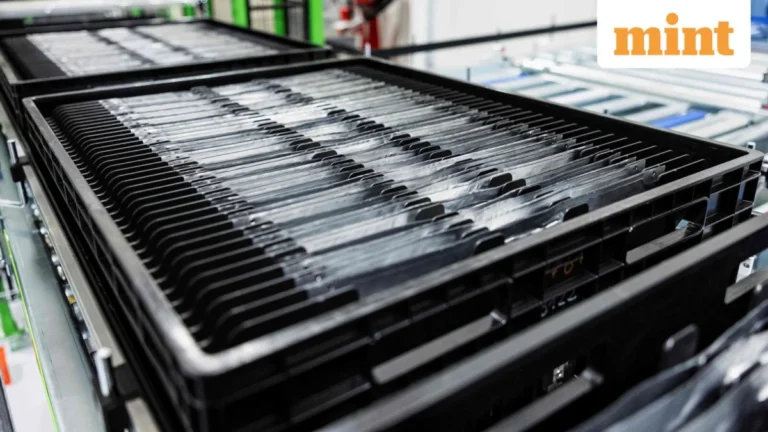
Nestlé India Limited, a titan in the fast-moving consumer goods (FMCG) sector, has significantly amplified its production capabilities with the inauguration of a new manufacturing unit for its popular Munch wafer chocolate at its Sanand facility in Gujarat. This strategic ₹225 crore capital injection underscores the company’s unwavering commitment to scaling output and preemptively addressing burgeoning consumer demand across the subcontinent, marking a pivotal moment in its long-term growth trajectory within one of the world’s most dynamic markets.
The newly commissioned production line at the Sanand factory is a critical component of Nestlé India’s broader capital expenditure strategy, encompassing both greenfield and brownfield projects aimed at augmenting overall capacities. This particular expansion is set to add approximately 8,300 annual tons of production capacity for Munch, a move that directly translates into enhanced market penetration and a more resilient supply chain. Such an investment is not merely about increasing volume; it reflects a sophisticated understanding of market dynamics, consumer preferences, and the logistical intricacies of distributing products across a vast and diverse geography. By expanding its manufacturing footprint, Nestlé aims to capitalize on the increasing per capita consumption of confectionery items, driven by a young demographic and rising disposable incomes.
The choice of Sanand, Gujarat, as the site for this significant expansion is strategically astute. Gujarat has emerged as a formidable industrial hub, boasting robust infrastructure, a favorable business environment, and excellent connectivity to major consumption centers and ports. This allows companies like Nestlé to optimize logistics, reduce transportation costs, and achieve greater efficiency in distribution, factors critical for FMCG players operating on thin margins. The state’s progressive industrial policies and skilled labor pool further enhance its appeal, providing a fertile ground for large-scale manufacturing operations. For Nestlé, leveraging multiple manufacturing sites for Munch—including the newly enhanced Sanand facility—ensures supply chain resilience and optimal market coverage, mitigating risks associated with single-point production and enabling faster response to regional demand fluctuations.
This expansion comes amidst a period of robust performance for Nestlé India. For the third quarter ending December 2025, the company reported a remarkable 45.12% surge in consolidated net profit, reaching ₹998.42 crore, a substantial leap from ₹688.01 crore in the corresponding period of the previous fiscal year. This impressive bottom-line growth was mirrored by a significant uplift in sales, which escalated by 18.5% to ₹5,643.5 crore, compared to ₹4,721.3 crore in the prior year. The overall operational revenue for the quarter also saw a healthy increase of 8.56% year-over-year, settling at ₹5,667.04 crore from ₹4,779.73 crore. These figures are indicative of a well-executed strategy, where targeted investments in capacity expansion and brand strengthening have yielded tangible results, further bolstered by market stabilization and favorable policy adjustments, particularly those related to the Goods and Services Tax (GST).
The company’s financial prowess during this period was not accidental but a result of deliberate strategic choices. Nestlé India significantly ramped up its consumer-centric media and promotional expenditures by a staggering 42% annually, demonstrating a clear focus on brand visibility and consumer engagement. Despite these increased outlays, the company managed to maintain a healthy EBITDA margin of 21.3%, reflecting operational efficiencies and strong pricing power. Total outlays, including operational expenses, rose by 20.86% to ₹4,667.63 crore during the quarter. This balanced approach—investing heavily in growth drivers while maintaining cost discipline—is a hallmark of successful FMCG leadership.

The domestic market served as a primary engine for this growth, with sales expanding by 18.32% to ₹5,402.6 crore in the December FY26 quarter, up from ₹4,566.05 crore in the previous fiscal year. This sustained growth trajectory, as highlighted by Nestlé, is a testament to more agile and precise executive decisions, coupled with the positive momentum generated by GST rate adjustments which have streamlined taxation and improved supply chain efficiencies across the country. The Indian FMCG sector, valued at over $110 billion, is characterized by its resilience and immense growth potential, driven by a growing middle class, increasing urbanization, and evolving consumption patterns. Snacks and confectionery, in particular, are witnessing robust demand as consumers seek convenient and affordable indulgence options.
A notable trend observed by Nestlé India during the quarter was the rapid acceleration of e-commerce channels, particularly quick-commerce platforms. The advent of 10-minute delivery services has revolutionized how consumers access daily necessities and impulse purchases, making digital channels indispensable for FMCG companies. Nestlé, with its diverse portfolio encompassing Maggi noodles, Nescafe coffee, Kit Kat chocolates, and now enhanced Munch availability, is well-positioned to leverage these platforms, expanding its reach into previously underserved segments and catering to the modern consumer’s demand for instant gratification. This digital pivot is crucial for maintaining competitive edge in a market where traditional retail is increasingly complemented, if not challenged, by online alternatives.
Beyond digital, organized retail also demonstrated robust and diversified growth across various segments, significantly bolstered by holiday promotions and the successful scaling of new product introductions. This dual-channel strength—both online and in modern trade—provides Nestlé with a comprehensive market strategy. In its milk products and nutrition segment, Milkmaid continued its strong growth momentum, indicating sustained consumer trust and demand for trusted brands in essential categories. Everyday milk powder also showed a significant recovery in key geographies, while the company’s toddler milk products performed exceptionally well, reporting notable market share gains. These performances underscore Nestlé’s diversified portfolio strength and its ability to cater to a wide spectrum of consumer needs, from daily staples to specialized nutrition.
Adding another dimension to its strong performance, Nestlé India’s revenue from exports witnessed a healthy increase of 22.86%, reaching ₹240.92 crore. This growth in international markets highlights the company’s expanding global footprint and its increasing role as a regional manufacturing hub for specific product lines. Leveraging India’s cost-effective production capabilities and skilled workforce, Nestlé India is strategically positioned to serve neighboring markets and beyond, contributing to the parent company’s broader global supply chain objectives.
The strategic investment in the Sanand facility for Munch is therefore more than just an operational upgrade; it is a clear declaration of Nestlé India’s intent to dominate key product categories, adapt to evolving retail landscapes, and harness the immense growth potential of the Indian consumer market. As India continues its economic ascent, characterized by increasing purchasing power and a burgeoning young population, Nestlé’s proactive capacity enhancements position it favorably to capture future growth waves, ensuring that its iconic brands remain accessible and relevant to millions of households across the nation. While shares of Nestlé India closed marginally lower at ₹1,186.30 apiece, down ₹18.50 or 1.54% on the NSE following the announcement, this short-term fluctuation does not overshadow the long-term strategic significance of such substantial capacity building, which is designed to yield sustained returns and reinforce market leadership for years to come.