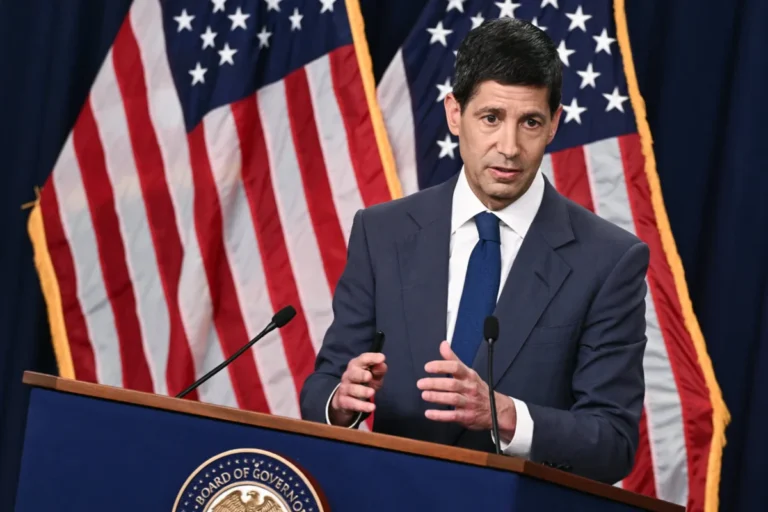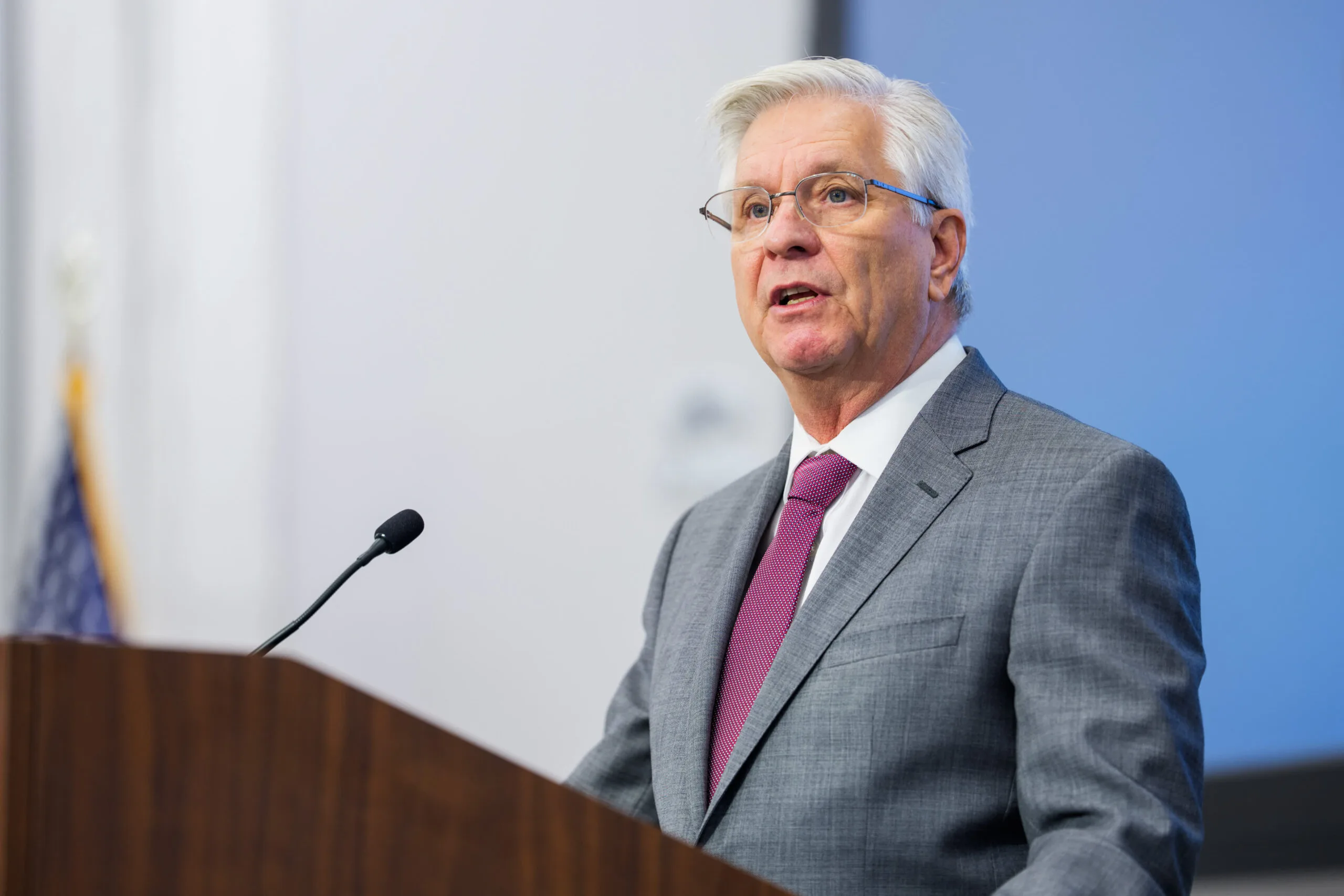
In a significant recalibration of his monetary policy outlook, Federal Reserve Governor Christopher Waller has transitioned from a vocal proponent of imminent interest rate reductions to a stance of watchful reservation. Speaking in the wake of escalating Middle Eastern tensions and a cooling domestic labor market, Waller’s recent commentary underscores the profound complexity facing the U.S. central bank as it attempts to engineer a "soft landing" amidst a landscape of heightened geopolitical risk and structural economic shifts. While Waller maintains that the door remains open for policy easing later in the year, his immediate priority has shifted toward a "wait and see" approach, reflecting a broader sense of trepidation within the Federal Open Market Committee (FOMC).
The primary catalyst for this shift is the eruption of open conflict involving Iran, a development that has sent shockwaves through global energy markets and introduced a new layer of inflationary pressure just as the Fed seemed to be winning its battle against rising prices. For much of late 2025, the narrative in Washington and on Wall Street was one of disinflation, with many expecting the Fed to pivot aggressively to support growth. However, the war has disrupted traditional supply chains and pushed crude oil prices to levels that threaten to bleed into consumer prices, complicating the Fed’s mandate to maintain price stability. Waller, who previously dissented in favor of a rate cut as recently as January, now acknowledges that the "fog of war" makes any immediate move premature.

The labor market, once the engine of the post-pandemic recovery, is now providing a paradoxical set of data points that have left policymakers cautious. On one hand, the U.S. economy saw nearly zero net job growth throughout 2025, a stark contrast to the robust hiring of previous years. On the other hand, the headline unemployment rate has remained surprisingly stable. Waller noted that this stability is largely a function of a shrinking labor force rather than organic strength; as people exit the workforce, the unemployment rate fails to capture the underlying erosion in payroll health. The February jobs report, which revealed a contraction of 92,000 nonfarm payrolls, served as a "shot across the bow" for the Fed. Waller emphasized that if the next report reflects a similar decline—marking what would be four negative reports out of the last five—the narrative of a resilient labor market would effectively collapse.
This deterioration in employment data typically triggers a swift response from central banks in the form of lower interest rates to stimulate investment and hiring. However, the "tricky business" Waller described involves the simultaneous threat of tariff-driven inflation. The current administration’s trade policies have introduced a series of tariffs that Waller views as "one-off" price shocks. While these are technically transitory, their persistence through the second half of the year could force the Fed into a corner. If inflation begins to trend upward again due to tariffs and high energy costs while the labor market is simultaneously shedding jobs, the Fed would face the nightmare scenario of stagflation—stagnant growth combined with high inflation.
Market participants have reacted to these developments with a sharp repricing of risk. Earlier in the year, futures markets were pricing in at least two or three rate cuts for 2026. Today, those expectations have been almost entirely erased, with many traders now anticipating that the federal funds rate will remain at its current restrictive level well into 2027. This "higher for longer" sentiment has driven Treasury yields upward, increasing the cost of borrowing for everything from corporate debt to residential mortgages, further cooling economic activity. Waller’s recent comments served to validate this market skepticism, signaling that the Fed is in no rush to provide liquidity until the trajectory of both the war and the labor market becomes clearer.

The internal debate within the Federal Reserve remains vibrant, highlighting a lack of consensus on the path forward. While Waller has moved toward the center, other governors maintain more aggressive positions. Fed Governor Michelle Bowman, for instance, has emerged as a leading voice for a more accommodative stance. Bowman recently suggested that the Fed could implement up to three rate cuts this year, arguing that the benchmark rate should be moved below the "neutral" level—the point where it neither stimulates nor restricts the economy. Her optimism is rooted in the belief that supply-side policies currently being enacted by the administration will provide enough of a tailwind to support "strong growth" even as the Fed lowers its guard against inflation.
However, Bowman’s dovishness is currently a minority view. The latest "dot plot" grid, which tracks the individual projections of the 19 FOMC participants, shows that only three officials currently favor aggressive cuts this year. The majority of the committee appears to share Waller’s concern that moving too early could reignite inflation, while moving too late could deepen a potential recession. This balancing act is made more difficult by the global context. While the U.S. deals with its internal labor and energy issues, other major economies are struggling with their own crises. The European Central Bank (ECB) and the Bank of England are facing similar inflationary pressures from the Middle East conflict, but with significantly weaker domestic growth than the United States. A divergent policy path, where the Fed holds rates high while others cut, could further strengthen the U.S. dollar, hurting American exports and putting additional pressure on emerging market economies burdened with dollar-denominated debt.
The economic impact of the war with Iran cannot be overstated in this context. Beyond the immediate spike in oil prices, the conflict has increased the "risk premium" on global trade. Shipping insurance rates have climbed, and the potential for a wider regional conflict threatens to close vital maritime chokepoints. For a central bank that relies on predictable data to set policy, these exogenous shocks are a significant hurdle. Waller’s sanguine view on structural inflation—believing it is still moving toward the 2% target despite the noise—suggests that he wants to cut rates, but he is searching for a "safe window" that the current geopolitical climate simply isn’t providing.

Looking ahead to the next quarter, the Federal Reserve will be hyper-focused on two specific metrics: the rolling average of nonfarm payrolls and the core Consumer Price Index (CPI) excluding energy and food. If the labor market continues to shed jobs at a rate of 90,000 or more per month, the "mandate of maximum employment" will likely take precedence over inflation concerns, potentially forcing Waller and his colleagues to act despite the risks. Conversely, if the tariff effects do not "roll off" as Waller expects, and inflation remains sticky above 3%, the Fed may be forced to maintain its restrictive stance even as the economy enters a downturn.
Governor Waller’s transition to a more conservative posture represents a broader realization within the halls of the Fed: the era of predictable, post-pandemic recovery is over, replaced by a more volatile age of "polycrisis." Between the structural weakening of the U.S. labor force, the inflationary impact of trade protectionism, and the unpredictable nature of modern warfare, the central bank’s toolkit is being tested as never before. For now, Waller’s message to the markets is one of cautious patience. The Federal Reserve is not ready to declare victory over inflation, nor is it ready to ignore the cracks forming in the labor market. It is, instead, waiting for the dust to settle on a global stage that remains stubbornly unsettled. As the second half of the year approaches, the "tactical patience" preached by Waller will likely remain the defining characteristic of American monetary policy, leaving businesses and investors to navigate an environment where the only certainty is continued uncertainty.